

Researchers at Nanjing Forestry University have developed a color-changing fluorescent probe made from waste spruce wood that can detect formaldehyde in drinking water at concentrations below World Health Organization (WHO) safety limits.

Will Wetzel is a Senior Editor for Spectroscopy magazine. He specializes in creating engaging, high-value content for diverse audiences. His role involves driving digital growth through KPI assessments, social media strategies, and innovative content development.
Wetzel is also a sports writer and commentator, serving as a freelance writer for several sports websites, including FanSided. He currently serves as the host, producer, and creator of “The Inside Fastball,” a LinkedIn newsletter that discusses topical issues in Major League Baseball (MLB). Outside of work, Wetzel volunteers with the Nashville Humane Association and Habitat for Humanity. His stated goal is to help build one house with Habitat for Humanity in every U.S. state.
Researchers at Nanjing Forestry University have developed a color-changing fluorescent probe made from waste spruce wood that can detect formaldehyde in drinking water at concentrations below World Health Organization (WHO) safety limits.
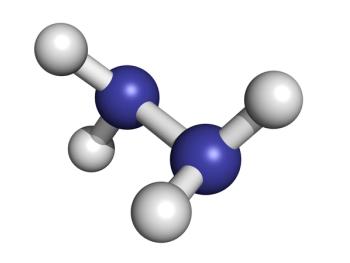
Dual-mode chemosensor developed at Shanxi Agricultural University achieves sub-micromolar detection limits in under five minutes.

In this interview clip, Sian Sloan-Dennison, a postdoctoral research associate at the University of Strathclyde, discusses how a new digital microfluidics surface-enhanced Raman spectroscopy (DMF-SERS) platform be implemented in clinical settings.

A team at Hebei University has developed a fluorescent probe that visualizes heavy metal stress in plant cells by detecting changes in intracellular viscosity, offering researchers a new real-time tool for assessing crop stress resistance.
Why is determining the function of a surface-enhanced Raman spectroscopy (SERS) assay important? This "Pathways in Spectroscopy" clip offers career advice for researchers in biological and clinical analysis by addressing this question.

How is spectroscopy being used to detect methane and contribute to sustainability missions?
Top articles published this week include a new “Pathways in Spectroscopy” clip, an exploration of the recent advances in Raman spectroscopy and artificial intelligence (AI), and a preview of an upcoming conference focused on tip-enhanced Raman spectroscopy (TERS).

A Portuguese study suggests a low-cost optical technique could help stratify risk for delayed graft function before transplantation, though researchers caution the findings require larger-scale validation.

PicoQuant announced the launch of a new microscope designed for materials characterization.

What were attendees talking about the most at Spring SciX?
Sian Sloan-Dennison, a postdoctoral research associate at the University of Strathclyde, discusses how young researchers can leverage their time at scientific conferences effectively to land their postdoctoral research opportunity.

The upcoming 10th International Conference on Tip-enhanced Raman Spectroscopy is set to take place from June 3–5, 2026, in Zurich, Switzerland. Here’s what attendees can expect.
Jennifer Ferguson, an Applications Manager at Renishaw, discusses why Raman spectroscopy is an ideal technique for characterizing lithium-ion battery anodes.
Inductively coupled plasma–mass spectrometry (ICP-MS) is a popular atomic-based technique, and it can be used to solve some of our most pressing environmental issues.
Sian Sloan-Dennison, a postdoctoral research associate at the University of Strathclyde, discusses the importance of considering the end-use application of SERS assays and random probes, such as whether they are for early diagnostics or patient use.
Top articles published this week include a new Molecular Spectroscopy Workbench column, a reflection of the life and career of C. V. Raman, and a preview of a new upcoming video series.

The Spring SciX Conference was held at the University of Exeter from April 14–16th, 2026. One talk discussed using Raman spectroscopy to characterize lithium-ion battery anodes.
Why does integrating a surface-enhanced Raman scattering (SERS) assay with a digital microfluidics (DMF) platform improve sensitivity, reproducibility, and throughput when detecting onset of drug-induced liver injury?

A recent study presented a reagent-free FT-IR-based spectroscopic method that detects melamine adulteration in milk powder at concentrations as low as 0.46 parts per million.
"Spectroscopy Around the Globe with Will Wetzel” will take viewers on a journey around the world, highlighting how spectroscopy is being used to study famous world landmarks.
An upcoming two-part video series on “Pathways in Spectroscopy” tackles working with surface-enhanced Raman spectroscopy (SERS), offering practical advice for researchers in clinical laboratories.
Sian Sloan-Dennison, a postdoctoral research associate at the University of Strathclyde, highlights the key topics that were discussed at Spring SciX.
Curiosity may kill the cat, but in engineering, it opens up pathways for engineers to pursue other adjacent career paths.

Spectroscopy is playing an increasingly important role in detecting adulteration in food products. We highlight some of the recent research on this topic in this Q&A.
Top articles published this week include a new Pathways in Spectroscopy episode, an inside look at how spectroscopy is being used in clinical diagnostics to assess drug induced liver injury, and a couple preview articles about two upcoming spectroscopy conferences.
Our coverage of the Spring SciX Conference includes a profile on the current issues of current clinical diagnostics, including how spectroscopy can improve assessment of drug induced liver injury.

Can visible-near-infrared (vis-NIR) spectroscopy detect toxic trace elements in soil and sediments effectively?

Researchers have identified chemical signatures in the South Atlantic Ocean that could allow scientists to track the movement of major deep-water masses using dissolved organic matter.

In this overview of the upcoming International Symposium for Molecular Spectroscopy (ISMS), we discuss the awards given out at the conference.
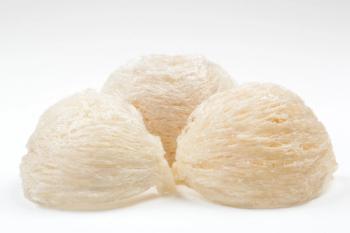
Researchers at the National University of Singapore have demonstrated that widely used spectroscopic methods for detecting adulteration in edible bird's nest products are based on a false assumption — that genuine product has a uniform chemical signature.