Pittcon

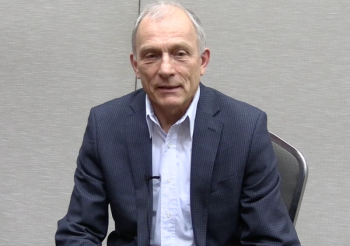
In this “Pathways in Spectroscopy” episode, Brian Strohmeier, who is Pittcon’s President for the 2027 Conference, talks about his role as Pittcon president, what his main responsibilities are, and the amount of work that is required on his end when planning the 2027 show.

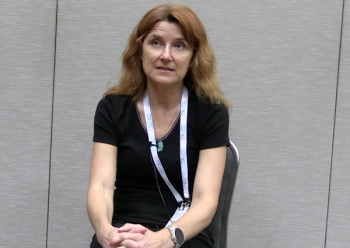
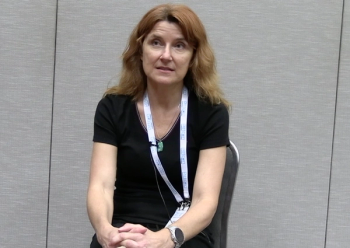
In this interview clip, Lenka Halámková, an assistant professor of high-dimensional data analysis at Texas Tech University, explains the next steps needed in order for attenuated total reflectance Fourier transform infrared (ATR-FTIR) spectroscopy and machine learning to become a part of routine forensic and clinical toxicology workflows for opioid exposure.

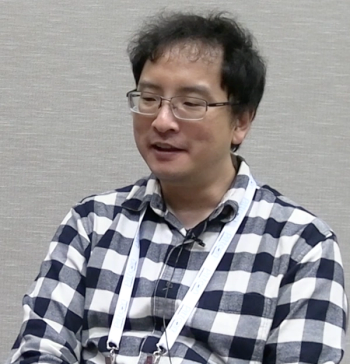
In this interview clip, Dmitry Kurouski, an Associate Professor of Biochemistry and Biophysics, and Biomedical Engineering at Texas A&M University, explains why combining near-infrared excitation Raman spectroscopy (NieRS) with partial least squares–discriminant analysis (PLS-DA) created a robust method for identifying dyes.

In this interview clip, Dmitry Kurouski, an Associate Professor of Biochemistry and Biophysics, and Biomedical Engineering at Texas A&M University, explains the benefit of using near-infrared excitation Raman spectroscopy (NieRS) over high-performance liquid chromatography (HPLC) for forensic dye analysis.

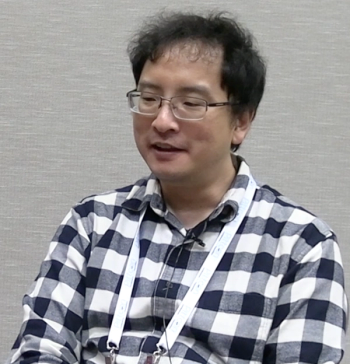
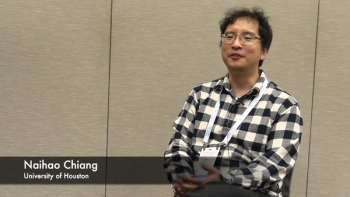
Naihao Chiang Pittcon interview

How was the Pittcon 2026 experience in San Antonio? In this video clip, Naihao Chiang, an assistant professor of chemistry at the University of Houston, addresses this question.

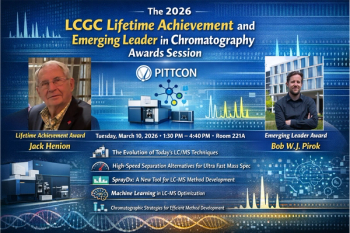
The 2026 LCGC Lifetime Achievement and Emerging Leader in Chromatography Awards Session (AI Generated).

At Pittcon 2026 in San Antonio, Texas, the LCGC International Awards Session was held on Tuesday, March 10, from 1:30 PM to 4:40 PM. This session, presided by Jerome Workman, Jr., celebrated two distinguished scientists whose work has significantly influenced modern separation science. This annual session honors both a lifetime of achievement and the promise of emerging leadership in chromatography. In its nineteenth year, the program recognized Jack Henion with the LCGC Lifetime Achievement Award and Bob W. J. Pirok with the LCGC Emerging Leader in Chromatography Award.

Pittcon 2026: San Antonio Texas skyline and River Walk ©  Shaon -chronicles-stock.adobe.com

The Pittcon (Pittsburgh) Conference and Expo in San Antonio featured a forward-looking symposium exploring how generative artificial intelligence (AI) may transform the daily practice of analytical chemistry. The James L. Waters Symposium, “Generative AI in the Analytical Chemist’s Toolbox for Chemical Measurements”, took place on Monday, March 9, 2026 (2:30–4:40 p.m.) in Room 221A. The session was presided over by Daniel W. Armstrong of The University of Texas at Arlington, who introduced the topic by emphasizing the rapidly expanding knowledge base required of modern analytical chemists. In addition to chemistry, today’s analytical scientist must command elements of physics, advanced mathematics, data science, and, increasingly, AI. The symposium focused on the practical integration of generative AI tools into chemical measurement science. Speakers discussed how AI can assist analytical chemists with tasks such as algorithm generation, signal processing, literature synthesis, and data interpretation. Importantly, the session emphasized responsible implementation, highlighting the need for rigorous validation, high-quality data sets, and integration into existing laboratory workflows.