





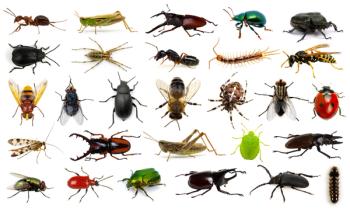
Scientists have created a new means of identifying insect species using ATR-FTIR spectroscopy and machine learning methods.
Scientists have created a new means of identifying insect species using ATR-FTIR spectroscopy and machine learning methods.

Scientists in Ireland recently tested the effectiveness of different machine learning (ML) methods for measuring contamination levels on wind turbine blades.

John H. Kalivas, a professor in the Department of Chemistry at Idaho State University, has been named the winner of the 2023 EAS Award for Outstanding Achievements in Chemometrics.

Felipe Bachion de Santana of Teagasc in Wexford, Ireland, is exploring new ways to monitor soil quality through using spectroscopic techniques. Spectroscopy spoke to him about his team’s work in monitoring the quality of soil to improve agricultural efficiency.

A team of scientists have used airborne lidar mapping to study Mayan architecture, seeing how certain buildings’ construction can hint at the social status of their inhabitants.

In the Chemometrics in Food and Agriculture oral symposia today at SciX 2023, Barry Lavine of Oklahoma State University delivered a talk titled, “Authentication of Edible Oils Using an Infrared Spectral Library and Digital Sample Sets for Calibrated and Uncalibrated Adulterants.” Here is a brief reflection of his talk.

As a preview to SciX 2023, Spectroscopy magazine sat down with Ishan Barman of Johns Hopkins University to ask him about his thoughts on how artificial intelligence may impact spectroscopic research going forward.

There is a variation of the MLR calibration algorithm that can reduce sensitivity to repacked sample measurements. We explore that MLR method here in detail.
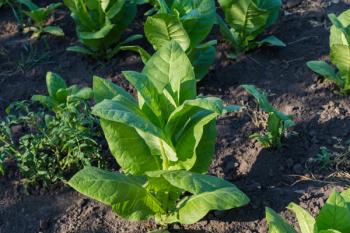
To effectively classify tobacco stems and impurities, a group of scientists from Jiangsu, China used hyperspectral superpixels to separate classify compounds and avoid the influence of interference fringes.

A group of researchers from Beijing Technology and Business University developed a couple extraction algorithms and classification methods that could contribute toward ensuring the quality of wheat flour.

In this interview, Peter Griffiths, 2023 recipient of the Ellis R. Lippincott Award, reflects over his storied career, as well as his most recent work, which focuses on measuring fine airborne particles within mining environments.

In this interview, James Chapman discusses his current and future research efforts, and how combining spectroscopy with machine learning tools can change how bacterial research is conducted.

In this interview, Jürgen Popp discusses the importance of Raman spectroscopy, where it can make a difference, and how it can be evolved and improved on in the future.

Researchers have developed an eco-friendly method using chemometric techniques and artificial neural networks for simultaneous determination of aspirin, clopidogrel, and either atorvastatin or rosuvastatin in their fixed-dose combination (FDC) formulations using ultraviolet (UV) spectrophotometry.

A team of researchers has developed a novel algorithm for rapid peak fitting and resolution enhancement in Raman hyperspectra analysis. The algorithm offers significant advancements in processing large datasets, improving peak resolution, and extracting valuable information about analytes.

A research team has utilized the Allan variance technique to analyze the performance characteristics of compact Fourier transform infrared (FT-IR) spectrometers. The study provides insights into the noise sources and instabilities of these handheld instruments, offering guidance for improving their accuracy and stability in real-time material detection and quantification applications.

A sample library of selected references discussing the application of artificial intelligence (AI) in analytical chemistry and molecular spectroscopy is presented.

A new publication explores the concept of secondary model-based examination of model-free analysis results in chemical data, revealing hidden insights. His research highlights the significance of integrating quantitative model-based evaluations to enhance data interpretation and extract valuable information.

A researcher team questions the effectiveness of core consistency as a diagnostic tool in fluorescence analysis of complex samples. This new study suggests the need for alternative methods to accurately determine model complexity in such analyses.

We interviewed an AI program (ChatGPT) for Spectroscopy asking questions about AI and its role in various applications for vibrational and atomic spectroscopy, including data analysis.

The relationship between leaf nitrogen content (LNC) and hyperspectral remote sensing imagery (HYP) was determined to construct an estimation model of the LNC of drip-irrigated sugar beets, to enable real-time monitoring of sugar beet growth and nitrogen management in arid areas.

In combination with attenuated total reflectance (ATR), Fourier transform infrared (FT-IR) spectroscopy can be used to classify different moss species.

Are you intrigued by artificial intelligence, but unsure what it really means for analytical chemistry? Read on.

The purpose of this work is to achieve rapid and nondestructive determination of tilapia fillets storage time associated with its freshness. Here, we investigated the potential of hyperspectral imaging (HSI) combined with a convolutional neural network (CNN) in the visible and near-infrared region (vis-NIR or VNIR, 397−1003 nm) and the shortwave near-infrared region (SWNIR or SWIR, 935−1720 nm) for determining tilapia fillets freshness.

The past decision to use binary representation in computer architectures affects the results of chemometric-based outputs, especially if different data values are used.