




In this study, laser-induced breakdown spectroscopy (LIBS) was applied in conjunction with principal component analysis (PCA) to identify and classify flower species.


Innovative Hyperspectral Imaging Advances Black Garlic Quality Control

Study: NIR and Chemometric Model for Gastrodia elata Bl. Geographic Traceability
In this study, laser-induced breakdown spectroscopy (LIBS) was applied in conjunction with principal component analysis (PCA) to identify and classify flower species.

A recent review article explores the evolving landscape of pigment analysis in cultural heritage (CH).

Over the past two years Spectroscopy Magazine has increased our coverage of artificial intelligence (AI), deep learning (DL), and machine learning (ML) and the mathematical approaches relevant to the AI topic. In this article we summarize AI coverage and provide the reference links for a series of selected articles specifically examining these subjects. The resources highlighted in this overview article include those from the Analytically Speaking podcasts, the Chemometrics in Spectroscopy column, and various feature articles and news stories published in Spectroscopy. Here, we provide active links to each of the full articles or podcasts resident on the Spectroscopy website.

Researchers have developed a novel method combining near-infrared (NIR) and mid-infrared (MIR) diffuse reflectance spectroscopy with advanced data fusion techniques to improve the accuracy of non-structural carbohydrate estimation in diverse tree tissues, advancing carbon cycle research.

A recent study presents a new technique that combines femtosecond double-pulse laser-induced breakdown spectroscopy (fs-DP-LIBS) with machine learning (ML) algorithms to significantly enhance tissue discrimination and signal quality, paving the way for more precise biomedical diagnostics.

Sirish Subash is the winner of the Young Scientist Award, presented by 3M and Discovery education. His work incorporates spectrophotometry, a nondestructive method that measures the light of various wavelengths that is reflected off fruits and vegetables.

Five invited speakers joined Joseph Smith, the 2024 Emerging Leader in Molecular Spectroscopy, on stage to speak about trends in hyperspectral imaging, FT-IR, surface enhanced Raman spectroscopy (SERS), and more during the conference in Raleigh.

A review by researchers from Curtin University comprehensively explores how chemometrics can revolutionize forensic science by offering objective and statistically validated methods to interpret evidence. The chemometrics approach seeks to enhance the accuracy and reliability of forensic analyses, mitigating human bias and improving courtroom confidence in forensic conclusions.

A recent study looks at how to improve the aging life of lithium-ion batteries.

A recent review article explored the Brazilian coffee industry and how spectroscopic- and chemometrics-based approaches are helping to ensure the authenticity and quality of Brazilian coffee.

Top articles published this week include a peer-reviewed article that discuss two multivariate calibration algorithms for the spectrophotometric analysis of a drug containing antazoline hydrochloride (AN) and naphazoline hydrochloride (NP), an article about chemometric calibrations, and a feature about the 2024 Emerging Leader in Molecular Spectroscopy awardee.

This study applied principal component regression (PCR) and partial least squares (PLS) algorithms for the spectrophotometric analysis of a drug containing antazoline hydrochloride (AN) and naphazoline hydrochloride (NP) without chemical separation. Both methods showed high accuracy and precision, with results closely matching those from a reference HPLC method, and were successfully validated for analyzing commercial pharmaceutical products.

This column is the continuation of our previous column that describes and explains some algorithms and data transforms beyond those most commonly used. We present and discuss algorithms that are rarely, if ever, seen or used in practice, despite that they have been proposed and described in the literature.

The advent of artificial intelligence (AI) and machine learning (ML) has propelled spectroscopic instrumentation to new heights.

Some of the most recent articles in data analytics, statistics, machine learning, and artificial intelligence are presented below.

A recent study in beverage analysis showcased the capability of a new electronic tongue (e-tongue) prototype in analyzing liquid samples such as coconut water.
Top articles published this week include a preview of our upcoming “The Future of Forensic Analysis” e-book, a few select offerings from “The Future of Forensic Analysis,” and a news story about next-generation mineral identification.
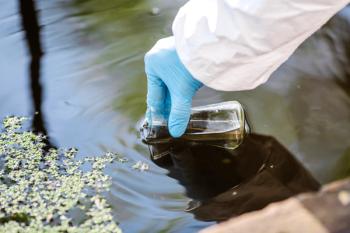
A recent review article evaluates how artificial intelligence (AI) and machine learning (ML) are being used to assess water quality.

A pioneering study integrates laser-induced breakdown spectroscopy (LIBS) with Raman spectroscopy (RS) and applies machine learning (ML) to achieve exceptional accuracy in mineral identification. The combined approach not only leverages the strengths of both techniques but also enhances classification precision, achieving up to 98.4% accuracy.

This article offers some insight into using attenuated total reflectance Fourier transform infrared (ATR FT-IR) spectroscopy at crime scenes.

A recent study reveals on the challenges and limitations of AI-driven spectroscopy methods for rapid food analysis. Despite the promise of these technologies, issues like small sample sizes, misuse of advanced modeling techniques, and validation problems hinder their effectiveness. The authors suggest guidelines for improving accuracy and reliability in both research and industrial settings.

Researchers from Zhejiang University have developed a new non-linear memory-based learning (N-MBL) model that enhances the prediction accuracy of soil properties using visible near-infrared (vis-NIR) spectroscopy. By comparing N-MBL with traditional machine learning and local modeling methods, the study reveals its superior performance, particularly in predicting soil organic matter and total nitrogen.
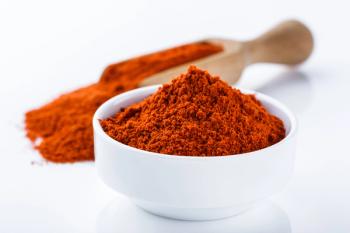
Food authentication is becoming increasingly important. In this article, the editors of Spectroscopy outline the methodology used in a recent study used to analyze paprika.

By providing automated tools and guidance, an ECS would aim to streamline the calibration process, improve calibration transfer, enhance operator efficiency, and improve the overall consistency and reliability of analytical results produced using advanced chemometrics and machine earning techniques.

A recent study from Sichuan, China, leveraged a few spectroscopic techniques with chemometrics to analyze key components of the beer brewing process.