






University of Granada researchers compared different methods and their effectiveness in classifying ink found in historical documents.
University of Granada researchers compared different methods and their effectiveness in classifying ink found in historical documents.

Researchers have developed a high-sensitivity optical fiber vibration sensor based on Fabry-Perot (F-P) interference, designed to improve wind turbine tower monitoring. This innovation addresses issues with traditional electrical sensors and has strong potential for integration into the Internet of Things (IoT) for real-time structural health monitoring.

A study by researchers at Universidad de Talca in Chile explores the integration of artificial intelligence (AI), the Internet of Things (IoT), and remote sensing to modernize modern farming. The research highlights how these technologies optimize resource use, improve crop yields, and promote sustainable agricultural practices.

A recent review by researchers at Nagpur University and Seth Kesarimal Porwal College explores the ever advancing landscape of the Internet of Things (IoT) and its essential components—sensors and actuators. The review paper classifies various IoT sensors and examines their role in integrating the physical and digital worlds to enable smarter devices and enhanced automation.

This article highlights key contributors who have significantly advanced the field of spectroscopy in recent decades.

A team of researchers from the International Iberian Nanotechnology Laboratory (INL) in Braga, Portugal, has developed an autonomous Internet of Things (IoT) spectral sensing system designed to monitor grape ripening in real-time. The study, led by Hugo M. Oliveira, Alessio Tugnolo, Natacha Fontes, Carlos Marques, and Álvaro Geraldes, was published in Computers and Electronics in Agriculture and introduces a novel approach to non-destructive, in-situ optical monitoring of grape maturity.

A new study examines the role of Internet of Things (IoT) technology in fostering sustainable urban development. Through a systematic review of 73 publications, researchers highlight how IoT-enabled sensors improve air quality, transportation, disaster management, and resource efficiency in smart cities.

The most viewed Spectroscopy DOI-registered articles from January 2025.

At Pittcon this year, an oral symposium on Tuesday afternoon will discuss the increasing role of artificial intelligence in vibrational spectroscopy.

Researchers highlight the growing role of Internet of Things (IoT) and sensor technologies in enhancing food security and agricultural sustainability. The study, published in Ain Shams Engineering Journal, explores the applications, benefits, and challenges of smart agriculture, emphasizing the potential of optical sensors in monitoring and optimizing farming practices.

This “Chemometrics in Spectroscopy” column traces the historical and technical development of these methods, emphasizing their application in calibrating spectrophotometers for predicting measured sample chemical or physical properties—particularly in near-infrared (NIR), infrared (IR), Raman, and atomic spectroscopy—and explores how AI and deep learning are reshaping the spectroscopic landscape.

Researchers at Zhengzhou Police University have developed an AI-powered Raman spectroscopy method that achieves 100% accuracy in identifying plastic beverage bottles.

Researchers from Jiangsu University review advancements in computer vision and spectroscopy for non-destructive citrus quality assessment, highlighting the role of AI, automation, and portable spectrometers in improving efficiency, accuracy, and accessibility in the citrus industry.

Researchers have developed a novel approach to improve the accuracy of near-infrared spectroscopy (NIRS or NIR) in quantifying highly porous, patient-specific drug formulations. By combining machine learning with advanced Raman imaging, the study enhances the precision of non-destructive pharmaceutical analysis, paving the way for better personalized medicine.

Researchers have successfully demonstrated that human nails can serve as a reliable biological matrix for detecting fentanyl use. By combining attenuated total reflectance-Fourier transform infrared (ATR FT-IR) spectroscopy with machine learning, the study achieved over 80% accuracy in distinguishing fentanyl users from non-users. These findings highlight a promising, noninvasive method for toxicological and forensic analysis.
Scientists from China and Finland have developed an advanced method for detecting cardiovascular drugs in blood using surface-enhanced Raman spectroscopy (SERS) and artificial intelligence (AI). This innovative approach, which employs "molecular hooks" to selectively capture drug molecules, enables rapid and precise analysis, offering a potential advance for real-time clinical diagnostics.

Top articles published this week include a video interview that explores using label-free spectroscopic techniques for tumor classification, an interview discussing how near-infrared (NIR) spectroscopy can classify different types of horsetails, and a news article about detecting colorless microplastics (MPs) using NIR spectroscopy and machine learning (ML).

Spectroscopy sat down with Juergen Popp of the Leibniz Institute for Photonic Technology to talk about the Photonics West Conference, as well as his work using label-free spectroscopy techniques for precise tumor margin control.

This new study highlights the potential of visible-near-infrared (Vis-NIR) spectroscopy for predicting phosphorus sorption parameters.

Researchers have developed a small near-infrared (NIR) spectrometer dedicated to achieve painless, accurate glucose measurements.

A research team is claiming significantly enhanced accuracy of non-invasive blood-glucose testing by upgrading Fourier transform infrared spectroscopy (FT-IR) with multiple-reflections, quantum cascade lasers, two-dimensional correlation spectroscopy, and machine learning. The study, published in Spectrochimica Acta Part A, reports achieving a record-breaking 98.8% accuracy, surpassing previous benchmarks for non-invasive glucose detection.

A team of researchers from Nankai University has developed an advanced method to classify tea types using near-infrared spectroscopy (NIRS) and artificial intelligence (AI). Their approach, involves a fine-tuned 1DResNet model, outperforms traditional methods, and offers an accurate, non-destructive, and efficient classification solution for the tea industry.
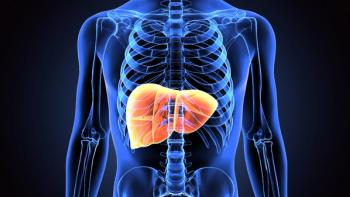
Researchers have explored the potential of combining near-infrared spectroscopy (NIRS) with machine learning (ML) to create a non-invasive, rapid diagnostic tool for liver fibrosis detection, a key factor in transplant surgery planning. These approaches could offer a more accurate and accessible alternative to traditional methods like biopsy.

Scientists demonstrate a self-supervised learning framework that dramatically improves near-infrared spectroscopy classification results, even with minimal labeled data.