SPEC PerkinElmer 10.13
News|Videos|October 8, 2026

Alessandro De Giacomo on LIBS, Plasma Physics, and Nanoparticle Size

Honored with a dedicated Spectrochimica Acta Part B award session at SciX 2026, De Giacomo explains why larger nanoparticles produce stronger LIBS signals and what that means for sensing design.

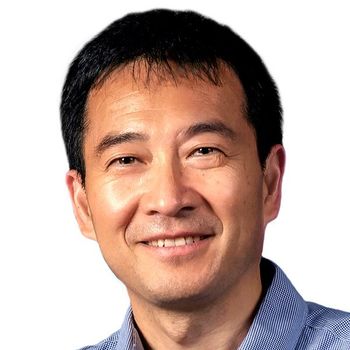
Alessandro De Giacomo, a professor at the University of Bari Aldo Moro in Italy and a longtime editorial board member of Spectrochimica Acta Part B: Atomic Spectroscopy, is being recognized at SciX 2026 with a dedicated award session hosted through the journal.1

As part of our coverage of the 2026 SciX Conference in Sparks, Nevada, Spectroscopy sat down with De Giacomo to talk about his research. In this clip, De Giacomo discusses why nanoparticles are emerging as tags in biomedical applications.

De Giacomo's research centers on laser-induced breakdown spectroscopy (LIBS) and the physics of laser-induced plasmas, including nanoparticle-enhanced LIBS (NELIBS) for trace analysis. His work has been applied to environmental monitoring, cultural heritage diagnostics, and space exploration.

LIBS is often valued for its speed and minimal sample preparation, but plasma behavior is notoriously difficult to model. De Giacomo discussed which aspect of laser-induced plasma physics took him the longest to understand well enough to control. Drawing on work across three very different application areas, each with its own end users and constraints, he also compared how designing a LIBS approach for a Mars mission differs from designing one for analyzing a painting or a soil sample.

A central topic of the conversation was his group's finding that smaller nanoparticles vaporize more efficiently, yet larger nanoparticles still produce a stronger LIBS signal overall. De Giacomo walked through why total atom count outweighs vaporization efficiency in this case.

He then addressed the practical recommendation that emerges from the work, that larger nanoparticles provide better detectability, and explains how that finding could reshape the design of LIBS-based sensing strategies. He considered, in particular, applications such as biomedical tagging, where particle size may already be constrained by other requirements.

Finally, De Giacomo offered advice to students deciding between fundamental plasma physics and applied instrument development within LIBS, drawing on his own experience building a career that has included both.

We are looking forward to sharing with you the rest of our conversation with De Giacomo soon. You can stay up to date on all our coverage of SciX 2026 here.

References
  1. Workman, J., Jr. SciX 2026 Award Winners: The Conversations Coming Next. Spectroscopy Online, 2026. https://www.spectroscopyonline.com/view/scix-2026-award-winners-the-conversations-coming-next (accessed October 7, 2026).
  2. Center for Colloid and Surface Science, Alessandro De Giacomo. Center for Colloid and Surface Science, 2026. https://www.csgi.unifi.it/person.php?p=335 (accessed October 7, 2026).


Related to this article

Sparks near Reno Nevada – Site of 2026 SciX Conference ©   DTM Media  -chronicles-stock.adobe.com
Wednesday's program at SciX 2026 kept returning to one question: can spectroscopy perform outside the controlled laboratory? Speakers took surface-enhanced Raman scattering (SERS), laser-induced breakdown spectroscopy (LIBS), mid-infrared photonics, chemometrics, and fluorescence excitation–emission matrix (EEM) spectroscopy into clinics, food plants, reactor coolant loops, brine fields, and drinking water supplies.
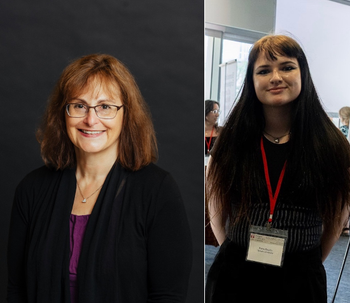
Nancy Pleshko (left) is a Laura H. Carnell Professor Emerita in Temple University's Department of Bioengineering. Petra A. Baylin (right) is a research assistant in the Tissue Imaging and Spectroscopy Lab at Temple University. Photo Credits: © Nancy Pleshko and Petra Baylin
As part of our coverage of the SciX 2026 Conference, Nancy Pleshko and Petra Baylin of Temple University sat down with Spectroscopy to talk about their recent study, explaining how Fourier transform infrared (FT-IR) imaging of ultra-high weight molecular polyethylene (UHMWPE) implants permits oxidation evaluation throughout the sample yielding insight into failure.
FACSS 2026 Award Interviews ©  Erin -chronicles-stock.adobe.com
Eight FACSS award winners at SciX 2026, One LIBS trailblazer. Forty-eight questions. And not one of them is a softball. Award season in spectroscopy usually means polite applause, a plaque, and a photo. We're not completely interested only in the award sessions. The eight scientists honored at SciX 2026 in Sparks, Nevada, along with LIBS researcher Alessandro De Giacomo, are pushing Raman into operating rooms, flying LIBS on drones, reading chemistry off Mars, and tracing toxic metals downwind of industrial sites. Their work makes big claims. In the coming days, Spectroscopy will sit down with eight of these researchers and ask whether those claims hold up. The interviews that follow won't just celebrate. They'll press on the gaps between simulation and experiment, between the lab bench and the clinic, and between a clever paper and an instrument someone will actually buy and use.
The Ongoing Decline of Spectroscopy Expertise
In this panel discussion, five SpecAcademy instructors examined why spectroscopy expertise has declined and how SpecAcademy aims to rebuild it through curated, fundamentals-based education suited to increasingly complex analytical work.
The Mismatch Between Education and Industry
Panelists from the Society for Applied Spectroscopy, the Coblentz Society, Syensqo, Specac, and the University of Georgia discuss how a mismatch between academic curricula and industry practice leaves many analysts unsure when, and how, to use infrared and Raman spectroscopy.