
Spectroscopy
The Eighth International Conference on Laser Induced Breakdown Spectroscopy (LIBS 2014) will be held at Tsinghua University (Beijing, China) from September 8-12, 2014.
Spectroscopy
The Eighth International Conference on Laser Induced Breakdown Spectroscopy (LIBS 2014) will be held at Tsinghua University (Beijing, China) from September 8-12, 2014.
Spectroscopy
The Center for Nano-Optics has been created at Georgia State University (Atlanta, Georgia), under the leadership of Georgia State Physics Professor Mark Stockman. The center will expand the university?s nanotechnology focus and continue the development of two university inventions ? the spaser, and the nanoplasmonic metal funnel.
Spectroscopy
Labcyte, Inc. (Sunnyvale, California), an acoustic dispensing company, has been awarded $1 million to create an innovative process to detect cancer-related proteins in samples, with initial work in breast cancer detection.
Spectroscopy
The Coblentz Society, an affiliate of the Society of Applied Spectroscopy, was approached with a challenge from an anonymous donor during the SciX13 conference.
Spectroscopy
Bristol Instruments, Inc. (Victor New York), a designer, manufacturer, and marketer of optical interferometer-based instrumentation, has moved its headquarters to better accommodate the company?s growing business in the scientific research, fiber communications, and optical metrology markets.
Spectroscopy
The United States Food and Drug Administration (FDA) and the National Institutes of Health (NIH), as part of an ongoing interagency partnership, have awarded a total of up to $53 million to fund tobacco-related research in fiscal year 2013 to create 14 Tobacco Centers of Regulatory Science (TCORS).

Spectroscopy
The Urine Metabolome Database (UMDB) (www.urinemetabolome.ca) containing detailed information on over 3000 metabolites has been launched following the comprehensive quantitative metabolome characterization of urine by scientists at the University of Alberta, Canada.
Spectroscopy
The New York section of the Society for Applied Spectroscopy is seeking nominations for the 2014 Gold Medal Award. Established in 1952, the award recognizes outstanding contributions to the field of applied spectroscopy.
Spectroscopy
The Eastern Analytical Symposium (EAS) will be held this year from November 18 to 20, 2013, in Somerset, New Jersey. EAS is the second largest conference and exposition for laboratory science in the United States dedicated to the needs of analytical chemists and those in the allied sciences.
Spectroscopy
Frost & Sullivan has awarded AB Sciex the 2013 Global Market Share Leadership Award for Mass Spectrometry.
Spectroscopy
A new Raman technique that color codes cancerous and health brain cells according to their chemistry could help surgeons remove all traces of brain tumors while minimizing damage to sensitive tissues.
Spectroscopy
Bruker Corporation (Billerica, Massachusetts) has acquired Prairie Technologies, Inc. (Middleton, Wisconsin), a provider of life science fluorescence microscopy products.
Spectroscopy
Edinburgh Instruments (Livingston, UK) has appointed Mark Vosloo as chief executive officer.
Spectroscopy
Scientists at ETH Zurich (Switzerland) and the Lawrence Livermore National Laboratory (LLNL, Livermore, California) have developed a sensor for surface-enhanced Raman spectroscopy (SERS) that has allowed them to detect a certain organic species (1, 2bis(4-pyridl)ethylene, or BPE) in a concentration of a few hundred femtomoles per liter.
Spectroscopy
A novel Inborn Errors of Metabolism (IEM) screening assay was successfully demonstrated during a clinical study in Turkey, in which more than 1,000 newborn babies were screened by nuclear magnetic resonance (NMR) spectroscopy in an effort to establish a method for a non-invasive, efficient, and reliable assessment of absolute and relative metabolite concentrations in newborns, allowing pediatricians to assess their health, and to detect a multitude of inborn metabolic errors simultaneously.
Spectroscopy
Agilent Technologies Inc. (Santa Clara, California) and ABC Instrumentacion Analitica (ABCIA) (Mexico City, Mexico) have signed a definitive agreement for Agilent to acquire assets from ABCIA.
Spectroscopy
Teledyne Completes Acquisition of Cetac Technologies Teledyne Instruments, a subsidiary of Teledyne Technologies of Thousand Oaks, California), has completed the acquisition of assets of SD Acquisition, Inc. (better known as Cetac Technologies).
Spectroscopy
Rigaku (The Woodlands, Texas) has acquired the crystallization reagent and consumables business, including crystallization screening kits, from Emerald Bio (Bainbridge Island, Washington). The companies have agreed to work together to develop new products and solutions for the field of protein science.
Spectroscopy
Purdue University (West Lafayette, Indiana) researchers recently received more than $200,000 in grants to commercialize their spectroscopy innovations designed to facilitate biological and medical research and diagnostics. The grants were awarded by the Purdue Research Foundation’s Trask Innovation Fund, which assists faculty and staff whose discoveries are commercialized through the Purdue Office of Technology Commercialization.

Spectroscopy
Spectroscopy is pleased to announce the addition of Fran Adar to its editorial advisory board.
Technology developed by the National Physical Laboratory (Teddington, Middlesex, UK) (NPL) could help reverse the estimated $5.42 billion lost each year through the production of counterfeit clothing.
The Mid-Infrared Technologies for Health and the Environment (MIRTHE) center hosted a workshop titled “Air Quality Monitoring Related to Energy Extraction†on Friday, August 9, 2013 at Princeton University (Princeton, New Jersey). The workshop was well attended and highlighted some of the key issues surrounding energy extraction.
Spectroscopy
The U.S. Food and Drug Administration (FDA) proposed an ?action level? of 10 parts per billion (ppb) for inorganic arsenic in apple juice. This is the same level set by the U.S. Environmental Agency (EPA) for arsenic in drinking water.
Spectroscopy
Photonis Technologies (Sturbridge, Massachusetts) has created a new business unit that will exclusively concentrate on the research, design, development and manufacture of digital low-light imaging technologies. The new division, to be known as Photonis Digital Imaging, will be headquartered in Frisco, Texas.
Spectroscopy
Charles Wilkins, a professor of chemistry and biochemistry at the University of Arkansas (Fayetteville, Arkansas), has been awarded the 2013 American Chemical Society Division of Analytical Chemistry Award in Chemical Instrumentation, sponsored by the Dow Chemical Company (North Olmsted, Ohio).
Spectroscopy
WITec will host the 10th Symposium Confocal Raman Imaging from September 30 to October 2, 2013, in Ulm, Germany.The symposium will cover various aspects of modern Raman microscopy and will provide insights into confocal Raman imaging and its applications.
Bruker Corporation (Bremen, Germany) has signed an exclusive patent license agreement with 3M Company (Elyria, Ohio), which allows Bruker to use 3M patented innovations relating to matrix-assisted laser desorption ionization (MALDI) mass spectrometry imaging.
Spectroscopy
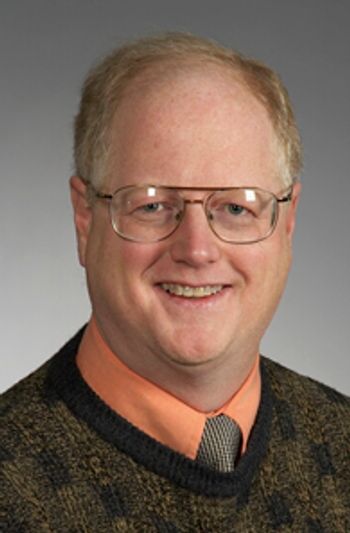
Spectroscopy is pleased to announce the addition of Mike Bradley to its editorial advisory board.
Spectroscopy
The U.S. Pharmacopeial Convention (USP) is deferring implementation of General Chapters <232> Elemental Impurities?Limits and <233> Elemental Impurities?Procedures.
Spectroscopy
R. Graham Cooks, the Henry Bohn Hass Distinguished Professor of Chemistry at Purdue University (West Lafayette, Indiana), is the recipient of the 2013 Dreyfus Prize in the Chemical Sciences, conferred this year in chemical instrumentation.