


A new perspective from researchers at the Karlsruhe Institute of Technology explores the evolving relationship between human expertise and artificial intelligence in polymer chemistry.
A new perspective from researchers at the Karlsruhe Institute of Technology explores the evolving relationship between human expertise and artificial intelligence in polymer chemistry.
In this interview segment, Reddy discusses how O-PTIR combined with mid-infrared frequency comb technologies enhances both resolution and throughput in tissue analysis and how this integration address the limitations of conventional MIRSI approaches in clinical settings.
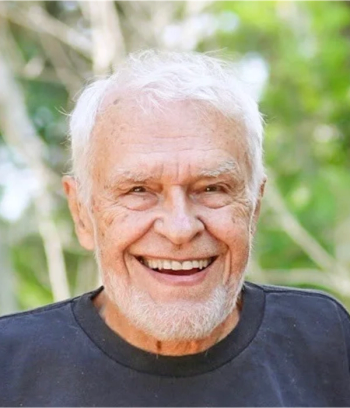
James Dudley Winefordner was a preeminent figure in analytical chemistry whose contributions to spectrochemical method development, instrumentation, and mentoring shaped generations of scientists.
Scientists have developed IR-Bot, an autonomous robotic platform that combines infrared spectroscopy, machine learning, and quantum chemistry to perform real-time analysis of chemical mixtures. The system promises to transform autonomous experimentation by delivering rapid, accurate feedback to guide chemical reactions without human oversight.
In this interview segment, Rafael Davalos discusses contactless dielectrophoresis, highlighting the utility of this technique not just in cancer research, but other application areas as well.
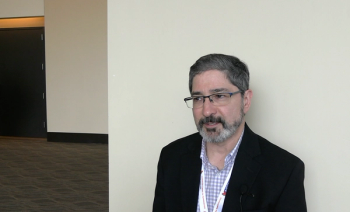
In this interview segment, Rob Lascola discusses how Raman spectroscopy complements other techniques in fuel dissolution and solvent extraction and what Raman can detect in off-gas streams.
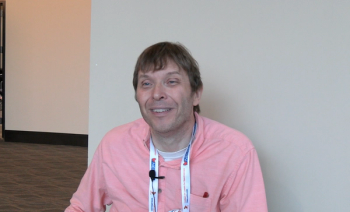
In this video segment, Karl Booksh of the University of Delaware explains how his study highlighted a major improvement in classification accuracy using stacked models for differentiating exotic hardwood species.
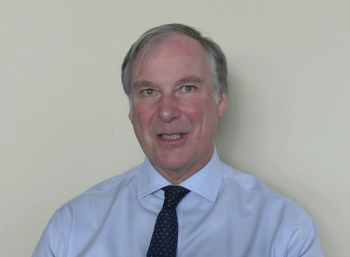
In this segment, Bell addresses the key barriers that are preventing SERS from being more widely adopted in complex environments.
This tutorial explains how baseline drift and multiplicative scatter distort spectroscopic data, reviews correction techniques such as MSC, SNV, EMSC, wavelet-based detrending, and AsLS baseline estimation with matrix-based derivations, and explores emerging data-driven scatter modeling strategies and future research directions.
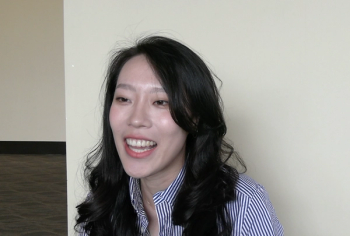
In this interview, Yingchan Guo of the University of Florida discusses high-throughput IMS and identifying fatty acyl chains of lipids using mass spectrometry, particularly in matrix-assisted laser desorption ionization (MALDI) imaging.
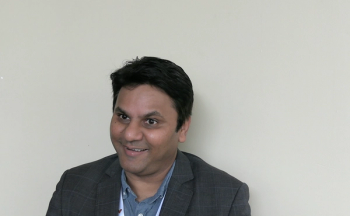
In this interview segment, Prashant Jain, who is a G. L. Clark Professor of Physical Chemistry at the University of Illinois Urbana-Champaign (UIUC), discusses the implications of his study’s findings, highlighting how they advance our understanding of light-driven hydrocarbon formation pathways and plasmonic catalytic events.

Top articles published this week include several video interviews from our coverage of the SciX Conference and an inside look at the challenges of developing universal spectral libraries.
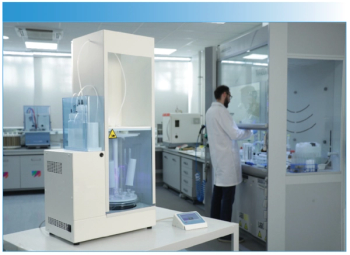
This article discusses pre-analytical best practices, recent innovations in MW design, and other productivity tools to consider throughout the workflow, explaining how these factors collectively enhance analytical accuracy and data integrity.
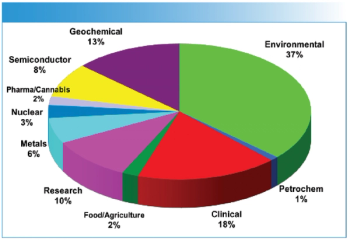
Explore essential best practices for optimizing ICP-MS methodologies, enhancing accuracy, and tackling analytical challenges in diverse sample matrices.
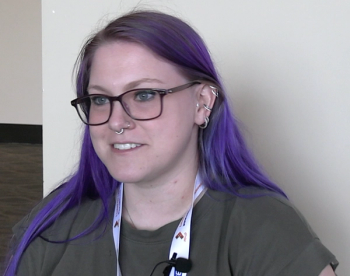
Spectroscopy sat down with Renee Romano, a graduate student at The Ohio State University, to discuss the broader implications of her findings, including how they demonstrate the potential of Raman spectroscopy for in situ, real-time monitoring of plant–microbe interactions without destructive sampling.
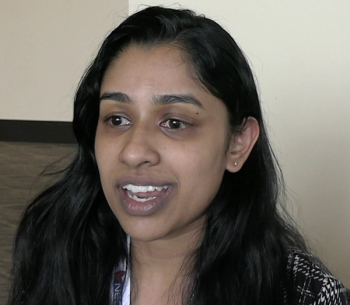
In this exclusive interview, Nishadi Nadeeshani Moragoda Liyanage, a graduate student at The Ohio State University, outlines how the results of her study help advance our understanding of plasmon-induced electron transfer and its applications in nanoscale optoelectronic and catalytic systems.
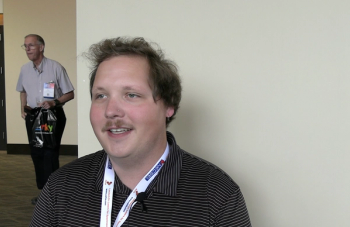
As part of our coverage of the SciX Conference, Spectroscopy sat down with Witte, a graduate student at The Ohio State University, to talk about how machine learning (ML) algorithms can differentiate between spectral features associated with radiation dose and those reflecting temporal changes post-exposure, as well as the benefits of using Raman spectroscopy to detect and quantify radiation-induced molecular changes.

A recent review by Jhonatan Contreras and Thomas Bocklitz from Friedrich Schiller University Jena and the Leibniz Institute of Photonic Technology delves into the emerging field of explainable artificial intelligence (XAI) in spectroscopy.
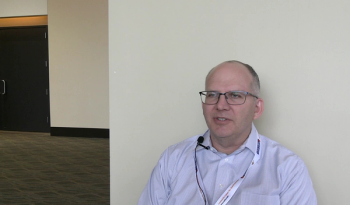
At SciX, Zac Schultz of The Ohio State University sat down with Spectroscopy to discuss his work characterizing molecular interactions with localization microscopy techniques, as well as give his thoughts about how spectrally resolved surface-enhanced Raman spectroscopy (SERS) imaging will impact in vitro cell imaging and other application areas.
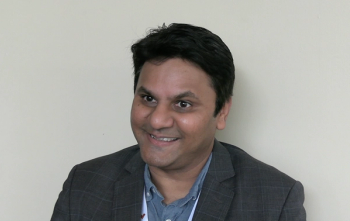
In this interview segment, Prashant Jain of the University of Illinois Urbana-Champaign discusses the unique reaction pathways observed in light-driven chemistry on nanoparticles, particularly in CO2 reduction, and the insights gained into the quantum mechanical mechanisms of these reactions.

Astronomers have captured the first detailed optical spectrum of 3I/ATLAS, the third known interstellar object to visit our Solar System. Using the VLT’s MUSE instrument, the team finds a red, dust-dominated coma with no detectable gas emissions, offering a rare glimpse into the composition of alien comets.
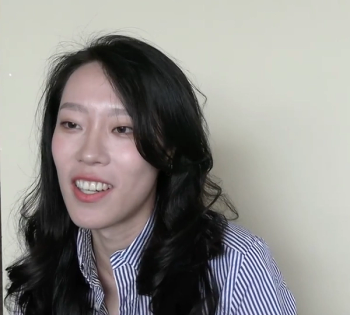
In this interview segment, Yingchan Guo previews her talk on Thursday and highlights some of the research projects that are ongoing in the Prentice Research Group at the University of Florida.
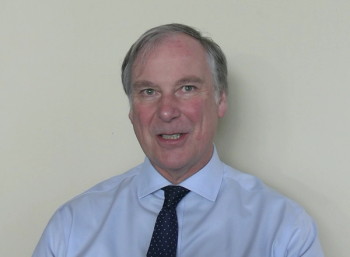
In this interview segment, Steven Bell, a professor of physical chemistry at Queen's University Belfast, provides an overview of his talk, and he also outlines what attendees can look forward to at this technical session, highlighting the list of speakers and their research interests.
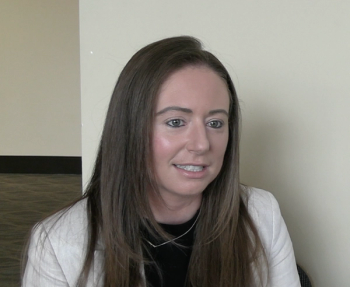
In this video clip, Fay Nicolson, who is a Research Fellow at the Dana-Farber Cancer Institute and Harvard Medical School, highlights an oral session she is chairing tomorrow that will feature talks about the use of spectroscopy in disease management.
In this interview clip, Yingchan Guo of the University of Florida previews her talk on Tuesday and gives her reaction of the conference thus far.
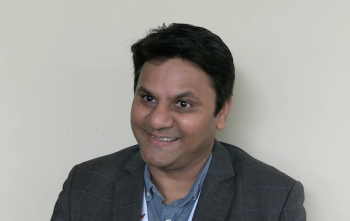
In this interview segment, Prashant K. Jain, a G. L. Clark Professor of Physical Chemistry at the University of Illinois Urbana-Champaign (UIUC), recaps his award plenary talk that he delivered at the SciX Conference this year.
This tutorial examines the development of universal spectral libraries, reviewing standardization efforts, mathematical frameworks, and practical examples across multiple spectroscopies, while emphasizing metadata harmonization, FAIR principles, and the emerging role of AI in building interoperable, machine-readable repositories. This remains an unsolved problem in spectroscopy.

Top articles published this week include a news article about monitoring arsenic in natural waters, an inside look at spectroscopic observations of interstellar objects, and an interview that highlights changes made to USP Chapters 41 and 1251.
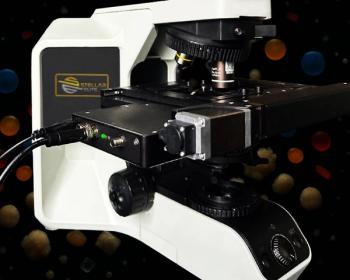
The StellarScope AM/PA Raman Particle Analyzer, launched by StellarNet Inc., is an advanced analytical platform that merges automated mapping with particle analysis.

New observations of interstellar comet 3I/ATLAS, the third known interstellar object ever to visit our solar system, reveal unexpected activity and composition, challenging many previous assumptions about interstellar objects.