Spectroscopy magazine is pleased to welcome you to the “Planetary Bodies and Other Celestial Objects” landing page, one of three landing pages in our “Spectroscopy and Space Exploration” content series.

Spectroscopy magazine is pleased to welcome you to the “Planetary Bodies and Other Celestial Objects” landing page, one of three landing pages in our “Spectroscopy and Space Exploration” content series.

Spectroscopy magazine is pleased to welcome you to the “Mars” landing page, one of three landing pages in our “Spectroscopy and Space Exploration” content series.

Spectroscopy magazine is pleased to welcome you to the “Outer Space: The Final Frontier” landing page, one of three landing pages in our “Spectroscopy and Space Exploration” content series.

In a pioneering study published in Nature, researchers have presented their findings on the atmospheric properties of the exoplanet WASP-39b. Using data obtained from the JWST NIRISS instrument, the team successfully breaks model degeneracies and reveals intriguing insights into the exoplanet's heavy-element enhancement, carbon-to-oxygen ratio, potassium-to-oxygen ratio, and the presence of wavelength-dependent, non-grey clouds.

A review article explores the significance of analyzing terrestrial analogues to enhance spectroscopic capabilities for Mars exploration. The review highlights key findings and lessons learned from studying terrestrial analogues, providing valuable insights for the development of spectroscopic systems in current and future missions to Mars.

On July 20th, 1969, American astronauts Neil Armstrong and Buzz Aldrin made history by becoming the first humans to land on the moon. Today, 54 years later, Spectroscopy magazine highlights how spectroscopy is playing a role in advancing space exploration.

A Nature study reports the discovery of diverse organic-mineral associations in the Máaz and Séítah formations within Jezero crater on Mars, as observed by the Perseverance rover's SHERLOC instrument. The Raman and fluorescence findings indicate the presence of aromatic organic molecules within Martian soils.

The study of exoplanets, or planets outside of our solar system, is becoming increasingly important in space exploration. Scientists are working to characterize these planets and Raman spectroscopy is playing a key role. Andrew Mattioda, a research scientist at the National Aeronautics and Space Administration (NASA) Ames Research Center, is on the front lines of this research.

Spectroscopy magazine is pleased to announce the launch of a new one-day content series titled, “Spectroscopy and Space Exploration,” which will take place this Thursday, July 20th, 2023.

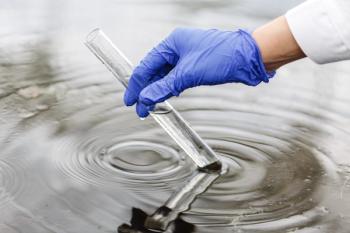
Researchers have developed a highly sensitive method for determining total chromium in seawater using ultrasound nebulization-dielectric barrier discharge (UNDBD) vapor generation coupled with inductively coupled plasma-mass spectrometry (ICP-MS).

A research group has utilized laser-induced breakdown spectroscopy (LIBS) to analyze the contamination profiles of Frascati Tokamak Upgrade (FTU) limiter tiles after exposure to fusion plasma. The study revealed the presence of various contaminants, including boron, calcium, lithium, and eroded materials, providing valuable insights into the distribution and effects of fusion plasma on the surfaces of these tiles.

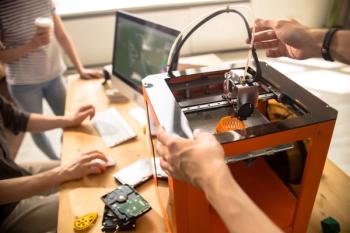
Researchers have developed a small and cost-efficient picoliter droplet printing device capable of accurately depositing 65 different elements for micro preparation.

A team of researchers have investigated the early dynamics of laser-induced plasma and cavitation bubbles in water, enhancing our understanding of underwater laser-induced breakdown spectroscopy (LIBS) and the critical role of bubble-plasma interaction in characterizing laser-induced plasma in water.

Researchers have developed an advanced method using laser-induced breakdown spectroscopy (LIBS) for sensitive and accurate detection of nitrogen in simulated Martian soil.

By evaluating different pretreatment techniques, such as sieving and milling, the study highlights the significance of achieving sample homogeneity for precise analysis of soil texture and organic carbon content.

A team of researchers has developed a greener and simplified method for determining elemental contaminants and metal catalyst residues in carbon nanotubes (CNTs) using ICP-OES.

Researchers have developed a non-destructive method for identifying monoclonal antibody drug substances using Raman spectroscopy.

Researchers explore the antioxidant potential of Corema album (L.) D. Don by conducting a spectrochemical analysis on its leaf extracts. The study uncovers seasonal and sexual variations in antioxidant activity and phenolic compound composition, providing valuable insights for harnessing the bioactive properties of this plant species.

Researchers delve into the interaction between calf thymus DNA and an anticancer platinum (Pt) complex, uncovering its binding mechanism through spectroscopy and molecular dynamic simulations, offering valuable knowledge for future therapeutic advancements.

Researchers identify osmundacetone as a strong inhibitor of xanthine oxidase, revealing its interaction mechanism and paving the way for the development of novel uric acid-related disorder treatments.

Researchers have developed a selective fluorescent probe, derived from flavone derivatives, called FlaN-DN for hydrogen sulfide (H2S) detection and intracellular imaging.

This study provides insights into the alternative use of barochromic studies for determining the polarizability of organic molecules in excited states.

Scientists have investigated the sorption mechanism of organic compounds on a mineral composite sorbent using infrared spectroscopy providing insights for the development of effective wastewater purification methods.

A research team has designed and synthesized two fluorescent sensors, CAA and CAB, for fluorescence detection of copper ion (Cu2+) and formaldehyde.

Researchers have developed a novel fluorophore, diaryl maleimide (DAM), with multichromic properties potentially useful for volatile vapor detection in LED lighting systems, showcasing its versatility and applications in sensing technologies.

A new study has been conducted on the phase transitions in 1-adamantylamine and 1-adamantanol. Through various experimental techniques, they revealed the nature of these transitions, including changes in dielectric properties and sensitivity to pressure, providing valuable insights into the behavior of these compounds.

A new study introduces a filter fluorometer calibration method that eliminates the need for the fluorometer itself.

A scientific team has developed a two-photon phosphorescent probe, Ir-CN, for the sensitive detection of sulfur dioxide derivatives in living cell mitochondria.

Researchers have successfully applied laser-induced breakdown spectroscopy (LIBS) technology to quantitatively detect raw ore turquoise, a key ingredient in Tibetan medicines.

Researchers have developed a new methodology using laser-induced breakdown spectroscopy (LIBS) and the support vector machine model (SVM) to classify defects in metal-additive manufacturing (AM) parts.