Experts from BASF, the French National Institute for Agriculture, Food, and Environment, and other institutions discussed how their teams are using chemometrics to improve their work.
Experts from BASF, the French National Institute for Agriculture, Food, and Environment, and other institutions discussed how their teams are using chemometrics to improve their work.
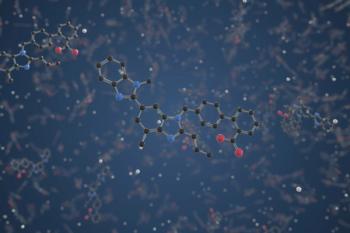
A recent study used spectroscopic techniques to quantify telmisartan and rosuvastatin in tablet dosage form and plasma.

Scientists at the Analytica conference in Munich, Germany delivered lectures on using techniques such as Raman and tunable diode laser absorption spectroscopy to analyze gas in the environment.

In this article, tunable diode laser absorption spectroscopy (TDLAS) is used to measure ammonia leakage, where a new denoising method combining empirical mode decomposition with the Savitzky-Golay smoothing algorithm (EMD-SG) is proposed to improve the signal-to-noise ratio (SNR) of absorbance signals.

Here are the top five articles that the editors of Spectroscopy published this week.

Near infrared (NIR) spectroscopy is a spectroscopic technique used in various industries. Here, we explain its importance in the pharmaceutical, agriculture, and food and beverage analysis industries.

A recent study examined the nutritional parameters in cookies using Fourier transform near-infrared spectroscopy (FT-NIR).

Two awards will be presented at Analytica including the Bunsen-Kirchhoff Award, which is sponsored by Analytik Jena.
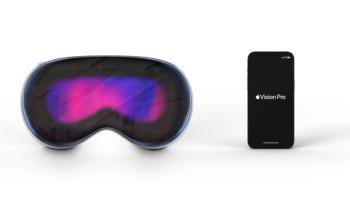
Liquid Instruments recently integrated its Moku system with Apple Vision Pro, according to an announcement from the company.
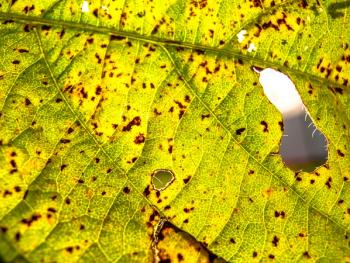
A study from Brazil explored how to use hyperspectral imaging and machine learning to determine the severity of Asian soybean rust.

In this article, the editors of Spectroscopy present an overview of the latest trend in Raman spectroscopy.

This year Analytica, which is held every two years in Europe, will focus on laboratory innovation and sustainability.

A recent study published in The Astrophysical Journal explored two new substructures of the inner Milky Way, Shakti and Shiva, unearthing more information into the formation of the galaxy.

The instrument manufacturer recently made updates to its Raman library, in addition to launching two new analyzers.

NASA’s X-ray Imaging and Spectroscopy Mission (XRISM) uses spectroscopy to study the hottest regions of the universe.


In a recent study, researchers from China investigated the effects of incorporating environmental markers into toxicity prediction models.

A recent study explores the use of another fluorescent probe that can be used in targeted protein degradation.

This article highlights the use of nuclear magnetic resonance (NMR) spectroscopy to characterize biomarkers of metabolic syndrome at different stages of progression.

In a recent study, spectroscopy-based detection protocols were used to detect Covid-19.

Heavy metals in soil remains one of the most pressing issues in environmental conservation efforts. According to the authors of a new study, laser-induced breakdown spectroscopy (LIBS) can contribute to the solution.

Raman spectroscopy has not been used in the electroceramics industry extensively. However, according to the authors of this study, a shift is underway to change that.

In a recent study from Cairo University, researchers examined fixed-dose combination drug formulations using chemometrics and artificial neuron networks (ANNs).

A recent study from the Southern University of Science and Technology proposes a new Raman spectral preprocessing scheme based on self-supervised learning (RSPSSL).
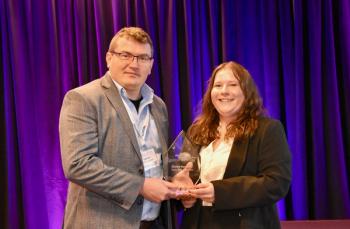
Nominate a candidate for the 2024 Emerging Leader in Molecular Spectroscopy Award!
The Gold Medal Award was established in 1952 to recognize outstanding contributions to the field of applied spectroscopy.

Among the products included in this estimate of the industry over the next seven years are fluorescence microarray scanners.

Pittcon highlighted how analytical scientists are exchanging research to tackle some of the world’s most pressing problems.
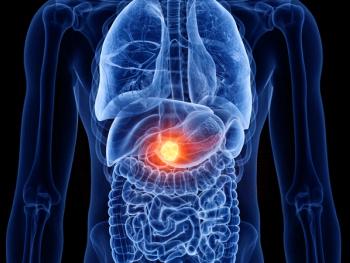
A recent study from Jagiellonian University examined how spectroscopic techniques can aid in the detection of pancreatic cancer.