

Forensics, Narcotics
Latest News
Advertisement
Latest Videos

Shorts
0:58
Tutorial Tuesday: The Methods Transforming Forensic Science
22 days ago
by
Tom Spudich
1:29
How Students Should Prepare for Forensic Science Careers
a month ago
by
Tom Spudich
0:25
Applying Spectroscopy in Forensic Science
a month ago
by
Tom Spudich
1:14
Tutorial Tuesday: The Challenges Forensic Scientists Face Today
a month ago
by
Tom Spudich
0:46
Why US DNA Databases Fail to Identify International Migrant Remains
6 months ago
by
Claire Glynn
Advertisement
More News
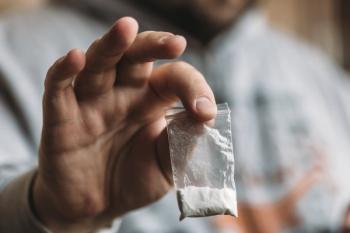
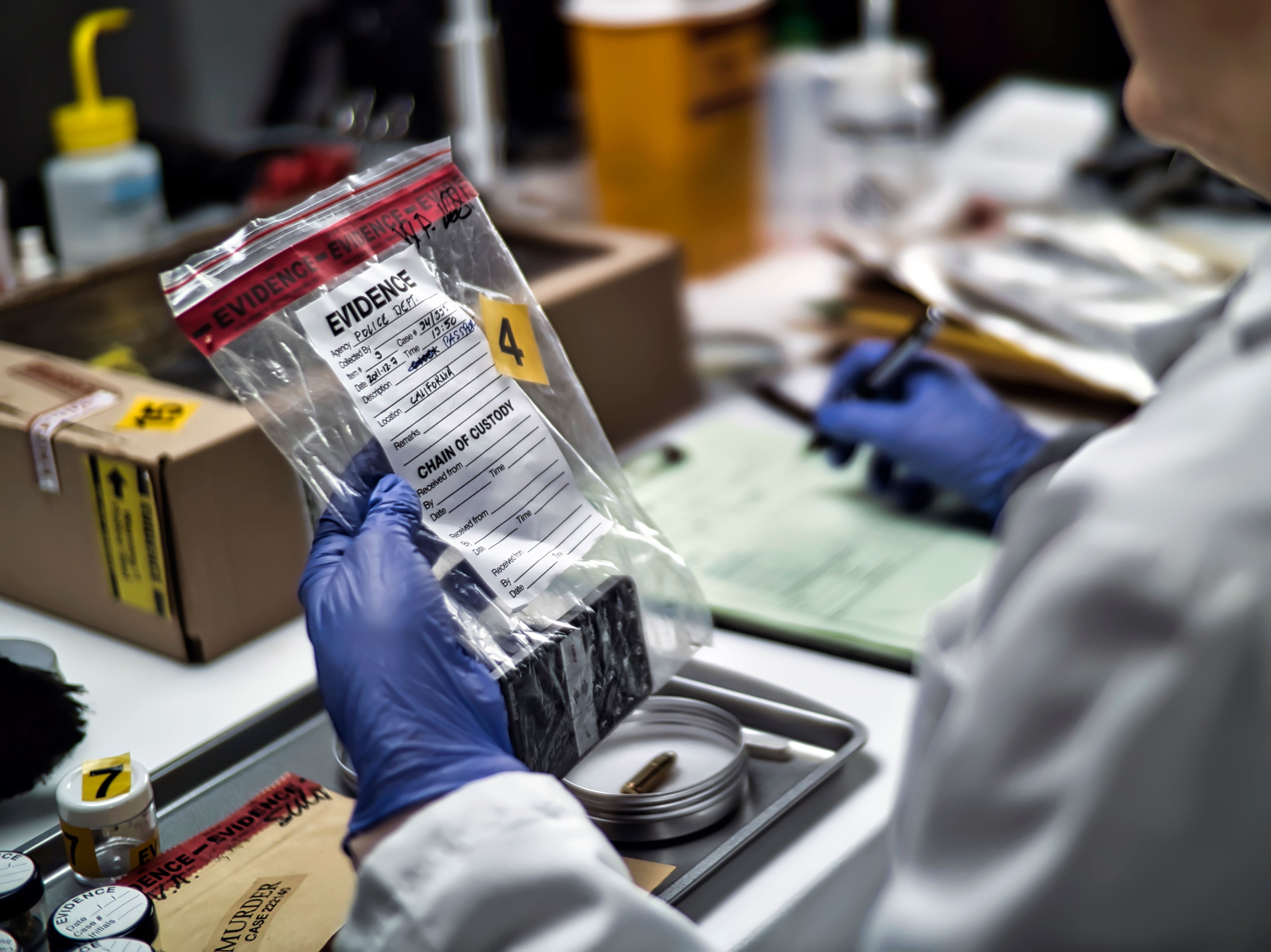
Sapienza Università di Roma team reports near-infrared (NIR) techniques that identify and quantify cocaine and cutting agents through sealed police evidence bags, addressing safety and chain-of-custody concerns in forensic laboratories.

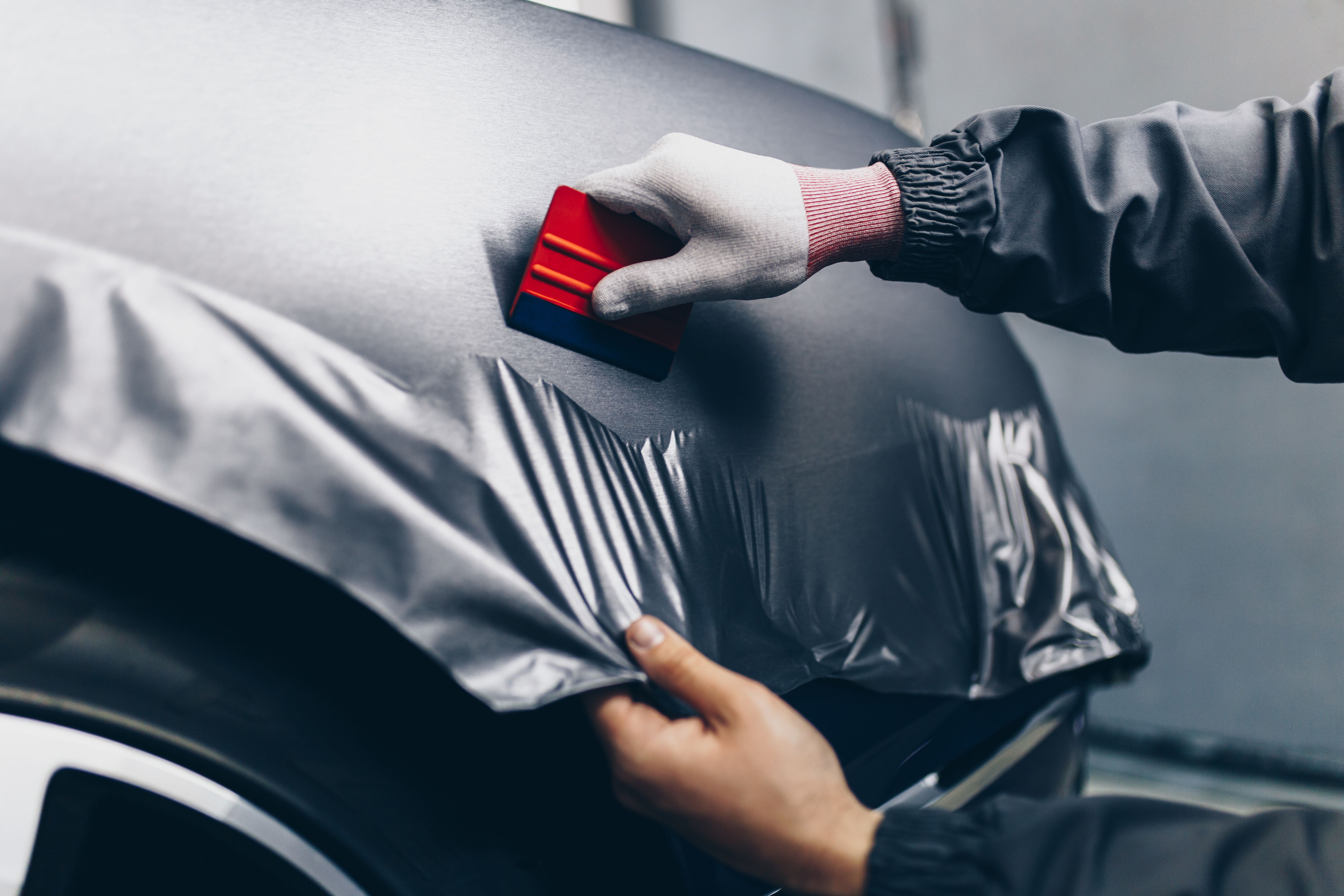
Forensic Differentiation of Automotive Coatings with Multiple Spectroscopic Methods: Comprehensive Spectral Information Analysis for More Accurate Identification
Published: | Updated:
A forensic case study using FT-IR, portable Raman spectroscopy, and SEM-EDS to differentiate three-layer automotive coatings from a hit-and-run accident, demonstrating that combining complementary spectroscopic and elemental techniques improves the accuracy of paint evidence identification.

Infrared (IR) spectroscopy, paired with statistical modeling, can non-destructively distinguish human, dog, and cat bloodstains on sand and soil, offering a preliminary proof-of-concept for field-deployable forensic screening tools.
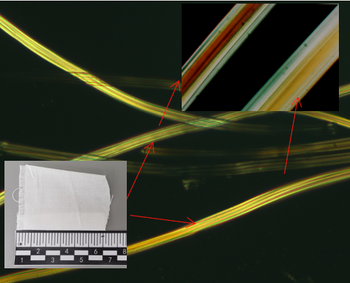
This study used molecular spectroscopic techniques to characterize fibers found at a crime scene and those from the suspects.

Atomic spectroscopy is making strides in fields such as forensics and environmental analysis. This Q&A explores how atomic spectroscopy-based techniques are being used and what the future looks like for these techniques.

An upcoming talk at the American Chemical Society (ACS) Fall 2026 Meeting will discuss how spectroscopy is advancing the assessment of novel psychoactive substances.

Webcasts
Webinar Date/Time: Tue, May 26, 2026 11:00 AM EDT
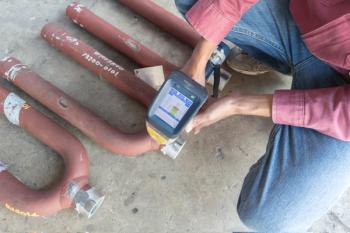
What does the rise of portable and handheld spectroscopic instrumentation tell us?

In this feature on the state of forensic analysis following the American Academy of Forensic Sciences (AAFS) Conference, we explore how forensic scientists are using spectroscopy in their work, and what trends they are seeing play out in the industry.
In this video clip from Pittcon 2026, Lenka Halámková, an assistant professor at Texas Tech University, provides an overview of her talk at Pittcon.
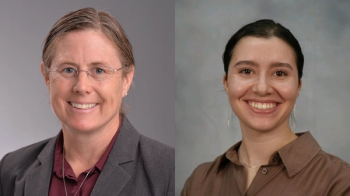
In this interview segment, Kelly Elkins and Jaden Force of Towson University focus to the challenges forensic scientists face, including how to position themselves for a career in this field.
In a recent interview, we sat down with Kelly Elkins, a Professor of Chemistry at Towson University and Jaden Force, a Graduate Research Assistant at Towson University, to talk about the state of forensics and how they apply spectroscopic techniques in their research.

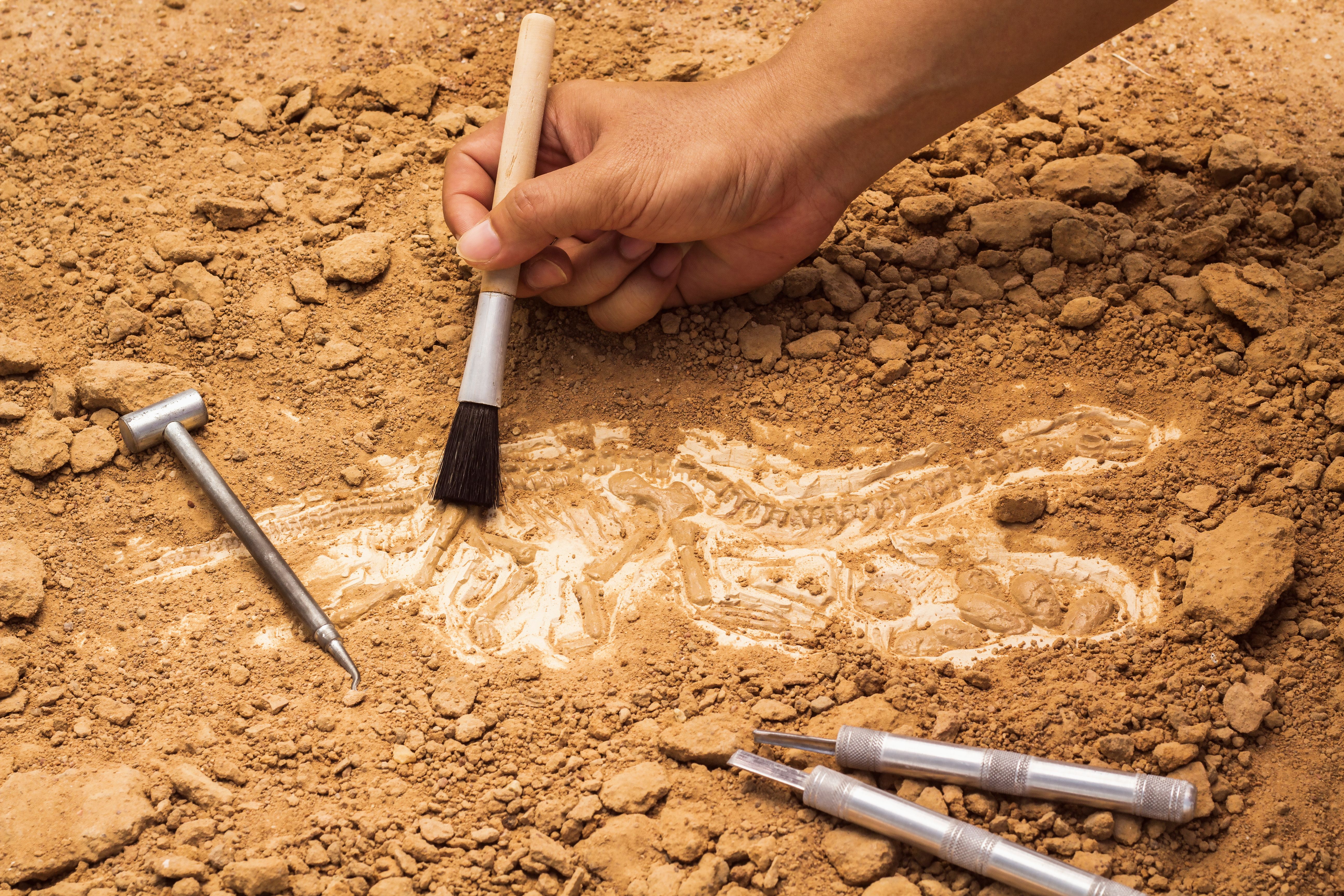
A recent study shows that handheld near-infrared (NIR) spectroscopy combined with artificial neural networks can rapidly and non-destructively distinguish human from animal bones with high accuracy, offering a practical new tool for on-site forensic investigations.
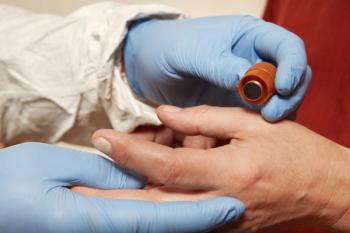
A recent study demonstrated that combining laser-induced breakdown spectroscopy (LIBS) with machine learning (ML) can accurately identify gunshot residue from nontoxic ammunition and reliably distinguish shooters from non-shooters despite the absence of traditional elemental markers.
Discover insights from Tom Spudich on forensic science advancements and challenges as AAFS 2026 approaches in New Orleans.
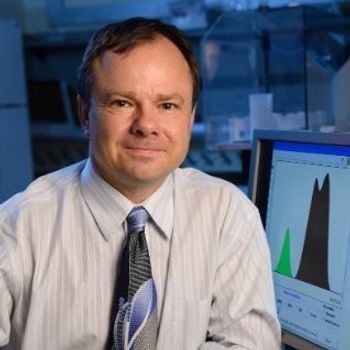
In this interview previewing the American Academy of Forensic Sciences (AAFS 2026), Conference, Spectroscopy sat down with James Cizdziel of the University of Mississippi to discuss the state of forensic analysis.

In the lead-up to the American Academy of Forensic Sciences (AAFS) Conference, we reflect on some of the most pertinent ongoing trends in forensic analysis.

This feature reflects on the interviews Spectroscopy magazine conducted in 2025.

Discover how LIBS revolutionizes forensic science by enabling rapid, precise bone identification, overcoming challenges of traditional methods with advanced AI classification.
In this article, we focus on why LIBS is particularly ideal for forensic applications, especially for studying human or animal remains.
Top articles published this week include an interview about drug detection techniques with Robert Ewing of the Pacific Northwest National Laboratory, a feature about how funding cuts are impacting analytical chemists, and a compilation of articles about how Raman spectroscopy is being used in cancer diagnostics.
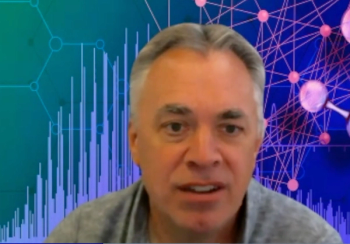
In this interview segment, Robert Ewing discusses how his contactless method improves on traditional drug detection techniques and how the VaporID technology remains adaptive to emerging synthetic variants.
In Part II of our three-part interview with Robert Ewing, he reviews the results of the Nogales border test.
In the first part of a three-part interview, Robert Ewing discusses the core technology behind the VaporID system, explains how the system differs from current IMS systems, and describes the challenges the team faced in miniaturizing the VaporID device into a portable, microwave-sized system.
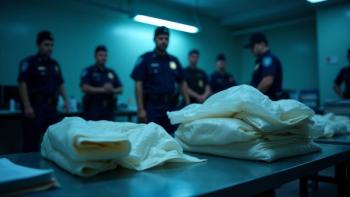
The U.S. Department of Energy’s Pacific Northwest National Laboratory’s (PNNL) VaporID, which is a newly developed portable air sampling system incorporating a miniaturized mass spectrometer (MS), can detect trace levels of fentanyl, methamphetamine, cocaine, and even explosives like TNT with great accuracy.
Advertisement
Advertisement
Trending on Spectroscopy Online
1
Spectroscopy Top 10 Articles of the Month (August 2026)
2
Celebrating National Forensic Science Week
3
Tracking Microplastics and Nanoplastics Using Laser-Based Imaging Technique
4
Tutorial Tuesday: How Raman Microspectroscopy Can Characterize Polycyclic Aromatic Hydrocarbons
5