
Spectroscopy
An investigation of the different kinds of clay used as paint additives with the goal of discriminating the paints
Spectroscopy
An investigation of the different kinds of clay used as paint additives with the goal of discriminating the paints
Spectroscopy
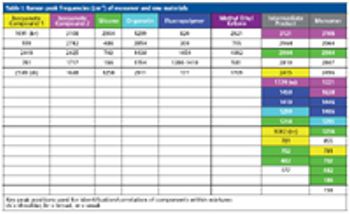
Confocal Raman microscopy can identify particles in the 5–50 ?m range and can bridge the gap between micro-FT-IR and SEM-EDS analyses.

In response to the growing concern in the United States over the threat of nuclear terrorism, the Domestic Nuclear Detection Office (DNDO) in the Department of Homeland Security (DHS) launched the National Nuclear Forensic Expertise Development Program (NNFEDP) in 2008. Led by DNDO in close collaboration with the Departments of Energy (DOE) and Defense, the NNFEDP is an interagency effort committed to developing and maintaining a robust academic and technical pipeline to strengthen the nuclear forensics workforce.
The Domestic Nuclear Detection Office in the Department of Homeland Security launched the National Nuclear Forensic Expertise Development Program (NNFEDP) in 2008. The NNFEDP is an interagency effort committed to developing and maintaining a robust academic and technical pipeline to strengthen the nuclear forensics workforce.
Spectroscopy recently spoke to Sam Houk, professor of chemistry at Iowa State University, and scientist in the Ames Laboratory of the United States Department of Energy, about the current state of ICP-MS, including its use in forensics.
Jim Moran, a geochemist at the Pacific Northwest National Laboratory (Richland, Washington), led a team of researchers in the development of a new laser-powered chemical analysis technique that can take dozens of samples from a single strand of hair and distinguish the chemical signatures of each.
Spectroscopy
A Q&A with Jose Almirall, PhD, professor in the Department of Chemistry and Biochemistry and the director of the International Forensic Research Institute at Florida International University.
Spectroscopy
A Q&A with Jose Almirall, PhD, professor in the Department of Chemistry and Biochemistry and the director of the International Forensic Research Institute at Florida International University.
Special Issues
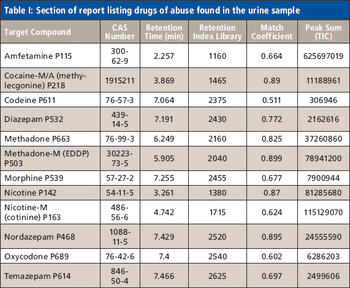
The analysis of urine for drugs of abuse via chromatographic methods is commonplace but can be complicated by high matrix effects and frequent coelution. Novel time-of-flight mass spectrometry in combination with sophisticated deconvolution software was tested and found to provide increased confidence in results due to the high sensitivity and quality of spectra achieved.

Special Issues
A high-throughput LC–MS method using core-shell UHPLC columns to screen for a panel of 11 drugs of abuse (expanded SAMHSA) was developed. The corresponding SPE method allowed the reproducible separation and quantitation of these 11 components in less than 2 min. This method demonstrates the power of new-generation HPLC media as well as some of the factors one must consider when developing such methods for LC–MS analysis.
Special Issues
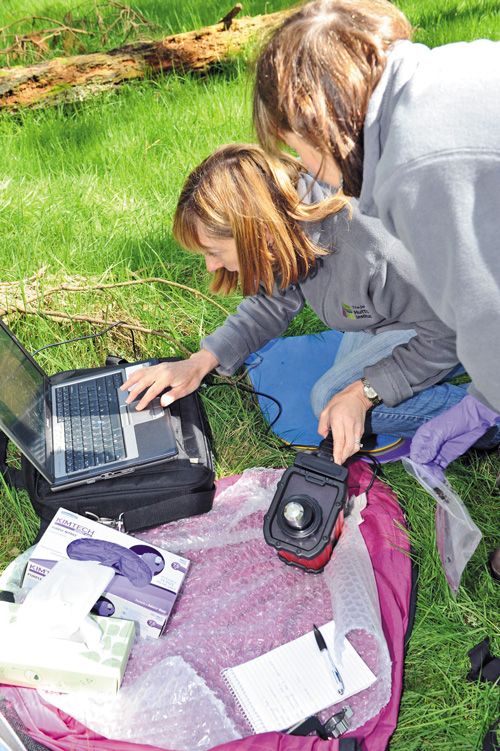
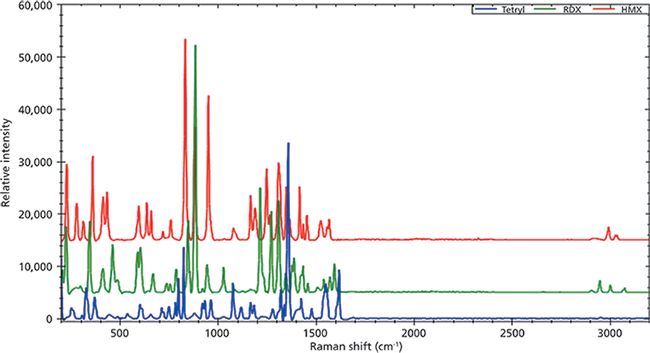
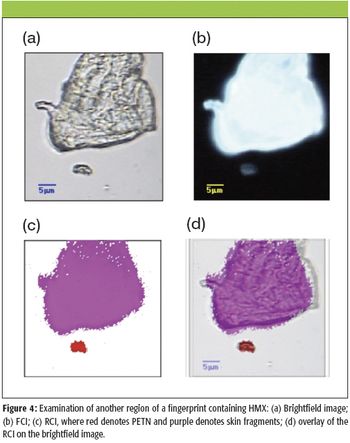
The use of explosive devices by terrorist groups has become a constant threat in recent years. Because of this threat, the U.S. Army and other organizations are developing spectroscopic techniques to detect explosives and perform forensic examination of scenes where explosives were handled. In our group, Raman chemical imaging (RCI) is being used for forensic examination of latent fingerprints contaminated with traces of explosives. RCI has the potential to be a powerful technique both for detecting explosives and providing the biometric information necessary to identify individuals who have handled explosives.
Special Issues
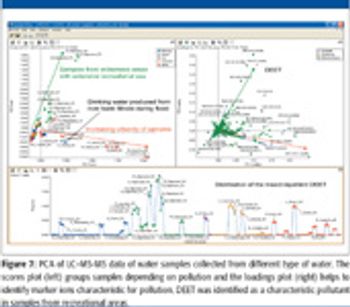
Liquid chromatography coupled to mass spectrometry (LC–MS) using electrospray ionization (ESI) is a powerful analytical tool for the analysis of a wide molecular weight range of polar, semivolatile, and thermally labile compounds.
Spectroscopy
The authors discuss the use of near-infrared spectroscopy to determine the age of a bloodstain, which can be critical in helping establish when a crime was committed.
Special Issues
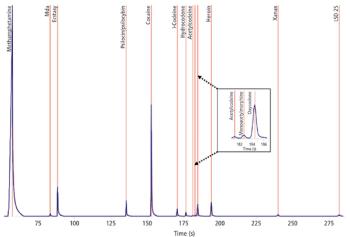
This article presents GC–TOFMS methods developed to identify several major drug classes and chemical functionalities.
Special Issues
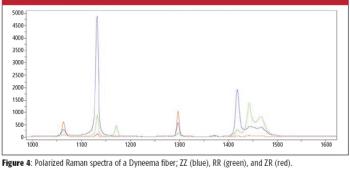
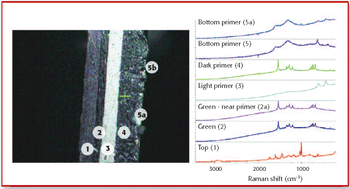
Chemical analysis in the forensic field is different in many aspects from other areas of analysis. The ultimate goal is to identify the sources of evidence, often by matching chemical composition. In this regard, identifying minor elements or trace impurities is as important as identifying main ingredients. In some cases, identifying minor and trace components can be critical to determining that material collected at the site of a crime is identical to material collected in a suspect's environment. In other cases, full identification of trace evidence can be important. Raman microscopy is capable of providing both types of information on minute amounts of material.
Special Issues
One of the promises of array detector inductively coupled plasma (ICP) systems has been the ability to measure all elements in an unknown sample. Sometimes referred to as elemental fingerprinting, this capability can be extremely powerful for quality control (QC) and forensic applications. To take advantage of this capability, the ICP system employed must provide full wavelength coverage as well as the spectral data handling tools needed to do the "fingerprinting." This article will demonstrate some of the elemental fingerprinting capabilities of ICP.
Spectroscopy
Laser ablation ICP-MS enables identification and comparison of physical crime-scene evidence. Discriminating elemental and isotopic differences of solid samples directly at the parts-per-billion level provides forensic scientists with a powerful analytical tool.
Special Issues
Due to its high information, vibrational content, the Raman spectrum provides important and specific molecular information. In this article, Raman microanalysis and instrumentation is discussed with specific application to the forensic science laboratory, where evidence integrity is of the utmost importance.