

Special Issues
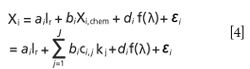
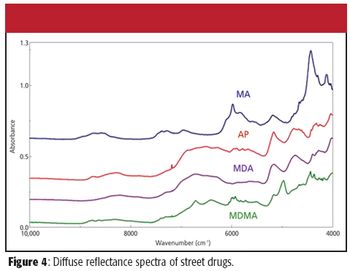
The authors discuss the use of FT-NIR to identify several different types of drug formulations.
Special Issues
The authors discuss the use of FT-NIR to identify several different types of drug formulations.
Spectroscopy
In Part I of this series, we examined recently developed miniature mid-infrared spectrometers (1). In Part II, we surveyed micro electro mechanical systems (MEMS), micro-opto-electro-mechanical systems (MOEMS), and some of the photonics technologies developed for optical communications (2). Here, in Part III, we summarize some of the conventional approaches to miniaturizing near-infrared (NIR) spectrometers, and in Part IV, we will bring these themes together and see how MOEMS and telecommunications photonics are poised to revolutionize NIR spectroscopy with a new generation of miniature instruments.

Application Notebook

This month's Technology Forum looks at the topic of FT-IR/NIR spectroscopy and the trends and issues surrounding it. Joining us for this discussion are Rohit Bhargava, with the University of Illinois, Chris Petty, with Thermo Fisher Scientific, Jim Yano and John Beauchaine, with Aspectrics, Richard Larsen, with Jasco, Inc., and Alan Rein, with A2 Technologies.

Spectroscopy
For ethanol to be usable as a fuel, water must be removed in the distillation process. This article reviews an experiment conducted to test the capability of an EP-IR spectrometer to quantify the percentage volume of water in ethanol.

Spectroscopy
This article compares three regulatory standards for near-infrared wavelength references and then reviews currently available materials. Reference types discussed include gas and vapor band spectra, solid artifacts in both transmittance and reflectance, and liquids in transmittance. Traceability issues are discussed in connection with calibration and qualification regulatory compliance requirements, particularly for the pharmaceutical and medical device industries.

Spectroscopy
NIR chemical imaging provides a rapid method for detecting and comparing suspected counterfeit pharmaceutical products with no sample preparation.

Spectroscopy
November 2006. The authors demonstrate the use of NIR-CI for simultaneous measurement of content uniformity for multiple tablets and discuss some advantages of this approach.

Spectroscopy
Here the authors determine the content of ecdsterone in the Chinese herb Niuxi using near-infrared diffuse reflection spectroscopy and the partial least squares correlation. Compared to existing methods, they contend that their approach is easier, quicker, cheaper, and less environmentally harmful.

Spectroscopy
Here the author compares near-infrared to mid-infrared as analytical tool in process management. he weighs the pros and cons of both spectral regions and suggests general applications for which one or the other is better suited.
Spectroscopy
Tunable diode laser absorption spectroscopy (TDLAS) has evolved from a laboratory specialty technique to the foundation for highly sensitive and specific gas-phase sensors for the process environment. This article discusses two recently developed products, a portable trace gas monitor, and a water vapor flow sensor.
Spectroscopy
The authors describe implementation and performance of a miniaturized NIR analyzer and associated chemometric techniques applied to the monitoring of a drying process for active pharmaceutical ingredients (APIs).
Special Issues
NIR-CI adds a completely new dimension to conventional NIR spectroscopy.
Spectroscopy
Encoded photometric technology has the ability to address the demands of modern process applications, including those of the PAT initiative.
This article summarizes recent efforts by the Duquesne University Center for Pharmaceutical Technology to develop and validate a PAT method using NIR spectroscopy for the on-line prediction of tablet hardness and active pharmaceutical ingredient content.
Spectroscopy
This article summarizes recent efforts by the Duquesne University Center for Pharmaceutical Technology to develop and validate a PAT method using NIR spectroscopy for the on-line prediction of tablet hardness and active pharmaceutical ingredient content.
Spectroscopy
Near-infrared spectroscopy moves into warehouses to check incoming drug substances, excipients, and packaging materials, and onto the production floor to monitor characteristics such as blend uniformity, moisture content, and dissolution rate.