





Our annual review of new products for atomic and molecular spectroscopy, including details by category and highlights of overarching trends.
Our annual review of new products for atomic and molecular spectroscopy, including details by category and highlights of overarching trends.
Controlling methane is one of the highest-impact ways to reduce climate impacts, so its accurate measurement is essential. Spectroscopy offers valuable tools for this task.

High-performance instrumentation requires many critical components. We focus here on energy sources, lasers, and detectors.

Raw data produced by an NIR instrument undergoes some sort of processing, or transformation, to make them easier to use. In this series, we explore options for that data transformation, starting with multiple linear regression (MLR).

This study provides theoretical and technical support for implementing online detection of cement raw meal components using near-infrared (NIR) spectroscopy.

This issue is a compilation of five peer-reviewed articles on the combined application of UV-vis-NIR spectral data with advanced chemometrics.

Classification and identification of different wood species are demonstrated using a portable near-infrared spectrometer, combined with four spectral pretreatment methods and three pattern recognition methods. Additional chemometric tools were used for comprehensive evaluation of classification model accuracy and complexity.

Given that grape seed oil has shown beneficial effects for consumers, there is a interest in measuring oil quality and potential adulteration. This study demonstrates an effective near-infrared (NIR) spectroscopy method, using a series of machine learning approaches for wavelength variable selection, to rapidly discriminate grape seed oil adulteration.

Spectral reflectance is a non-destructive method that is applicable to remote sensing and may be used to measure the chlorophyll content in a crop, which indicates the photosynthetic capacity, growth cycles, and degrees of stress (such as disease, insect infestation, and heavy metal stress) on plant ecosystems. This vis-NIR spectral reflectance method measures leaf chlorophyll using a wavelet analysis algorithm approach.
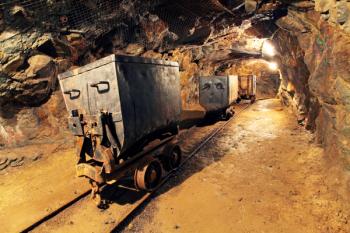
Depletion of modern mineral resources due to continuous exploitation and utilization makes it economically necessary to quickly identify the locate sources of low-grade ore. Here, we propose a vis-NIR remote sensing method to determine copper content in mining areas as well as to measure the environmental impact of surface mining methods.

Ozaki was presented with the award at the ICNIRS conference, which was held online this year in Beijing.

This article covers a portion of the analytical equipment and techniques used in the production of beer across the supply chain.

Inline FT-NIR and offline terahertz Raman imaging analysis are used to characterize active pharmaceutical ingredient (API) crystallinity and to monitor different solid physical states of the API, to control process parameters of hot melt extrusion.

Traditional qualitative analysis of agricultural materials using near-infrared spectroscopy can be improved using information-based classification methods, such as projection based on principal components and the Fisher criterion (PPF).

A frequency comb is a laser source, with evenly spaced narrow lines, potentially useful for spectroscopy applications, particularly as a source or for alignment of the wavelength axis.

Plasma spray–deposited metal films are used in many industrial applications. This study shows how high resolution terahertz time-domain spectroscopy (THz-TDS) can be used to analyze and characterize such films.

A rapid vis-NIR spectroscopy method for determining soil particle size and quality.
Spectroscopy
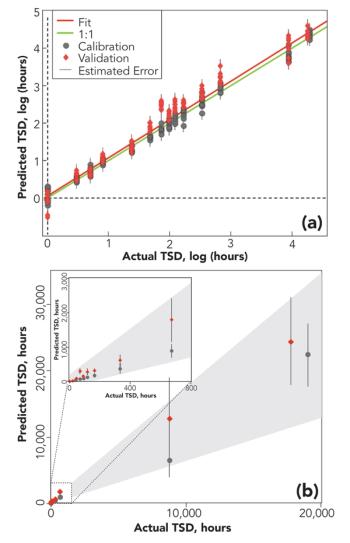
In celebration of Spectroscopy’s 35th Anniversary, leading experts discuss important issues and challenges in analytical spectroscopy.
Spectroscopy
In celebration of Spectroscopy’s 35th Anniversary, leading experts discuss important issues and challenges in analytical spectroscopy.

Spectroscopy
An important class of nanoparticles made of “upconversion” materials has found a central role in sensing. These nanoparticles are used to convert longer-wavelength photons into shorter-wavelength fluorescence to detect temperature, pH, gas molecules, ions, and trace biomolecules.
Spectroscopy
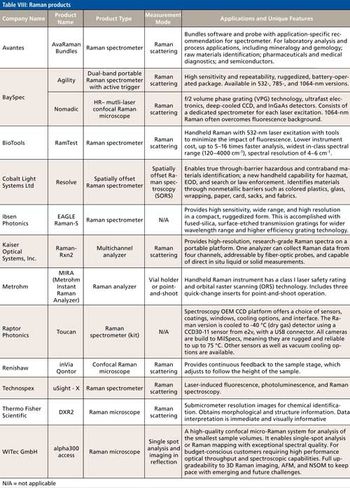
Our annual review of products introduced at Pittcon or during the previous year, broken down by the following categories: accessories, atomic spectroscopy, components, imaging, mass spectrometry, mid-IR, NIR, NMR, Raman, software, UV-vis, and X-ray.

Spectroscopy
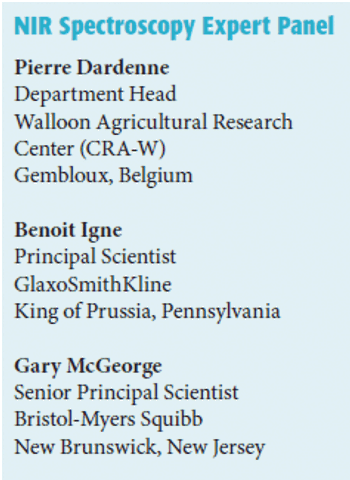
Near-infrared (NIR) spectroscopy offers quick analysis with no sample preparation for many fields, but it is particularly popular for process monitoring, materials science, and medical uses. NIR has also seen applications in agriculture from the very start of the technique, but new instrument capabilities are poised to offer even more to that field. Benoît Igne, a principal scientist at GlaxoSmithKline in King of Prussia, Pennsylvania, recently spoke to us about his work using NIR and areas where he thinks the technique has growth potential, specifically process analytical technology and agriculture.
Spectroscopy
In honor of Spectroscopy's celebration of 30 years covering the latest developments in materials analysis, we asked a panel of experts to assess the current state of the art of near-infrared (NIR) spectroscopy and try to predict how the technology will develop in the future.
Spectroscopy
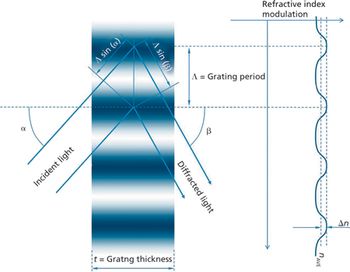
This article provides a basic overview of the capabilities of transmission gratings optimized for molecular spectroscopy.

An interview with Charles Wilkins, the winner of the 2013 American Chemical Society Division of Analytical Chemistry Award in Chemical Instrumentation, sponsored by the Dow Chemical Company.