


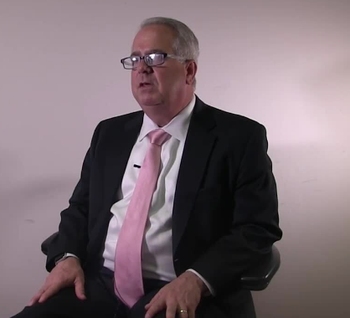
At the Eastern Analytical Symposium in Princeton, New Jersey, John McLean shared his thoughts about his career in mass spectrometry.
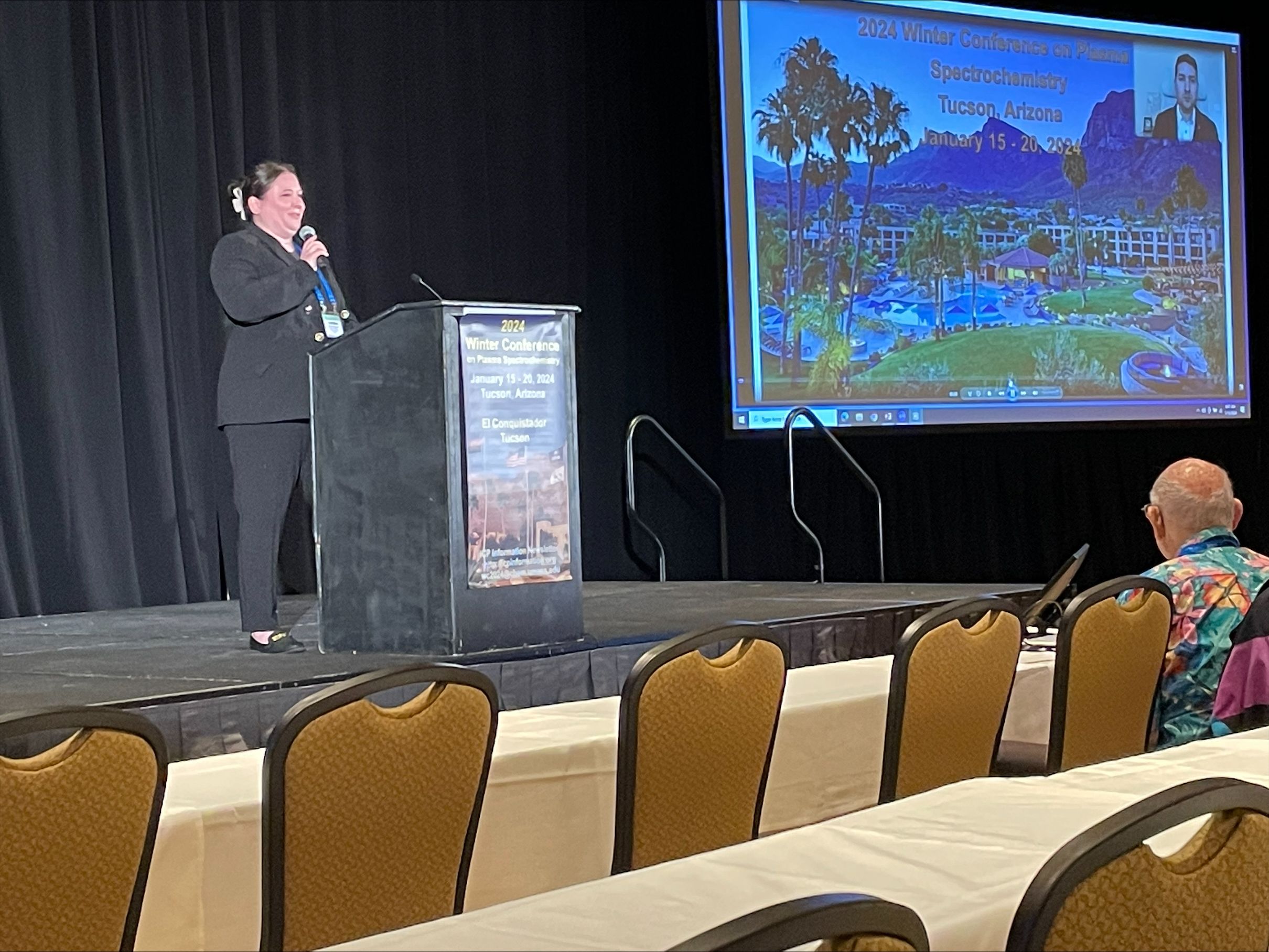
At the Eastern Analytical Symposium in Princeton, New Jersey, John McLean shared his thoughts about his career in mass spectrometry.

A type of calcite whose name comes from a resource-rich basin in northwest China was earmarked as a promising reference material for laser ablation inductively coupled plasma mass spectrometry (LA-ICP-MS) in situ U–Pb dating.

In a recent study, researchers used ICP-MS to learn new insights into ancient coinage and gold purification techniques are revealed through the analysis of platinum-group elements and gold in silver coins from various ancient civilizations.

Veronica Bradley's talk at SciX 2023 unveiled the transformative potential of single-particle mass spectrometry, enabling precise elemental and isotopic analysis at the particle level.

At SciX 2023 in Sparks, Nevada, Alexander Gundlach-Graham from Iowa State University delivered a groundbreaking talk on the origins of noise in single-particle ICP-TOF-MS data and its impact on particle analysis accuracy. His presentation unveiled a promising Monte Carlo simulation approach to better understand and mitigate signal variability in this cutting-edge analytical technique.

On Tuesday October 10th from 8:30–10:10 am, an oral session on inductively coupled plasma–time-of-flight–mass spectrometry (ICP-TOF-MS) will take place. We preview this session here.
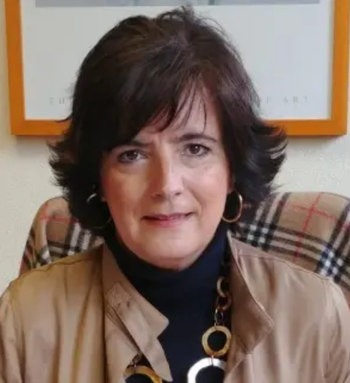
Spectroscopy sat down with 2023 Lester W. Strock Awardee Maria Montes-Bayon to talk about her research and what winning the Strock award means to her.

Earlier this year, Spectroscopy spoke to Maria Montes-Bayón of the Faculty of Chemistry at the University of Oviedo (Asturias, Spain) regarding her work with single cell inductively coupled plasma mass spectrometry (ICP-MS) to study the uptake and apoptotic status of nanoplatinum (IV) treated cells, specifically selenized yeast.

Manufacturing advanced electronic devices requires the production of high-quality semiconductors and integrated circuit chips. In this article, the authors explain how GC, when coupled with ICP-MS, enables the detection of elements that are essential in semiconductor production.

The bioaccumulation of heavy metals can lead to disastrous effects on the environment and human health. Here, ICP-MS was applied to study 48 different mushrooms collected at local markets in Madrid, Spain, showcasing its effectiveness at detecting heavy metals in edible fungi.

Spectroscopy spoke with Montes-Bayón of the University of Oviedo about her work with single cell ICP-MS to study the uptake and apoptotic status nanoplatinum treated cells.

Scientists used laser induced breakdown spectroscopy (LIBS) to analyze the safety of food.

Glow discharge (GD) spectroscopy is a well-established method in the elemental analysis of metals, coatings, and surface-modified materials.
A recent study tests new systems meant to better analyze components in the semiconductor industry and pave the way for better electronic devices.

A recent study used inductively coupled plasma–mass spectrometry (ICP-MS) to study the copper isotopic composition of ores of specimens excavated at three Copper and Early Bronze Age mining centers.
The ICP–MS mass spectrum contains useful additional information, but how to obtain that information is the question. Here, we provide the answer.

Researchers have developed a highly sensitive method for determining total chromium in seawater using ultrasound nebulization-dielectric barrier discharge (UNDBD) vapor generation coupled with inductively coupled plasma-mass spectrometry (ICP-MS).

A team of researchers has conducted a successful round-robin test using total reflection X-ray fluorescence (TXRF) to analyze the elemental composition of rat tissue samples. The preliminary results demonstrate the effectiveness of TXRF in accurately determining the elemental composition of mammalian tissue.

Scientists have developed an optimized method for the precise measurement of iodine-129 in decommissioning wastes using tandem ICP-MS/MS. Their study demonstrates the effectiveness of this approach in achieving low-level measurements with improved sensitivity for waste characterization and environmental monitoring.
New research has demonstrated a two-stage machine learning strategy to overcome bias in spICP-TOF-MS data and improve the classification of nanoparticles. The approach achieves high accuracy in identifying engineered, incidental, and natural nanoparticle types, providing a robust and efficient method for nanoparticle classification in complex samples.
Single-cell ICP-MS was used to study the uptake and apoptotic status of nanoplatinum (IV) treated cells, specifically selenized yeast, and the question of using commercialized reference material to validate single cell ICP-MS analysis is addressed.

A double spike analytical method has been developed for precise determination of mass-dependent tellurium (Te) isotope compositions in meteorites and terrestrial materials, enabling insights into sample geochemical characteristics and origins.

A team of French researchers has developed a high-precision method for measuring the isotopic composition of europium (Eu) using multi-collector inductively coupled plasma mass spectrometry (MC-ICP-MS), shedding details on the isotopic systematics of this element in geological samples.
A geoscience research team has developed a high-resolution method using femtosecond laser ablation multi-collector inductively coupled plasma mass spectrometry (fs-LA-MC-ICP-MS) to determine titanium isotopes in rutiles, offering valuable insights into geological processes.

A new study details the successful application of in situ LA-ICP-MS/MS Lu–Hf dating technique to Paleozoic-Precambrian xenotime, apatite and garnet. The study provides a more effective method for accurate age determination of samples with complex temporal records or lack of traditional U-rich accessory minerals.