ICP-MS

Latest News


Special Issues

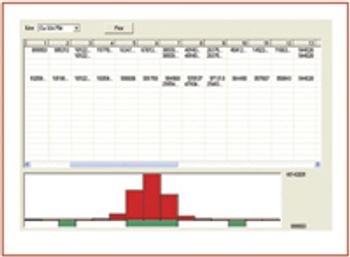
Interactive dedicated tools have been developed to facilitate the use of multiline analysis in inductively coupled plasma–atomic emission spectroscopy (ICP-AES) with emphases on multiline selection and on statistics for rejection of possible outliers. The aim is to take full benefit of the available information when using a charge-coupled device (CCD) detector–based instrument and to enhance the accuracy of the results. Determination of Cu in steel will be used to illustrate the potential of the tools.

Special Issues

The use of fertilizers is important to increase crop yields in soils that are being used for agricultural purposes. However, in order to maximize plant growth, it is also absolutely essential to know how the crops are using the nutrients in the soil. This process is commonly referred to as a fertility management program, where many soil samples are taken over a predefined area of the land and analyzed for various components such as pH, organic matter, and trace element nutrients. This article describes how a soil testing laboratory in the midwest has developed a method to analyze up to 3500 soil samples per day for 11 trace metals, using inductively coupled plasma–optical emission spectroscopy. It will focus on the soil sampling procedure together with the sample preparation requirements for this high workload environment. The instrumental analytical procedure will be described in greater detail, particularly how the measurement protocol and sampling process are optimized to cope with such extreme..

Special Issues

The analysis of edible oils and fats by inductively coupled plasma–optical emission spectroscopy (ICP-OES) utilizing direct injection after dilution with kerosene is described. Sample preparation was performed according to EN ISO 661 (1) and ISO 10540-3 (2). The accuracy was investigated using the AOCS reference sample, "Trace Metals in Soybean Oil" (3) and by spike recovery measurements using commercial sunflower oil. The analysis requirements for sensitivity, precision, and accuracy were met. This article includes line selection, detection limits, and accuracy studies.

Special Issues

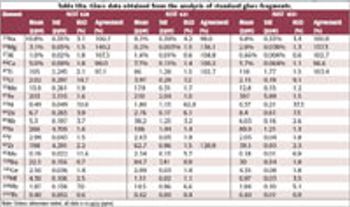
Although inductively coupled plasma–mass spectrometry (ICP-MS) has rapidly attained acceptance as the choice in trace metal analysis, most commercially available instruments are equipped with quadrupole-based mass analyzers. Quadrupole mass spectrometers have been available commercially for ICP since the early 1980s. Modifications and advances in these types of instruments predominantly have been in the sample introduction and ion optic areas, leaving the quadrupole mass spectrometer untouched.

Special Issues

Fertilizers are used to provide major plant nutrients (N, P, and K), secondary plant nutrients (Ca, S, and Mg), and micronutrients such as B, Mn, Fe, Cu, Zn, Mo, and Se. Accurate determination of the composition of fertilizers is essential so that the correct dose can be applied to the soil. An insufficient application of a fertilizer can result in poor crop yield, and an excessive application can result in environmental damage such as eutrophication by dissolved phosphates and nitrates entering water courses or land contamination from nonnutrient elements within the fertilizers. Inductively coupled plasma (ICP) spectroscopy offers cost-effective analysis of fertilizers because of its multielement capabilities. Complex torch designs and sparging systems have been employed in the past to determine nitrogen by ICP spectroscopy, but these additions to ICP instrumentation are costly and prolong analysis time.

i4-197396-1408689001421.gif

Special Issues

Elemental analysis in biological samples generally is achieved using flame atomic absorption spectrometry (AAS) and graphite furnace AAS (GFAAS). Flame AAS is fast, easy-to-use, and economical, but insufficiently sensitive for assays such as Se in serum and Pb/Cd in whole blood. These measurements require use of the more sensitive GFAAS. Inductively coupled plasma-mass spectrometry (ICP-MS), despite its low detection limit capabilities and wide elemental range, has had relatively little impact to date on biomedical analysis because of the popularly held conception that it is complex to use and expensive. In recent years, the instrumentation has been simplified and purchase, running, and maintenance costs have fallen. As a result, clinicians are becoming more interested in ICP-MS, although the perception that it is still much more expensive than GFAAS remains. This article provides a comparison of the costs of ICP-MS and GFAAS for biomedical sample analysis and illustrates the performance of ICP-MS for..

i4-197659-1408688748687.jpg

Special Issues

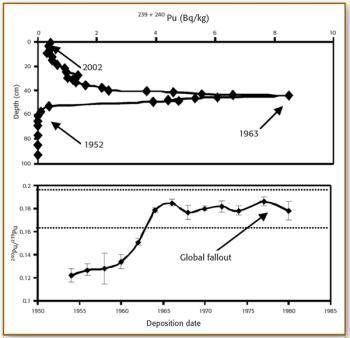
Plutonium is distributed globally in the Earth's surface environment as a result of atmospheric weapons tests, nuclear accidents, and nuclear fuel reprocessing. Mass spectrometry (MS), in particular, sector field ICP-MS, now is used widely to determine Pu activities and isotope ratios; 240Pu/239 is very useful in determining Pu origin. Determination of Pu by ICP-MS involves dissolution, column separation, and the MS determination; detection limits are 0.1–10 fg for each isotope. Applications of the determination of sector field ICP-MS to studies of environmental Pu include discerning sources of contamination near the Chernobyl reactor, and chronology of recent aquatic sediments.

i1-197400-1408688983100.jpg

Special Issues

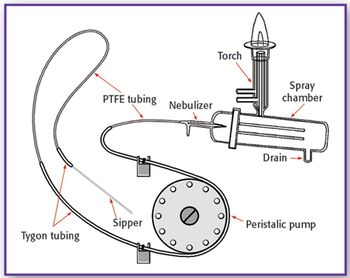
Sample introduction can be a significant source of random and systematic error in the measurement of samples by inductively coupled plasma optical emission spectroscopy (ICP-OES) and ICP mass spectrometry (ICP-MS) systems.The considerations made in selecting a liquid introduction system include dissolved solids content, suspended solids presence, presence of hydrofluoric acid or caustic, detection limit requirements, precision requirements, sample load requirements, sample size limitations, and operating budget. The analyst is left with the task of choosing the best introduction components.This article discusses the key components of a typical liquid sample introduction system for inductively coupled plasma spectroscopy, and offers troubleshooting tips for problems commonly encountered by practitioners.

i8_t-197399-1416914342566.jpg

Special Issues

As the demand for accurate soil analysis increases, agriculturalists will need faster, less expensive analytical methods to determine the type and amount of fertilizer required for optimum crop growth. Today, inductively coupled plasma–optical emission spectroscopy (ICP-OES) is the most commonly employed technique for the determination of nutrient elements in fertilizers, while combustion analysis is used for nitrogen. Until recently, ICP-OES could not achieve the accuracy and precision necessary to measure nitrogen due to the elevated background effects caused by atmospheric nitrogen, as well as the inherent stability limitations associated with older instrument designs. This paper describes a new ICP-OES configuration and sample introduction system designed to greatly reduce nitrogen backgrounds and thereby facilitate nitrogen determinations by ICP-OES. Furthermore, the nitrogen determinations are carried out concurrently with the other nutrient elements previously reported by ICP-OES without..

Spectroscopy

This article discusses the key components of a typical liquid sample introduction system for inductively coupled plasma spectroscopy, and offers troubleshooting tips for problems commonly encountered by practitioners.

Spectroscopy

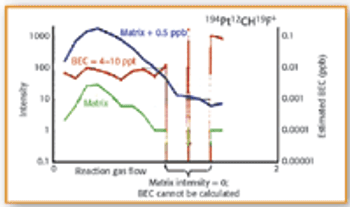
This study investigates the applicability of a quadrupole-based ICP-MS fitted with a dynamic reaction cell (DRC) to analyze high-purity phosphoric and sulfuric acid used in the semiconductor industry. It compares the DRC approach with traditional ICP-MS background reduction techniques to compensate for phosphorus- and sulfur-based interferences and presents data that suggests that the DRC technology can reach the next generation of semiconductor purity levels for these chemicals.