




ICP-MS
Latest News
Advertisement
Latest Videos





Shorts

1:19
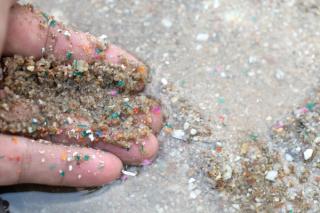
Analyzing Microplastics and Titanium Oxide Nanoparticles
a month ago
by
David Clases

1:38
Tutorial Tuesday: Improving the Accuracy of Raman and ICP-MS-TOF Measurements
a month ago
by
David Clases
0:35
Best of the Week: The Utility of ICP-MS-Based Techniques, Lithium-Ion Battery Anodes, Reflecting on Spring SciX
4 months ago
by
Will Wetzel
Advertisement
More News
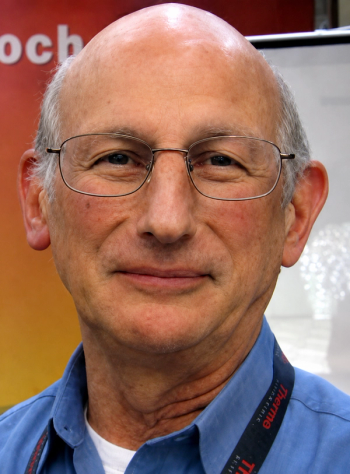
Ramon M. Barnes, PhD, Professor Emeritus of Chemistry at UMass Amherst and a pioneering figure in ICP spectrochemistry, has died at 86. He founded the Winter Conference on Plasma Spectrochemistry and edited the ICP Information Newsletter for decades.

Atomic spectroscopy is making strides in fields such as forensics and environmental analysis. This Q&A explores how atomic spectroscopy-based techniques are being used and what the future looks like for these techniques.

An upcoming poster session at the American Chemical Society (ACS) Fall 2026 Meeting will explore how spectroscopy can be used to identify the origin of lithium in oilfield wastewater.
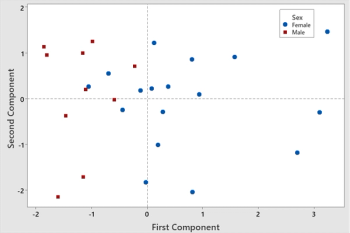
This peer-reviewed proof-of-concept study demonstrates that electrothermal vaporization inductively coupled plasma optical emission spectrometry combined with multivariate analysis can accurately classify the sex of individuals from both dyed and undyed hair samples, highlighting its potential as a green, forensic tool for human sex determination.
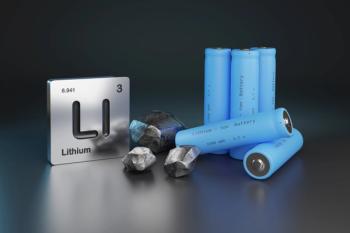
Spectroscopy is playing a key role in analyzing materials in lithium-ion batteries.
This article presents a strategic six-stage product development roadmap for atomic spectroscopy instruments, integrating Strategic Goal Setting with RISE prioritization, Kano analysis, and Three Horizons innovation. Emphasis is placed on beta validation to ensure inductively coupled plasma mass spectrometry( ICP-MS), inductively coupled plasma optical emission spectroscopy (ICP-OES), and atomic absorption spectroscopy (AAS) systems achieve technical excellence, regulatory compliance, market success, and long-term leadership in trace elemental analysis.
This first installment of Research Profiles in Spectroscopy Series features The University of California, Santa Barbara (UCSB) Petrochronology Research Group and its advances in laser ablation ICP-MS, isotope geochemistry, and petrochronology. Led by John Cottle, Andrew Kylander-Clark, and Morgan Adamson, the group has developed innovative spectroscopic methods that combine high-resolution isotopic dating with trace-element analysis to better understand petrochronology processes, including mountain building, crustal evolution, and complex geological processes.
This overview article discusses how spectroscopic techniques are being used to improve cannabis analysis.
The 2024-2026 period has been marked by rapid methodological innovation and critical reassessment of established atomic spectrometric techniques in environmental analysis. Advances in inductively coupled plasma–tandem mass spectrometry (ICP-MS/MS) reaction-cell chemistry, matrix-effect correction in X-ray fluorescence (XRF), microwave-sustained plasma sources, and green preconcentration strategies have expanded analytical capabilities for soils, waters, sediments, plants, and atmospheric particulates. Simultaneously, comparative evaluations of inductively coupled plasma–mass spectrometry (ICP-MS), inductively coupled plasma–optical emission spectrometry (ICP-OES), and XRF have sharpened our understanding of detection limits, bias, and field applicability. This brief review highlights 10 of the most influential publications shaping environmental applications of XRF, ICP-MS, and ICP-OES during 2024–2026. Each paper is discussed with emphasis on its technical contributions and broader impact on environmental monitoring, regulatory science, and instrumental development.

The Top 10 Most Influential Applications of Vibrational Spectroscopy in Environmental Analysis (2024-2026)
Published: | Updated:
Between 2024 and 2026, environmental applications of vibrational spectroscopy advanced rapidly through innovations in multimodal instrumentation (combining 2 or more distinct measurement techniques), spectral data fusion, portable sensing technologies, and the integration of chemometrics and machine learning (ML). Near-infrared (NIR), Fourier transform infrared (FTIR), and Raman spectroscopy were increasingly deployed to address pressing environmental challenges such as microplastics contamination, soil organic matter quantification, indoor air quality monitoring, and pesticide residue detection in food and ecological systems. This article reviews 10 influential peer-reviewed papers published during this period, providing expanded narrative discussions of their technical contributions and explaining why each paper represents a significant impact on the field.

How are ICP-MS and ICP-OES revealing heavy-metal trends in pet food? In this short tutorial, we explain how these techniques have been tracking pet food trends, and what owners can do in response to these trends.
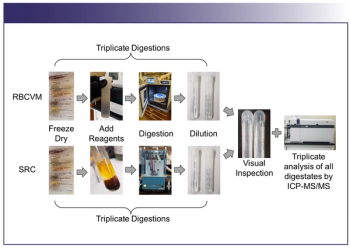
The primary goal of this study was to evaluate two microwave digestion systems for the acid decomposition of biological tissues: (1) a single reaction chamber (SRC) system and (2) a rotor-based, closed vessel microwave (RBCVM) system.
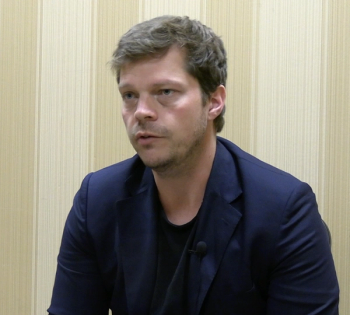
In this interview clip, David Clasas of the University of Graz discusses the trapping mechanism of the OF2i and how it improves downstream Raman and ICP-TOFMS measurements and also highlights the multimodal approach his team used to improve microplastic analysis.

In this video segment, Sarah Theiner dives into the research that she conducted at the University of Vienna, which focused on how chemoresistance affects drug distribution in the tumor microenvironment.
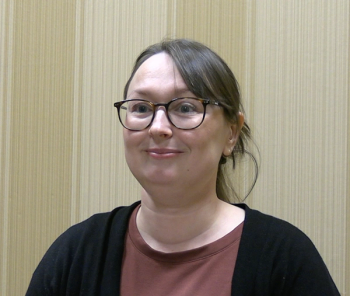
In this video segment, Anika Retzmann explains how developing fully automated analyte purification procedures helps improve data quality and reproducibility compared to traditional approaches.
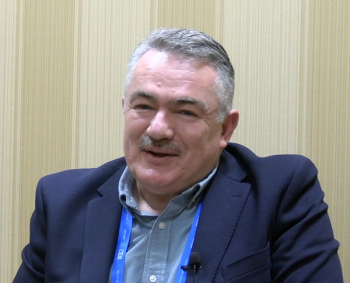
At the Winter Conference on Plasma Spectrochemistry, Spiros Pergantis, an analytical chemist and Professor of Analytical Chemistry at the University of Crete, sat down with Spectroscopy to discuss his group’s current research endeavors.
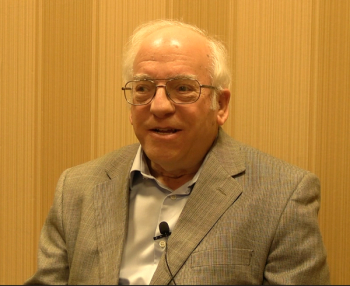
In this video clip, discover insights from Alexander Scheeline's talk on transient discharges at the Winter Conference on Plasma Spectrochemistry.
Patrick Parsons of the New York State Department of Health previews his upcoming talk at the Winter Conference on Plasma Spectrochemistry.

A recent study demonstrated that deep learning combined with ICP spectroscopy can accurately and affordably predict multiple soil properties.

This article provides a clear refresher on key spectroscopy techniques—IR/NIR, Raman, UV–Vis, XPS/XAS, NMR, ICP-MS, and LIBS—and their applications in the energy industry, from batteries and solar panels to fuel production and emissions monitoring.
Leading experts from Covalent Metrology, PerkinElmer, IAS, and Linde identify the top efficiency and purity challenges facing semiconductor manufacturers and reveal how advances in spectroscopy and automation are reshaping fabrication, contamination control, and process precision across the industry.

Top articles published this week include an interview with our Emerging Leader in Molecular Spectroscopy award winner Lingyan Shi, a mini-tutorial highlighting practical workflows and innovative applications, and an inside look at single-particle ICP-TOF-MS.

James Dudley Winefordner was a preeminent figure in analytical chemistry whose contributions to spectrochemical method development, instrumentation, and mentoring shaped generations of scientists.
Elemental analysis using ICP-OES and ICP-MS is essential across the lithium-ion battery lifecycle—ensuring safety, performance, traceability, and sustainable recycling from mining to manufacturing and end-of-life recovery.
This article discusses pre-analytical best practices, recent innovations in MW design, and other productivity tools to consider throughout the workflow, explaining how these factors collectively enhance analytical accuracy and data integrity.
Advertisement
Advertisement
Trending on Spectroscopy Online
1
Beyond the Fingerprint: AI, Coherent Detection, and Miniaturization Are Redefining Raman Spectroscopy
2
What is SpecAcademy and What Need Does It Fill?
3
The Right Tool for the Job: Why Infrared Spectroscopy Deserves a Second Look
4
Boston Electronics to Distribute PremierPhotonics InGaAs Photodetectors in North America
5