
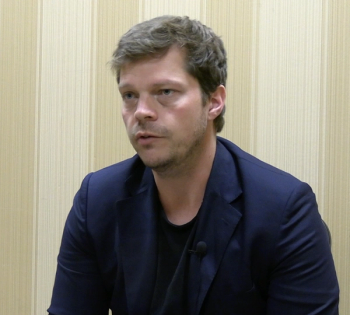
In the final part of our conversation with David Clases at the Winter Conference on Plasma Spectrochemistry, he reacts to winning both awards and offers his perspective on the key spectroscopic trends this year.
In the final part of our conversation with David Clases at the Winter Conference on Plasma Spectrochemistry, he reacts to winning both awards and offers his perspective on the key spectroscopic trends this year.
In this “Pathways in Spectroscopy” episode, Mercedes Bertotto, who is the Founder of Vibralytics, talks about the necessary skills spectroscopists need when starting their own business, and what challenges they will need to face head-on during this process.

In this video segment, John Margeson, a Product Manager at Thermo Fisher Scientific’s Tewskbury headquarters, discusses the updated software capabilities in the company’s new line of handheld XRF spectrometers.
In this episode, Mercedes Bertotto, who is the Founder of Vibralytics, discusses her background in spectroscopy, highlighting how her experience working in a national reference laboratory in Argentina led to her next opportunity to work with chemometrics and spectral sensing in the Netherlands.
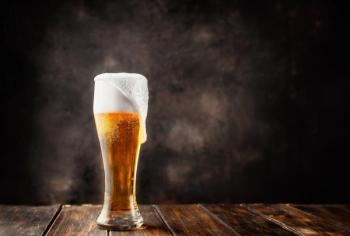
A recent study demonstrated that Fourier transform infrared (FT-IR) spectroscopy combined with chemometric modeling can accurately quantify ethanol in beer.

A study published in Food Control shows that near-infrared spectroscopy can accurately and non-destructively authenticate the feeding regime of purebred Iberian pigs in vivo.

This dynamic video from the Winter Conference on Plasma Spectrochemistry reveal 2026 trends in plasma MS, imaging, and clinical analysis.
Part 2 of our conversation with John Margeson focuses on how Thermo Scientific’s Niton handheld XRF analyzers are engineered to meet the demanding needs of high-volume scrap recycling.
In this video, we preview an upcoming two-part episode of Pathways in Spectroscopy.
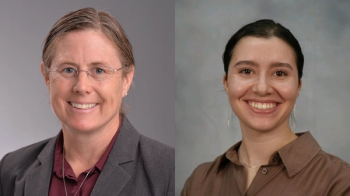
In this interview segment, Kelly Elkins and Jaden Force of Towson University focus to the challenges forensic scientists face, including how to position themselves for a career in this field.

A study from the İzmir Institute of Technology published in Food Chemistry shows that combining FT-IR spectroscopy with chemometric modeling enables rapid, non-invasive screening of iron supplements and protein–iron complexes for their ability to restore cellular iron status in iron deficiency anemia models.
In a recent interview, we sat down with Kelly Elkins, a Professor of Chemistry at Towson University and Jaden Force, a Graduate Research Assistant at Towson University, to talk about the state of forensics and how they apply spectroscopic techniques in their research.

Researchers at the University of Massachusetts Amherst demonstrated that X-ray fluorescence spectroscopy combined with chemometric modeling can provide a rapid, minimally destructive, and accurate alternative to traditional methods for routine arsenic quantification in rice and rice-based foods.

A new review article explores how integrating artificial intelligence (AI) with established analytical techniques such as spectroscopy, chromatography, mass spectrometry (MS), and sensors is significantly improving the efficiency, accuracy, and scope of food chemistry research and food quality assessment.
Discover insights from Tom Spudich on forensic science advancements and challenges as AAFS 2026 approaches in New Orleans.
In Part III of our conversation with David Clases, we discuss how optical trapping better enables polymer identification via Raman spectroscopy, and where ICP-MS research is heading in the future.
In an exclusive interview with Spectroscopy, John Margeson, a Product Manager at Thermo Fisher Scientific in the company’s Tewksbury headquarters, discusses the current state of handheld X-ray fluorescence (XRF) instrumentation.
Part II of our conversation with David Clases focused on his proof-of-concept analysis of microplastic and TiO₂ nanoparticles, and the new insights that emerged from simultaneously accessing size, molecular identity, and elemental composition at the single-particle level.

In this video segment, Sarah Theiner explains why using LA-ICP-TOF-MS was the ideal technique for this research compared to more conventional methods. She also touches upon how the findings from her study could inform the design of future chemotherapies and combination treatments.
In this interview clip, David Clasas of the University of Graz discusses the trapping mechanism of the OF2i and how it improves downstream Raman and ICP-TOFMS measurements and also highlights the multimodal approach his team used to improve microplastic analysis.
In the final part of our conversation with Ken Marcus, he discusses how external acquisition systems enhance isotopic precision and what spectroscopic trends experts should be paying attention to in 2026.
In this video segment, Alex Scheeline of the University of Illinois Urbana-Champaign discusses how hyphenated approaches are changing the nature of speciation analysis.
In this “Pathways in Spectroscopy” episode, Sarah Theiner discusses what her career transition from research to sales was like, and how her experience at the University of Vienna prepared her for the rigors of her new role at Nu Instruments.
In this video segment, Sarah Theiner dives into the research that she conducted at the University of Vienna, which focused on how chemoresistance affects drug distribution in the tumor microenvironment.
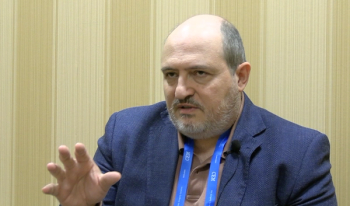
In the final part of our conversation with Martin Resano, he discusses how the use of partial least squares (PLS) regression improves the quality of the isotopic analysis data.
In this interview clip, we turn the focus to the advent of artificial intelligence (AI) and machine learning (ML) in spectroscopy, and Alex Scheeline discusses how AI and ML will enhance SIBS and LIBS calibration.
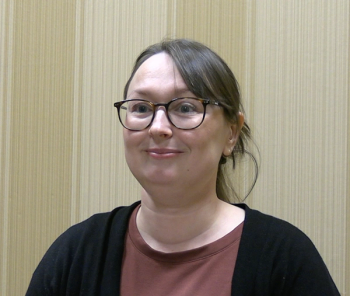
In the below video segment, we shifted our focus to the future, with Anika Retzmann of the University of Calgary giving her thoughts about what emerging applications will benefit the most from high-precision metal isotope analysis of biological systems.
In the second part of our conversation with Ken Marcus, he discusses the parameters that are most influential in enhancing Nd isotope ratio measurements, and the implications of monitoring oxide species rather than atomic ions for isotope ratio analysis, and the benefits and challenges of this approach.
In this video segment, Martin Resano of the University of Zaragoza talks about the challenges and advancements in obtaining isotopic information using atomic spectroscopy.
In the second part of our interview, Alex Scheeline discuss the current trends in SIBS and LIBS, and some of his observations from reading the recent literature on the subject.