

The study reveals that infrared and Raman spectroscopy can accurately identify dye sources and detect light-induced chemical degradation in culturally significant Māori harakeke fibers.
The study reveals that infrared and Raman spectroscopy can accurately identify dye sources and detect light-induced chemical degradation in culturally significant Māori harakeke fibers.

Damodaran Krishnan Achary explains how experimental NMR and computational chemistry work together to reveal the structure, dynamics, and reaction mechanisms of complex systems like ionic liquids.

Damodaran Krishnan Achary of University of Pittsburgh highlights how modern NMR education is shifting toward real-world samples and interdisciplinary applications, reflecting the needs of industry and materials science researchers.

The University of Pittsburgh professor discusses how diffusion, relaxation, multinuclear, and ultra-high-resolution NMR experiments can be strategically applied to probe structure, dynamics, and interactions in complex chemical systems.

Damodaran Krishnan Achary discusses how advanced NMR techniques reveal the unique structure, cation–anion interactions, and dynamic behavior of ionic liquids, providing insights that other analytical methods cannot capture.

Damodaran Krishnan Achary discusses how modern NMR spectroscopy enables interdisciplinary research, from biomolecular studies to solid-state materials, and emphasizes the importance of staying current with advanced techniques and experimental strategies.

This brief article highlights the key takeaways from studying the 3I/ATLAS comet and what it means for space exploration moving forward.
A recent study used operando UV-vis spectroscopy to learn more about metal–sulfur redox reactions.
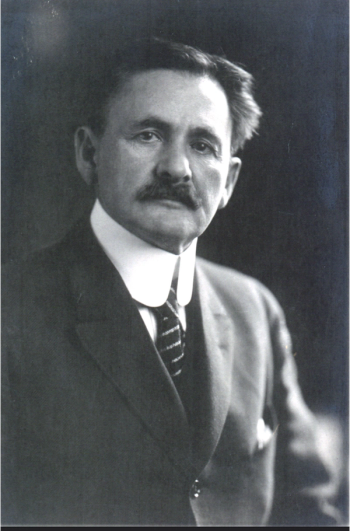
This video in the Icons of Spectroscopy series highlights the life and scientific achievements of Albert A. Michelson, the first American Nobel Laureate in the sciences. It traces his journey from his early years in the American West and his education at the U.S. Naval Academy to his groundbreaking experiments measuring the speed of light. We explore his invention of the Michelson interferometer, its role in the famous Michelson–Morley experiment, and its lasting influence on modern optical and spectroscopic methods, including astronomy.

A recent study published in the Journal of Chemometrics explored how chemometric modeling can be used to examine ingredient interactions in processed foods.

A recent study presented a new AI model that can be used to improve patient outcomes for breast cancer.

In a recent study, a team of researchers developed a three-dimensional (3D) spectroscopic map of a distant exoplanet’s atmosphere, revealing surprising details about its structure and chemistry.

This compilation of articles shows how spectroscopy is being used to ensure honey authentication.

Recently, a team of researchers investigated a new approach for manipulating electron motion at the femtosecond timescale.

In this edition of “Inside the Laboratory,” we profile the Schultz Laboratory at The Ohio State University in Columbus, Ohio, speaking with Zac Schultz, Spencer Witte, Nishadi Nadeeshani, and Renee Romano about their work.

Discover the latest advancements in medical devices and artificial intelligence, focusing on the transformative impact of IoMT devices in healthcare.
In this final interview segment with Lingyan Shi, she discusses the challenges of developing multimodal metabolic nanoscopy systems, and where these systems could be applied in the future.
In the second part of a three-part interview, Lingyan Shi recaps the award technical session that she chaired at the SciX Conference, highlighting the speakers she invited and what they discussed.
In this interview segment, Shi recaps her talk that she delivered at the SciX Conference and the four major technologies that she and her team developed over the past few years at the University of California, San Diego.
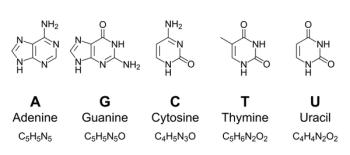
In a recent study, a team of researchers from Peking University and the National Key Laboratory of Advanced Micro and Nano Manufacture Technology have proposed a new method for identifying DNA nucleobases using a fusion of terahertz time-domain spectroscopy (THz-TDS) and advanced deep learning techniques.

In this video segment, Fay Nicolson discusses her career trajectory, from her time in graduate school to her time as a postdoctoral candidate to her time as an independent researcher.

In this interview segment, Karl Booksh dives deeper into a new technique called conformal prediction, and how his group has been applying it in their research.
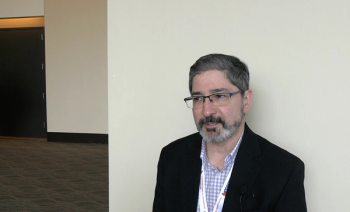
In the second and final part of our interview with Rob Lascola, he addresses the main challenges in achieving accurate acidity measurements using Raman spectroscopy in complex, highly absorptive systems, as well as explains what he has learned about dissolution mechanisms, and how these insights can influence future nuclear processing strategies.

In this interview segment, Reddy discusses how O-PTIR combined with mid-infrared frequency comb technologies enhances both resolution and throughput in tissue analysis and how this integration address the limitations of conventional MIRSI approaches in clinical settings.
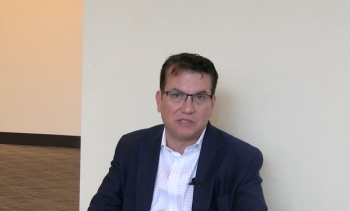
In this interview segment, Rafael Davalos discusses contactless dielectrophoresis, highlighting the utility of this technique not just in cancer research, but other application areas as well.
In this interview segment, Rob Lascola discusses how Raman spectroscopy complements other techniques in fuel dissolution and solvent extraction and what Raman can detect in off-gas streams.
In this video segment, Karl Booksh of the University of Delaware explains how his study highlighted a major improvement in classification accuracy using stacked models for differentiating exotic hardwood species.

In this segment, Bell addresses the key barriers that are preventing SERS from being more widely adopted in complex environments.

Sponsored
In this final episode, panelists discuss how advanced analytical techniques, combined with machine learning and automation, are transforming testing, recycling, and quality control for both lithium-ion and next-generation batteries while tackling emerging analytical challenges throughout the value chain.
Sponsored
This episode provides expert insights into safely transforming shredded lithium-ion batteries into reusable metals using ICP-OES.