
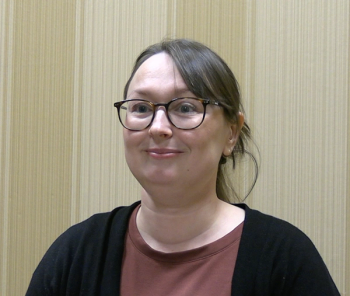
In this interview clip, Anika Retzmann of the University of Calgary dives more deeply into the utility of multi-collector microwave inductively coupled atmospheric-pressure plasma mass spectrometry (MC-MICAP-MS) for isotopic analysis.
In this interview clip, Anika Retzmann of the University of Calgary dives more deeply into the utility of multi-collector microwave inductively coupled atmospheric-pressure plasma mass spectrometry (MC-MICAP-MS) for isotopic analysis.

Spectroscopy is excited to announce the launch of “Pathways in Spectroscopy,” a new video series dedicated to showcasing the experiences, insights, and career journeys of emerging leaders and young scientists across the spectroscopy community.
In the final part of our conversation with Spiros Pergantis, an analytical chemist and Professor of Analytical Chemistry at the University of Crete, he discusses some of the top trends that spectroscopists should be paying attention to in 2026.
In this video segment, Anika Retzmann explains how developing fully automated analyte purification procedures helps improve data quality and reproducibility compared to traditional approaches.
Sponsored
Why do industry leaders attend the Gulf Coast Conference (GCC)? Jean-François Borny, Global Analytical Services Senior Manager at Lummus Technology and Technical Chair of GCC, shares his perspective.
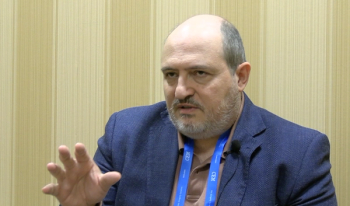
In this edition of “Inside the Laboratory,” Martin Resano, a Coordinator of the Rapid Analysis Methods with Spectroscopic Techniques (MARTE) group and as part of the Aragon Institute for Engineering Research (I3A) at the University of Zaragoza, discusses how compressed sensing spectroscopic techniques are used in his laboratory.
At the Winter Conference on Plasma Spectrochemistry, Spiros Pergantis, an analytical chemist and Professor of Analytical Chemistry at the University of Crete, sat down with Spectroscopy to discuss his group’s current research endeavors.
In this video segment, Sarah Theiner of Nu Instruments reflects on winning the Emerging Leader in Atomic Spectroscopy Award, explaining what winning the award means to her.
In the first part of our interview with Ken Marcus of Clemson University, he discusses what he enjoys about the Winter Conference on Plasma Spectrochemistry. Marcus also dives into his research and how the instrumentation his group uses allows for better separation of isobars without the need for chemical intervention, enhancing the accuracy of mass spectrometry (MS) readings.
In this video segment, Spiros Pergantis of the University of Crete discusses the supportive and tightly-knit nature of the spectroscopy community, which was evident at the Winter Conference on Plasma Spectrochemistry.
Hunter Andrews, an R&D Staff Scientist at Oak Ridge National Laboratory, discusses how other analytical approaches, such as mass spectrometry (MS), chemometrics, and electrochemistry, can help contribute to building better monitoring systems.
Patrick Parsons of the New York State Department of Health reflects on the ongoing challenges and future opportunities where X-ray fluorescence (XRF) instruments can be used to test food matrices.
In this video segment, Anika Retzmann of the University of Calgary discusses how analyzing elemental and stable metal isotopic compositions of biological systems help answer fundamentally different research questions across fields such as biomedicine and environmental science.
In this video clip, discover insights from Alexander Scheeline's talk on transient discharges at the Winter Conference on Plasma Spectrochemistry.
Patrick Parsons of the New York State Department of Health discusses how X-ray fluorescence (XRF) instruments can be used in food safety monitoring applications.
Gerardo Gamez, a Professor and Graduate Advisor at Texas Tech University, explains how ambient ionization techniques can improve polymer characterization.
Hunter Andrews, an R&D Staff Scientist at Oak Ridge National Laboratory, discusses the key role that laser-induced breakdown spectroscopy (LIBS) plays in his research.
Gerardo Gamez, a Professor and Graduate Advisor at Texas Tech University, discusses the work that his laboratory at Texas Tech University performs using compressed sensing spectroscopy techniques.
Patrick Parsons of the New York State Department of Health discusses the results of his recent study comparing different X-ray fluorescence (XRF) analyzers.
Gerardo Gamez, a Professor and Graduate Advisor at Texas Tech University, provides an overview about what glow discharge optical emission spectroscopy (GDOES) is and why it’s a useful technique for elemental mapping.
Hunter Andrews, an R&D Staff Scientist at Oak Ridge National Laboratory, discusses the work that he does in his laboratory.
Patrick Parsons of the New York State Department of Health previews his upcoming talk at the Winter Conference on Plasma Spectrochemistry.
Hunter Andrews, an R&D Staff Scientist at Oak Ridge National Laboratory, discusses what he is looking forward to at the Winter Conference on Plasma Spectrochemistry.
Gerardo Gamez, a Professor and Graduate Advisor at Texas Tech University, previews his upcoming talk at the Winter Conference on Plasma Spectrochemistry.
At the Winter Conference on Plasma Spectrochemistry, Hunter Andrews, an R&D Staff Scientist at Oak Ridge National Laboratory, will be giving a talk about using laser-induced breakdown spectroscopy (LIBS) for molten salt reactor monitoring. Andrews provides a preview of his upcoming talk here.

Experts comment on the biggest trends in spectroscopy heading into 2026, and what this means for science and technology.

This feature reflects on the interviews Spectroscopy magazine conducted in 2025.
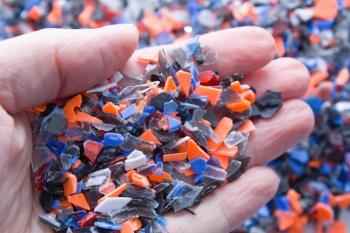
A study published in the Journal of Raman Spectroscopy reports the detection of polyethylene, PET, and nylon microplastics in Greece’s remote Dragon Lake on Mt. Tymfi.

The study reveals that leaf spectroscopy far outperforms traditional leaf traits in predicting forest leaf dark respiration across diverse ecosystems, offering a more accurate and scalable approach for improving carbon cycle models.
A recent study investigated how structural phase changes inside sensing materials dynamically influence performance during gas exposure.