




Analytical Instrumentation
Latest News
Advertisement
Latest Videos


Shorts
1:04
Automation Reduces Expertise In Spectroscopic Instrumentation
3 days ago
by
James de Haseth
Advertisement
More News

The 2026 SciX Conference will offer an assortment of short courses during the conference week in Sparks, Nevada. We highlight these courses below.

An upcoming talk at the 2026 SciX Conference will focus on nanoplastic analysis to distinguish between plastic and non-plastic particles.

John Philip Walters, Ph.D. (1938-2026), was an analytical chemist who spent 17 years researching the physics of spark-discharge emission spectroscopy at the University of Wisconsin-Madison before moving to St. Olaf College in 1982, where he became best known for pioneering a role-playing undergraduate laboratory model that had students take on professional roles to mirror real analytical-chemistry work. His 1991 three-part series on the approach in Analytical Chemistry earned him the ACS Division of Analytical Chemistry's J. Calvin Giddings Award in 1993, and he continued extending his understand-the-system teaching philosophy into computer-controlled instrumentation well into his later career.
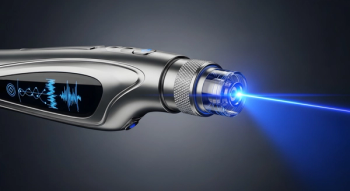
Raman spectroscopy is shedding its bulky, benchtop reputation as chip-scale spectrometers, tip-enhanced probes, and AI-native detectors push the technique into pockets, production lines, and single molecules. The result is an instrument category being rebuilt from the optics up, faster, smaller, deeper, and smarter than the Raman systems of even five years ago.

A History of The James L. Waters Symposium: Innovators, Instrumentation, and Applications, 1989-2026
A history of the James L. Waters Symposium at Pittcon, from its 1987 origins and its founder, instrument entrepreneur James Logan Waters, through thirty-six installments of speakers spanning gas chromatography to generative AI.

Atomic spectroscopy has quietly moved past splitting light and counting ions toward instruments that track a single nanoparticle, fuse a laser pulse with an isotope-ratio mass spectrometer, and correct their own interferences with artificial intelligence in real time. The result is a new class of ICP-MS, LIBS, and X-ray fluorescence (XRF) platforms that are turning what used to be a benchtop-only science into field-ready, self-optimizing analytical intelligence.
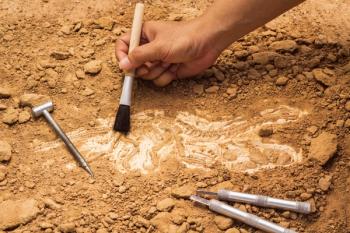
A handheld infrared (IR) scanner paired with an artificial neural network (ANN) can identify human versus animal bone with over 96% accuracy.
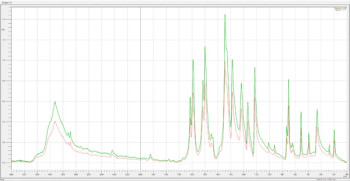
Fourier-transform infrared spectroscopy, a technique built on a scanning mirror invented before the moon landing, is quietly being rebuilt from the ground up. Light combs, photothermal probes, and chip-scale photonics are pushing infrared analysis past resolution and speed limits that stood for six decades.

Environmental analysis is a growing area of study, and single-particle inductively coupled plasma–mass spectrometry (spICP-MS) is one of the techniques contributing to this growth.

Can spectroscopy make real-time monitoring in nuclear and radioisotope facilities faster and safer?

HORIBA Launches New Partica Particle Size and Shape Analyzer
Published: | Updated:
HORIBA has launched Partica, a laser diffraction and dynamic image analysis particle size and shape analyzer for advanced materials research and quality control.
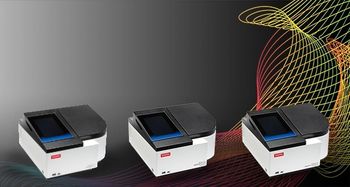
The suite has three configurations to help laboratories standardize workflows.

A European study of nearly 9,000 cropland soil samples found that combining visible–near-infrared (vis-NIR) spectroscopy with climate and topographic data only improves soil carbon and nitrogen prediction accuracy at spectral resolutions of 10 nanometers or finer.
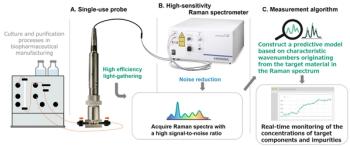
A new inline Raman measurement system seeks to address current industry challenges in biopharmaceutical manufacturing.

In this "Instrument Insights" Q&A, Angela Flack of Edinburgh Instruments discusses the shift from single-technique methods to multimodal techniques.

A recent study showcased a wearable, glove-mounted sensor that can detect trace residues of two cancer drugs on workplace surfaces.
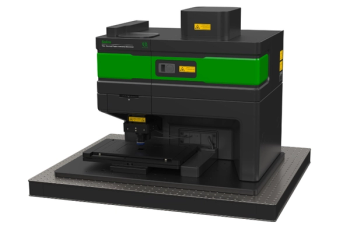
PicoQuant announced the launch of a new microscope designed for materials characterization.
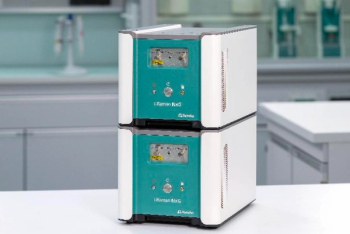
Metrohm USA has introduced two new laboratory Raman spectrometers—the i-Raman NxG and i-Raman Duo—targeting researchers and quality control teams who require more detailed chemical characterization than standard identification systems provide.

In this brief Q&A interview, Christina Ryder, who is a postdoctoral researcher at Texas A&M University and the lead author of this study, discusses her team’s findings.
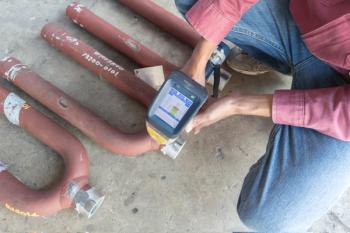
What does the rise of portable and handheld spectroscopic instrumentation tell us?

Pittcon concludes its 77th edition with Nobel winners, new ideas, and next-level experiences.

In this episode of "Pathways in Spectroscopy," John Margeson, Product Manager at Thermo Fisher Scientific, offers advice to young graduates who want to pursue careers in industry and scientific instrumentation.

In a recent press release, CEA-Leti announced that a team of researchers from their institution and CEA-IRIG validated what they describe as the first chip-scale, battery-operated electron paramagnetic resonance (EPR) spectrometer.
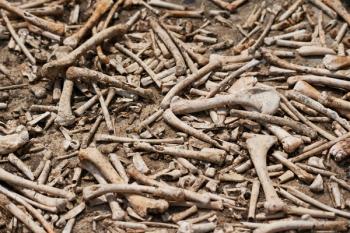
A recent study demonstrates that updated predictive models based on NIR spectra can outperform traditional nitrogen-based prescreening methods in identifying samples suitable for radiocarbon dating.

In this video segment, John Margeson, a Product Manager at Thermo Fisher Scientific’s Tewskbury headquarters, discusses the updated software capabilities in the company’s new line of handheld XRF spectrometers.
Advertisement
Advertisement
Trending on Spectroscopy Online
1
Kevin Wilkinson on Tracing Airborne Metal Pollution Particle by Particle
2
Jürgen Popp on Bringing Raman Diagnostics From the Laboratory to the Clinic
3
Alessandro De Giacomo on LIBS, Plasma Physics, and Nanoparticle Size
4
Optimizing PFAS Extraction for EPA 1633A
5