





Trends
Latest News
Advertisement
Latest Videos



Shorts

1:05
Two Top Trends in Spectroscopy
5 months ago
by
Martin Resano
Advertisement
More News

Is There Really Such a Thing as a Universal Sampling Accessory?
Published: | Updated:
A recent article examines whether attenuated total reflection (ATR) accessories with diamond elements truly function as “universal” sampling tools for FT-IR analysis, highlighting the technique’s practical advantages alongside important limitations rooted in sample properties and instrument considerations.
Top articles include an overview of the Artemis II mission, an interview with Christina Ryder about assessing collagen in archaeological bone, and a look at the importance of postdoctoral research.

In this episode of "Pathways in Spectroscopy," John Margeson, Product Manager at Thermo Fisher Scientific, offers advice to young graduates who want to pursue careers in industry and scientific instrumentation.

A recent review article explores how machine learning (ML)-assisted Raman spectral classification is being used in applications such as biomedicine and material analysis.

In this blog post, Alexis Weber, a Field Applications Scientist at PerkinElmer, describes how early forensic-science ambitions inspired by NCIS and Bones evolved through education at University of Central Florida, University of New Haven, and University at Albany, SUNY into a PhD-level spectroscopy career and ultimately a dynamic Field Applications Scientist role at PerkinElmer, highlighting the value of exploring nontraditional science careers.
Top articles published this week include a look at the top 10 applications of near-infrared (NIR) spectroscopy in biopharmaceutical analysis, an interview about the current trends in spectroscopy, and an inside look at handheld X-ray fluorescence (XRF) instrumentation.

How are ICP-MS and ICP-OES revealing heavy-metal trends in pet food? In this short tutorial, we explain how these techniques have been tracking pet food trends, and what owners can do in response to these trends.

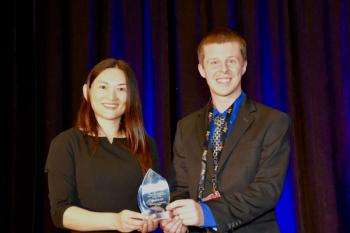
This year’s Emerging Leader in Atomic Spectroscopy Award recipient is Sarah Theiner, whose research is focused on the application of atomic spectroscopy techniques—laser ablation inductively coupled plasma–mass spectrometry (LA-ICP-MS) and single-cell ICP-MS—to expand these analytical techniques as tools for biological and clinical imaging and drug-distribution studies.

In an exclusive interview with Spectroscopy, John Margeson, a Product Manager at Thermo Fisher Scientific in the company’s Tewksbury headquarters, discusses the current state of handheld X-ray fluorescence (XRF) instrumentation.

In the lead-up to the American Academy of Forensic Sciences (AAFS) Conference, we reflect on some of the most pertinent ongoing trends in forensic analysis.
Spectroscopy is excited to announce the launch of “Pathways in Spectroscopy,” a new video series dedicated to showcasing the experiences, insights, and career journeys of emerging leaders and young scientists across the spectroscopy community.

In this article, we illustrate how automated calibration systems and sophisticated algorithms are transforming chemical data into actionable knowledge.
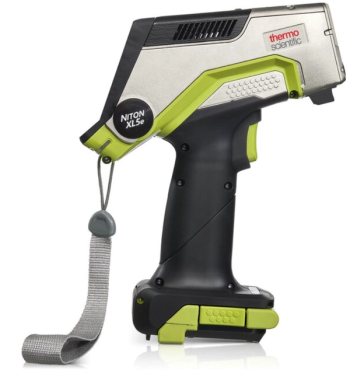
Responding to a growing need for real-time elemental analysis, Thermo Fisher Scientific announced the launch of its Niton XL5e Handheld XRF Analyzer.

Experts comment on the biggest trends in spectroscopy heading into 2026, and what this means for science and technology.

This feature reflects on the interviews Spectroscopy magazine conducted in 2025.
From San Francisco to Europe, we explored the most influential spectroscopy conferences of 2025, uncovering key trends, applications, and expert perspectives shaping the field today.

In this deep dive into one of America’s fastest-growing sports, we highlight how a range of analytical techniques, including spectroscopy, can and have been used to analyze pickleball equipment.

A recent article discussed the need for interdisciplinary collaboration to better understand the unique chemistry occurring at air–water interfaces. Experimental and conceptual challenges of linking molecular-level structure to macroscopic reactivity and calls for integrating advanced spectroscopy, computation, as well as cross-disciplinary approaches to overcome current limitations, are highlighted. This summary was generated with the help of artificial intelligence.

Spectroscopy is playing a sizable role in expanding the capabilities of remotely operated and manned submersibles. A recently published nonfiction book highlights the advancements made in deep-sea exploration technology, and we discuss spectroscopy's role in all of this.

Jiangnan University researchers map the evolution, challenges, and future of spectroscopy in preserving humanity’s shared legacy.
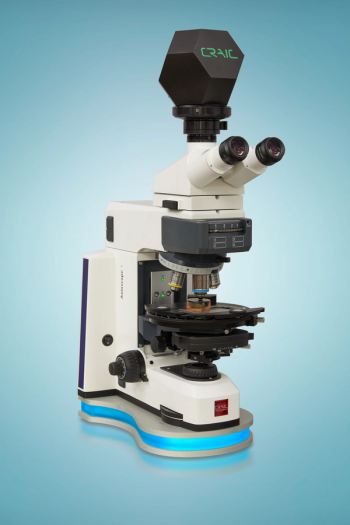
In a press release, CRAIC Technologies announced the launch of its novel maceral identification solution that is designed to improve coal analysis. This new system contains high-speed imaging, servo-driven scanning, and intelligent software that work together to generate more accurate maceral analysis.

We critically review the qualification and validation approaches in the World Health Organization Technical Report Series (WHO TRS) 1019 Annex 3 and its applicability to spectrometer systems.

This article recaps a recent study into the infrared (IR) spectroscopy market.

Spectroscopy is at the forefront of many changes happening across many industries. Here, two lead investigators comment on how they stay updated with the latest innovations and developments.

This review covers products introduced in the spectroscopy space between May 2023 and April 2024.
Advertisement
Advertisement