
Application Notebook
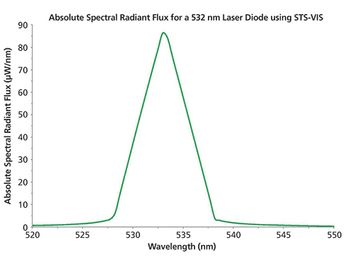
Used everywhere from bar code scanners to sophisticated single-molecule microscopes, lasers are powerful and cost-effective light sources for applications spanning basic research to consumer entertainment.
Application Notebook
Used everywhere from bar code scanners to sophisticated single-molecule microscopes, lasers are powerful and cost-effective light sources for applications spanning basic research to consumer entertainment.
Application Notebook
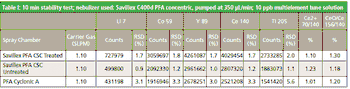
The new Savillex PFA Cyclonic Spray Chamber is the first inert chamber with the traditional shape of a glass cyclonic, and is also the first translucent inert chamber.
Application Notebook
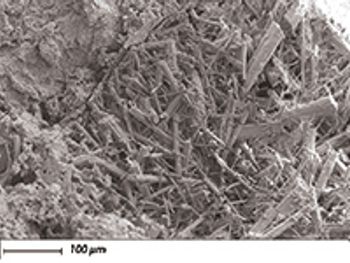
Ancient Roman builders designed maritime concrete harbor structures to remain intact in the aggressive seawater environment for very long periods of time.
Application Notebook
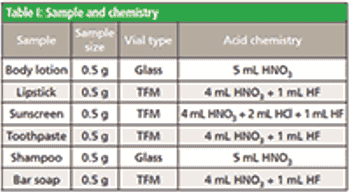
Milestone's UltraWAVE microwave digestion system with single reaction chamber (SRC) technology, enables the simultaneous digestion of up of to 22 different sample types and chemistries at temperatures and pressures as high as 300 ?C and 199 bar.
Application Notebook
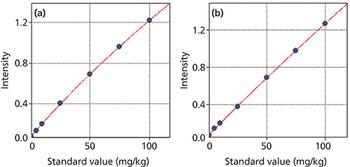
The permitted sulfur limit in fuel oils has been decreased to 10 ppm in many regions.
Application Notebook
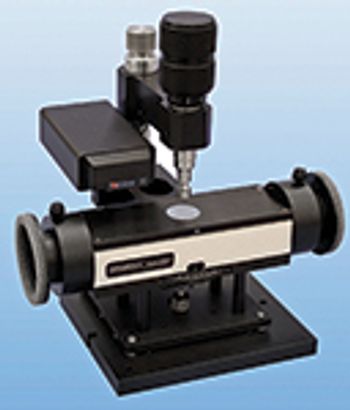
Grazing angle Ge ATR spectroscopy is extremely sensitive to monolayers and thin films on high refractive index substrates such as Si.
Application Notebook
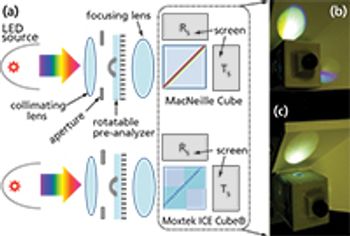
A broadband polarizing beamsplitter (PBS) cube was developed using embedded Moxtek Nanowire grid polarizer technology.
Application Notebook
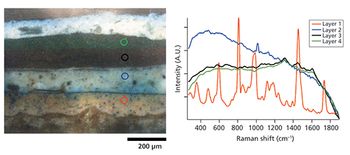
Raman measurement on microscopic inclusions in fluorescent materials requires the ability to measure in small volumes, excellent throughput, and long wavelength excitation such as 1064 nm for fluorescence reduction.
Application Notebook
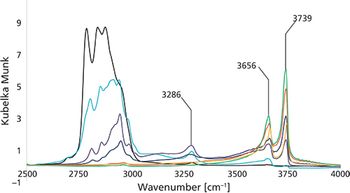
The thermal treatment of a grafted Sn-SiO2 catalyst was monitored in situ using diffuse reflectance infrared Fourier transform spectroscopy (DRIFTS).
Application Notebook
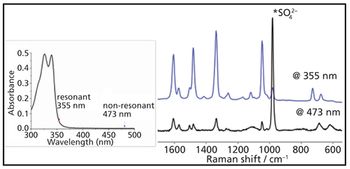
The "inelastic scattering of light," or Raman effect, was observed in practice for the first time in 1928 by C.V. Raman for which he was awarded the Nobel Prize in 1930.
Application Notebook
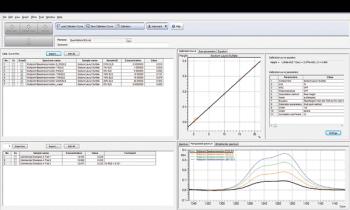
A method for quantifying the percent sulfate associated with sodium lauryl sulfate (also referred to as sodium dodecyl sulfate) and sodium laureth sulfate (also referred to as sodium lauryl ether sulfate) found in commonly used commercial body care products using FT-IR attenuated total reflectance (ATR) spectroscopy is outlined.
Application Notebook
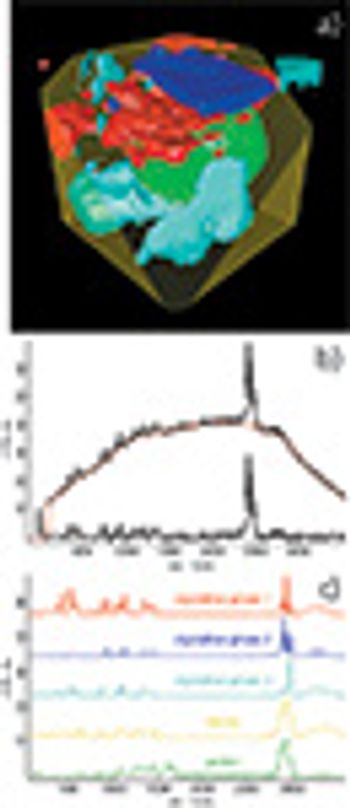
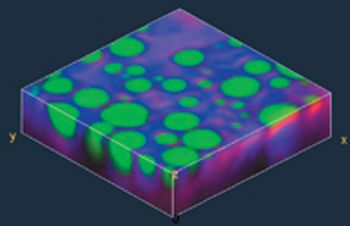
Newly developed software tools provide various functions for the acquisition, evaluation, and processing for high-resolution 3D Raman images.
Application Notebook
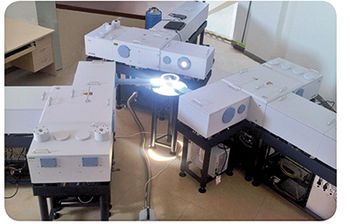
Bruker's IFS 125HR spectrometer is designed as an ultra-high resolution FT-IR spectrometer which provides outstanding performance for R&D laboratory application.
Application Notebook
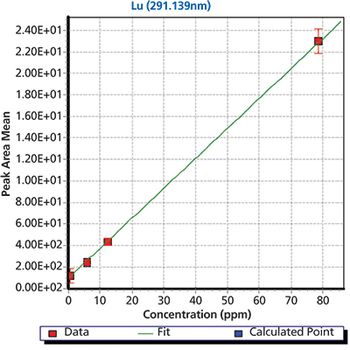
The lanthanide series is a series of metallic elements, with atomic numbers 58 through 71, which are - in order of increasing atomic number - cerium, praseodymium, neodymium, promethium, samarium, europium, gadolinium, terbium, dysprosium, holmium, erbium, thulium, ytterbium, and lutetium.
Application Notebook
Raman microscopy is a high resolution imaging technique that has become widely used for the characterization of materials in terms of their chemical composition.

Application Notebook
The new Savillex C400d PFA concentric nebulizer for ICP-MS combines the reliability of a low flow glass nebulizer with the chemical resistance and low elemental background of a PFA concentric nebulizer.
Application Notebook
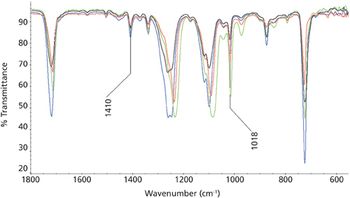
Polymer orientation of a blow-molded plastic was investigated using FTIR-ATR with polarization. By using a variable angle ATR accessory, changes in spectral features were observed at two different probing depths.
Application Notebook
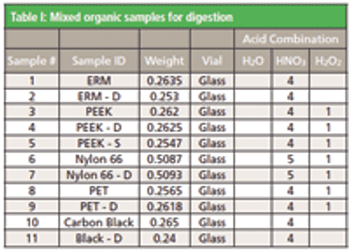
Sample matrices with high organic content have created a significant challenge for sample preparation methods.
Application Notebook
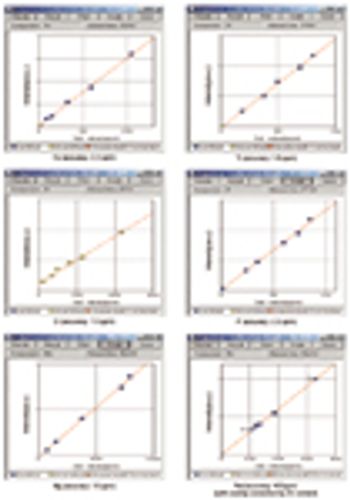
This application note introduces an Application Package for quantitative analysis of additive elements in polymer.
Application Notebook
Low concentration natural methanol exists in most alcoholic beverages and usually causes no immediate health threat.
Application Notebook
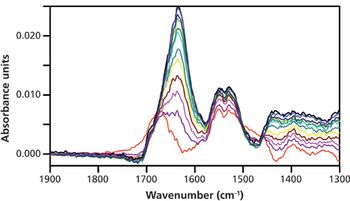
Infrared ATR spectroscopy has recently gained recognition as a viable technique for protein structural analysis due to its high information content, rapid sampling rate, and minimal sample preparation.

Application Notebook
This application note describes the capability of the Teledyne Leeman Lab's Prodigy7 High-Dispersion ICP for performing analysis according to SW-846 Method 6010C.
Application Notebook
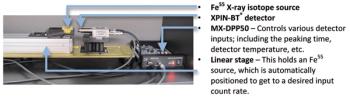
Moxtek now has a full energy dispersive X-ray fluorescence detector solution with Moxtek's XPIN detectors and our new MXDPP-50 electronics.
Application Notebook
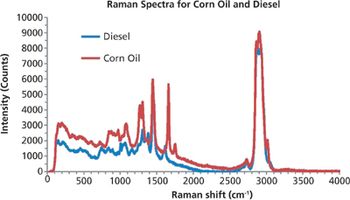
Raman spectroscopy is an excellent technique for the identification and characterization of fuels. With no requirement for sample preparation and the power to identify and quantify materials, Raman has many uses across a range of industries.
Application Notebook
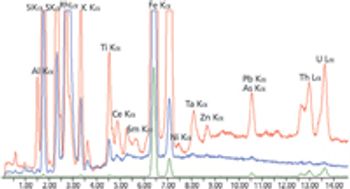
Demonstration of the advantages of using the Orbis micro-XRF elemental analyzer rather than other analysis techniques to perform elemental analysis through a plastic barrier and/or at atmospheric pressure.
Application Notebook
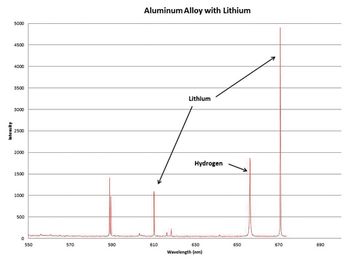
SciAps has developed a handheld analyzer based on laser induced breakdown spectroscopy (LIBS).
Application Notebook
Raman microscopy has evolved into a common method for fast and nondestructive analysis of microscopic samples in forensic and R&D laboratories as well as for troubleshooting in the field of quality control.
Spectroscopy
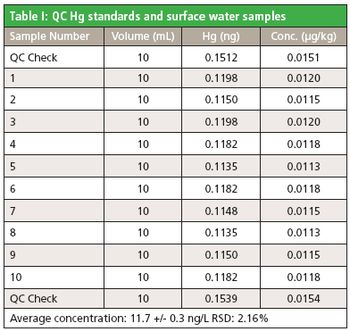
With over 1300 commercial testing labs in the United States, one out of every three samples is for water analysis. There has been an even stronger emphasis on mercury testing and its concentration in our water supplies.
Spectroscopy
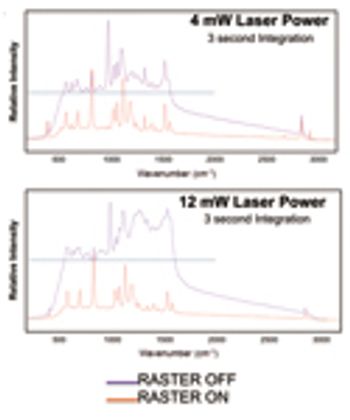
Raster orbital scanning (ROS) is a technique that dramatically increases the signal-to-noise ratio of Raman measurements made from target materials dispersed on surface enhanced Raman scattering (SERS) substrates.
Spectroscopy
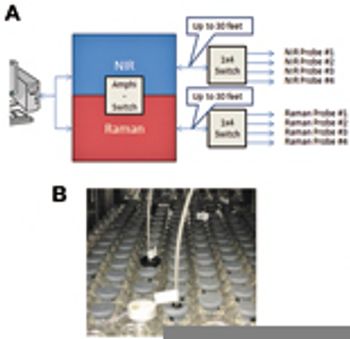
A new compact instrument (Amphi-Spec) combining dispersive Raman and NIR spectroscopy has been developed at BaySpec, Inc., to deliver maximum analytical power.