
Spectroscopy
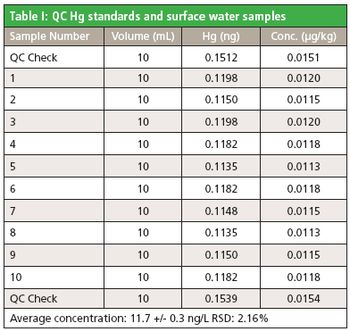
With over 1300 commercial testing labs in the United States, one out of every three samples is for water analysis. There has been an even stronger emphasis on mercury testing and its concentration in our water supplies.
Spectroscopy
With over 1300 commercial testing labs in the United States, one out of every three samples is for water analysis. There has been an even stronger emphasis on mercury testing and its concentration in our water supplies.
Spectroscopy
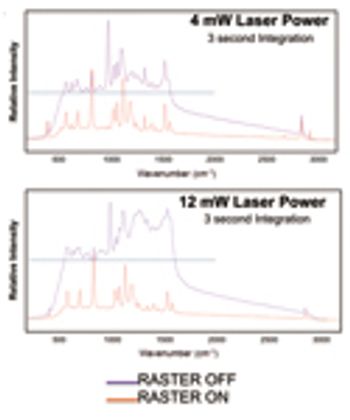
Raster orbital scanning (ROS) is a technique that dramatically increases the signal-to-noise ratio of Raman measurements made from target materials dispersed on surface enhanced Raman scattering (SERS) substrates.
Spectroscopy
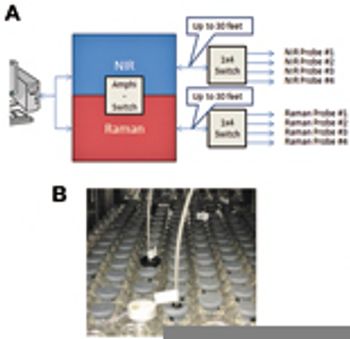
A new compact instrument (Amphi-Spec) combining dispersive Raman and NIR spectroscopy has been developed at BaySpec, Inc., to deliver maximum analytical power.
Spectroscopy
Moxtek makes ultra-thin polymer X-ray windows that are often used in SEM and TEM microanalysis detectors.
Spectroscopy
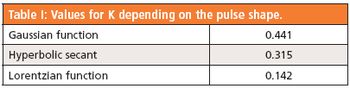
Even though no current electronics is fast enough to measure femtosecond lasers, an estimation of the pulse duration, peak wavelength, and relative intensity is possible.
Spectroscopy
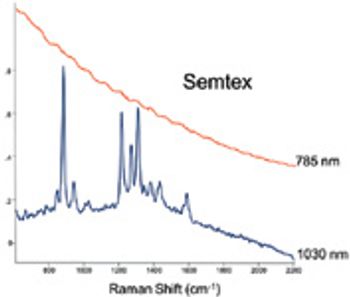
Handheld Raman analyzers have found widespread use in the pharmaceutical industry for excipients and raw materials verification, and in first responder/security applications. Most portable Raman units utilize lasers operating at 785 nm because of the relatively good signal strength at this wavelength.
Application Notebook
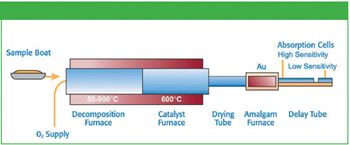
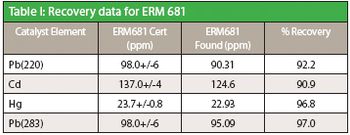
Mercury is a toxic, persistent pollutant found in many native ores rich in copper, silver and gold. As such ores are processed mercury can be released to the environment.
Application Notebook
Single reaction chamber microwave digestion enables a chemist to digest up to 15 different specialty chemical samples simultaneously at temperatures as high as 300 ?C, greatly simplifying the workflow while maintaining superior quality digestions.
Application Notebook
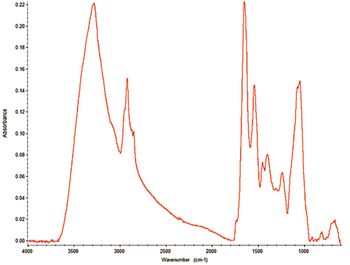
Yeast suspensions were dried and analyzed via FT-IR using an automated transmission sampling accessory. Up to six-fold sampling capacity increase may be realized through automation.
Application Notebook
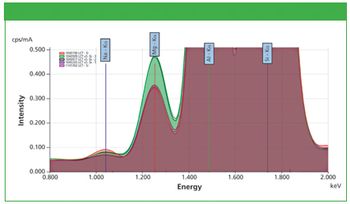
The analysis of coal is demonstrated, with specific emphasis on the measurement of Na2O, using a Cartesian geometry energy dispersive X-ray fluorescence (EDXRF) spectrometer employing the Fundamental Parameters (FP) approach.
Application Notebook
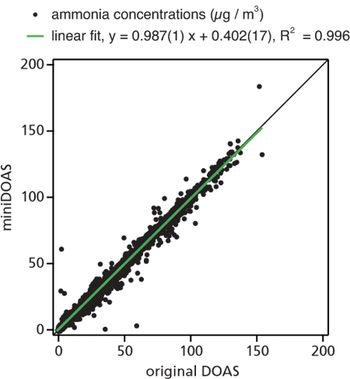
Knowledge of atmospheric ammonia concentrations is important, but ammonia is difficult to measure. We report here on the development of a low-cost ammonia measuring differential optical absorption spectroscopy (DOAS) instrument, based on a small sized and low priced spectrograph.
Application Notebook
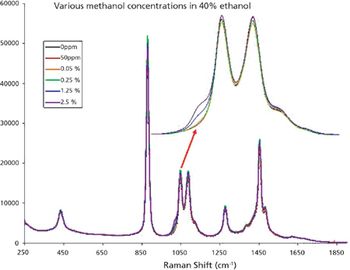
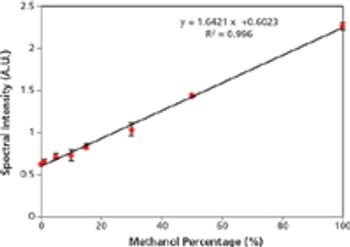
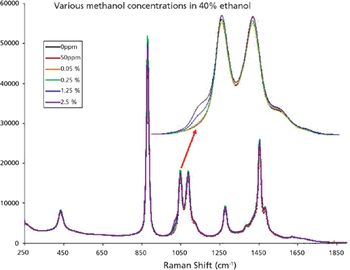
Low concentration natural methanol exists in most alcoholic beverages and usually causes no immediate health threat.
Application Notebook
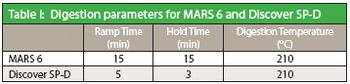
Pharmaceutical samples spiked with several heavy metals were prepared for ICP-MS analysis using microwave digestion following the protocols in proposed USP chapters <232> and <233>. The results of the spike recovery study are discussed.
Application Notebook
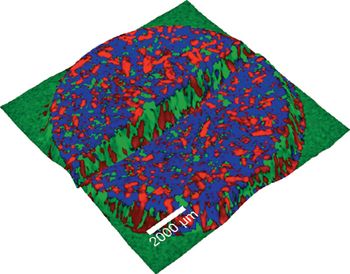
Confocal Raman imaging opened the door for many applications in Raman spectroscopy and imaging that were previously unavailable for measurement with conventional (non-confocal) Raman methods.
Application Notebook
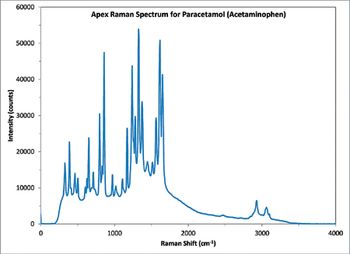
Owing to technological improvements spurred on by the telecommunications boom of the last decade, Raman spectroscopy has become much more accessible to users in all application areas, including agricultural, forensic, pharmaceutical, biomedical, and others.
Application Notebook
Although Raman spectroscopy is an excellent analytical tool, Raman signals are often weak and traditional slit spectrometers typically have poor optical throughput, limiting their effectiveness in low light level setups.
Application Notebook
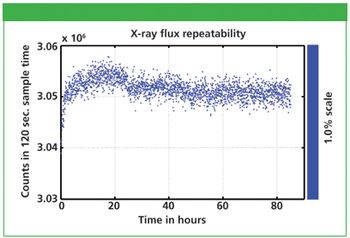
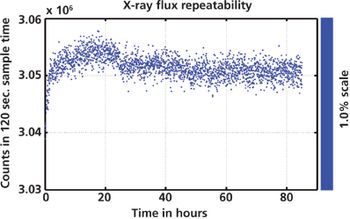
Moxtek's ULTRA-LITE X-ray source is a very small self contained X-ray source (X-ray tube and high voltage power supply) for use in portable X-ray applications, such as the handheld X-ray fluorescence (XRF) spectrometers. This note demonstrates that this X-ray source has a stable and repeatable X-ray flux output over time, which is vital for the precision of the calibrated XRF measurements.
Application Notebook
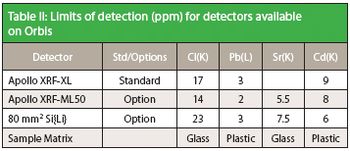
The measurement of trace elements is important across a wide variety of materials characterization problems. When measuring small glass fragments collected from crime and accident scenes, forensics experts analyze trace strontium (Sr) and zirconium (Zr) typically unintentionally incorporated into the glass during manufacturing as one point of identification or comparison.

Application Notebook
Multiple reflection ATR is ideal for detecting miniscule levels of components in solutions. If one component is volatile, trace analysis can be simplified by allowing the volatile liquids to evaporate.
Spectroscopy
The miniDOAS: Low Cost, High Performance Contactless Ammonia Measurements
Spectroscopy
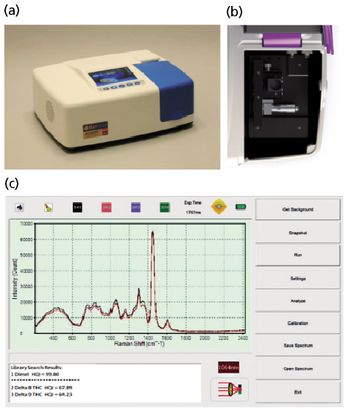
Transportable Dual-Band Raman System for Fuel Analysis
Spectroscopy
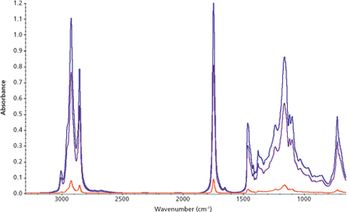
Probing the Detection Limits of Concentrated Multiple Reflection ATR Spectroscopy
Spectroscopy
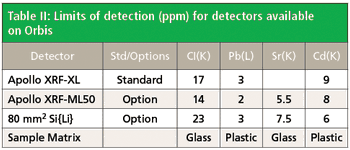
Improved Sensitivity with the New Apollow XRF ML-50 Detector on the Orbis Micro-XRF Analyzer
Spectroscopy
Determination of Low Concentration Methanol in Alcohol by an Affordable High Sensitivity Raman Instrument
Special Issues
Bruker Daltonics, Inc.
Special Issues
Proton OnSite
Application Notebook
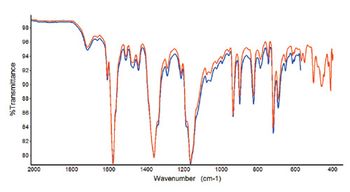
Experimental data show the crystal dimensions of an ATR-FT-IR sampling accessory influence the usable spectral range. An expanded range germanium crystal is introduced for the measurement of high refractive index samples.
Application Notebook
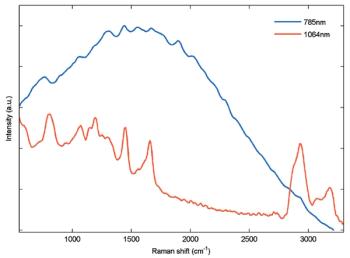
Biological tissues and other materials often autofluoresce at near-infrared wavelengths, prohibiting Raman acquisition. New, dispersive Raman systems at 1064 nm allow fluorescence-free measurement in similar integration times.
Application Notebook
Moxtek's ULTRA-LITE X-ray source is a very small self contained X-ray source (X-ray tube and high voltage power supply) for use in portable X-ray applications, such as the handheld X-ray florescence (XRF) spectrometers. This note demonstrates that this X-ray source has a stable and repeatable X-ray flux output over time, which is vital for the precision of the calibrated XRF measurements.
Application Notebook
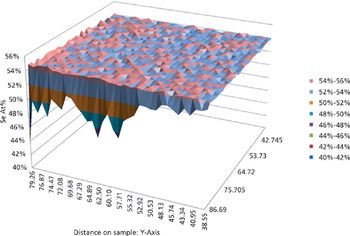
Building on more than 10 years of Micro-XRF experience, the Orbis spectrometer yields a system with excellent Micro-XRF capability while setting a new standard in analytical flexibility. The Orbis incorporates a unique motorized turret integrating video and X-ray optics allowing coaxial sample view and X-ray analysis. The turret can accommodate two additional collimators along with the X-ray optic for a total of three X-ray beam sizes to expand the Orbis analytical capabilities beyond traditional Micro-XRF analysis.