


Andrew Schmitz, an application scientist at ThermoFisher Scientific, held a workshop at the Gulf Coast Conference in Galveston, Texas, focused on real-time lubricant analysis.

Andrew Schmitz, an application scientist at ThermoFisher Scientific, held a workshop at the Gulf Coast Conference in Galveston, Texas, focused on real-time lubricant analysis.

Webcasts
Webinar Date/Time: Tue, Oct 17, 2023 1:00 PM EDT

Manufacturing advanced electronic devices requires the production of high-quality semiconductors and integrated circuit chips. In this article, the authors explain how GC, when coupled with ICP-MS, enables the detection of elements that are essential in semiconductor production.
Webcasts
Webinar Date/Time: Europe: Thursday, September 28, 2023, at 1 pm BST | 2 pm CEST North America: Thursday, September 28, 2023, at 1 pm PDT | 4 pm EDT Asia: Friday, September 29, 2023, at 9:30 am IST | 12 pm CST | 1 pm JST | 2 pm AEDT
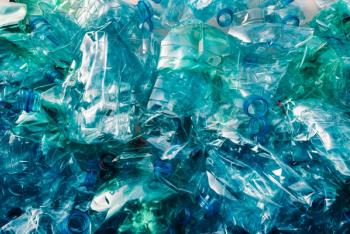
A recent study explains how laser-induced breakdown spectroscopy (LIBS) is better suited for rapidly quantifying heavy metals in plastics than traditional methods such as inductively couple plasma–mass spectrometry (ICP-MS) and atomic absorption spectroscopy (AAS).
Webcasts
Webinar Date/Time: Thu, Sep 14, 2023 10:00 AM EDT
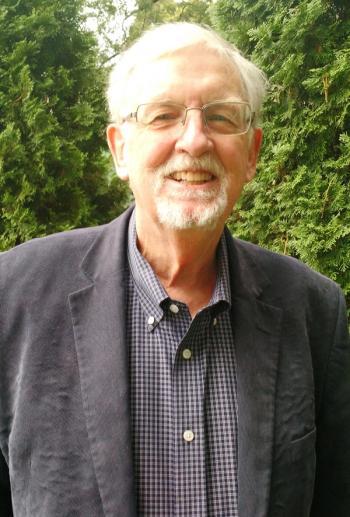
In this interview, Peter Griffiths, 2023 recipient of the Ellis R. Lippincott Award, reflects over his storied career, as well as his most recent work, which focuses on measuring fine airborne particles within mining environments.
Webcasts
Webinar Date/Time: Tue, Sep 12, 2023 11:00 AM EDT

A new study showcases a newly developed automated mineral classification workflow based on laser-induced breakdown spectroscopy (LIBS) mapping, enabling fast and accurate identification of minerals in geological samples.

New research demonstrates the potential of combining LIBS and EPMA for distinguishing and characterizing uranium mineralizations, opening new avenues for environmental protection and ore genesis studies.

Researchers have developed a highly sensitive method for determining total chromium in seawater using ultrasound nebulization-dielectric barrier discharge (UNDBD) vapor generation coupled with inductively coupled plasma-mass spectrometry (ICP-MS).

Researchers have developed a novel fluorophore, diaryl maleimide (DAM), with multichromic properties potentially useful for volatile vapor detection in LED lighting systems, showcasing its versatility and applications in sensing technologies.
Webcasts
Webinar Date/Time: Tuesday, July 25th, 2023 Morning session: 9:30am EDT|6:30am PST|3:30pm CET|2:30pm GMT Afternoon session: 2pm EDT|11am PST|8pm CET|7pm GMT Wednesday,July 26th, 2023 Morning session: 9:30am EDT|6:30am PST|3:30pm CET|2:30pm GMT Afternoon session: 2pm EDT|11am PST|8pm CET|7pm GMT
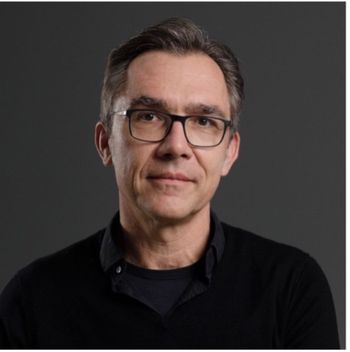
In this interview, Jürgen Popp discusses the importance of Raman spectroscopy, where it can make a difference, and how it can be evolved and improved on in the future.
Webcasts
Webinar Date/Time: Wednesday, July 19, 2023 at 10am EDT | 7am PDT | 3pm BST | 4pm CEST
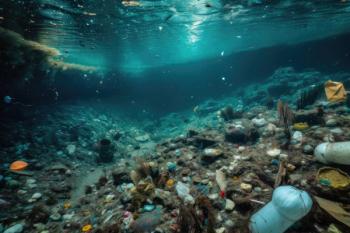
A recent study utilized Raman spectroscopy to confirm the presence of microplastics in karst spring waters.

Scientists have developed a fluorescent sensor via a surface ion imprinting rice husk-based polymer capable of selectively detecting and efficiently adsorbing copper ions from lake water.

Researchers have developed a near-infrared fluorescent probe that allows for highly sensitive detection of butyrylcholinesterase activity and pesticide residue in food samples. The probe offers a ratiometric pattern and shows promise for applications in health evaluation, disease diagnosis, and environmental monitoring.
A research team has utilized the Allan variance technique to analyze the performance characteristics of compact Fourier transform infrared (FT-IR) spectrometers. The study provides insights into the noise sources and instabilities of these handheld instruments, offering guidance for improving their accuracy and stability in real-time material detection and quantification applications.

Webcasts
Webinar Date/Time: Wednesday, June 21st, 2023 at 11am EDT | 8am PDT | 4pm BST | 5pm CEST
Webcasts
Webinar Date/Time: Thu, Jun 8, 2023 11:00 AM EDT

Researchers describe a new method for the ultra-trace determination of mercury in seawater using vortex-assisted liquid-liquid micro-extraction (VALLME) and atomic absorption spectrometry (AAS).
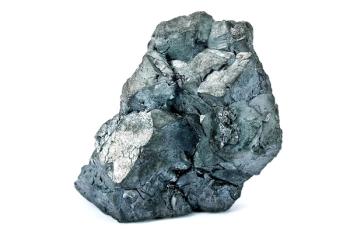
A new article reviews methods for determining trace elements in germanium and germanium dioxide, highlighting the advantages and limitations of methods with and without matrix separation procedures.

Waste medical masks can be converted into carbon dots into blue emissive carbon dots, which can be used to detect harmful substances in the environment.