



This article covers a portion of the analytical equipment and techniques used in the production of beer across the supply chain.


Using Laser-Induced Breakdown Spectroscopy (LIBS) for Protein-Based Analysis and the Identification of Meat Species
This article covers a portion of the analytical equipment and techniques used in the production of beer across the supply chain.

An increasing number of antibiotic residue problems in food have emerged around the world. We examine how SERS is used to identify antibiotic residues in chicken, focusing on doxycycline hydrochloride and tylosin.

The details of applying deep learning algorithms and FT-IR spectra are described for classification research using the spectra of strawberries as an example.
Special Issues
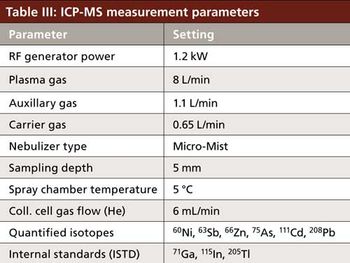
The authors compare LC–MS/MS methods for quantification of the pesticide glyphosate with and without sample derivatization, and discuss ICP-MS methods for the determination of heavy metals.
Special Issues
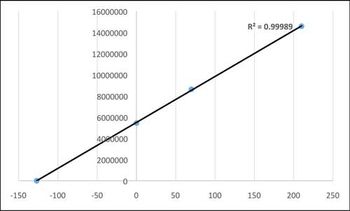
QuEChERS is introduced to the discipline of forensic testing as a viable method for the extraction of pesticides and cannabinoids in various complex sample matrices.
Special Issues
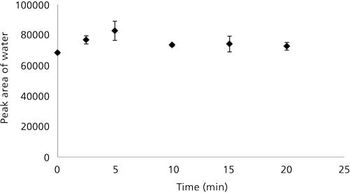
This fast, automated method was shown to be accurate and precise for 16 liquid sweeteners, and is likely more accurate than Karl Fischer titration.

Special Issues
This speciation method based on ion-interaction chromatography has a run time of
Special Issues
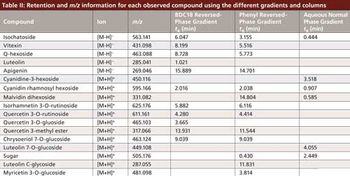
Given the wide range in polarity of the components of mesquite flour, it is advantageous to study the health benefits of this flour using methods that combine the complementary approaches of reversed-phase and aqueous normal phase LC.
Special Issues
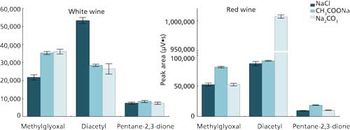
A new methodology for the analysis of three important -dicarbonyls (methylglyoxal, diacetyl, and pentane-2,3-dione) in wines was developed.

Spectroscopy
Trace toxic and major nutrient elements were measured in a single measurement in a milk powder SRM, with no ionization buffers, using a synchronous dual view ICP-OES. The methodology was in accordance with Chinese method GB 5413.21 for raw milk and dairy products. Excellent recoveries were achieved for all elements determined in the SRM, demonstrating the accuracy of the method over a large dynamic range.
Spectroscopy
Five arsenic species, including the toxicologically relevant inorganic forms As(III) and As(V), were determined in 4 minutes, with excellent sensitivity, accuracy and precision using an Agilent LC fitted with a reversed phase column coupled to an ICP-MS. Any potential interferences on As such as ArCl+ were removed using a single-cell gas mode (helium mode), speeding up the analysis.
Spectroscopy
A validated ICP-MS method for the determination of Cr, Se, and Mo in infant formula and adult nutritional products was transferred to a next-generation system. This methodology is potentially suitable as a global reference method for the application, as all samples can be analyzed using a single-cell gas mode (helium mode) that provides effective removal of polyatomic interferences - significantly improving productivity.
Spectroscopy
A fast and sensitive method using hydride generation (HG) with ICP-MS has been developed for the separation and detection of toxic inorganic arsenic (iAs) in foodstuffs. The iAs measured values in 31 commercial rice products all fell below the current legislative maximum level of 150 µg/kg set by China. Comparing the results obtained by HG-ICP-MS and HPLC-ICP-MS showed comparable limits of detection were achieved.
Spectroscopy
Safe, low cost MP-AES analysis of total metal content of a plant-based reference material following microwave digestion is presented. Elements that are difficult to analyze by FAAS such as B and P were included, with all data acquired in a single run. Accurate determinations over a wide concentration range and with better detection limits and sample throughput compared to FAAS were obtained.