






Biological, Medical, and Clinical Analysis
Latest News
Advertisement
Latest Videos



Shorts
0:31
Best of the Week: Implementing SERS in Clinical Settings, How Lasers Became Valuable Tools in Spectroscopy
4 months ago
by
Will Wetzel
Advertisement
More News
Reliability, dynamic measurements, artificial intelligence, and real-world applications are reshaping Raman spectroscopy – while Molecular Photonics points toward new translational frontiers.

Jurgen Popp, Thomas Mayerhofer, and colleagues at Leibniz IPHT and Friedrich Schiller University Jena introduce the Personalized Optical Digital Twin (PODT), a Photonics21 contribution to Europe's Virtual Human Twin ecosystem that connects molecular photonics—Raman blood analysis, coherent Raman tissue imaging, and multimodal endomicroscopy—with longitudinal physiology and clinical data. Drawing on the published multicenter INTELLIGENCE trials, the authors argue that technical feasibility and clinical utility must be evaluated separately as the field moves toward Europe's FP10 research agenda.

In this preview of the 2026 SciX Conference, we offer an overview of the keynote presentation.

A new peer-reviewed article discusses how pairing quantum mechanics with nanomaterial-based Raman spectroscopy has significantly boosted the technique's sensitivity.

Researchers developed spherical and hollow gold nanoparticle-based SERS platforms that enable label-free molecular imaging of chemotherapy drug effects and drug release within cancer cells, offering a theranostic tool with potential applications in early cancer diagnostics.
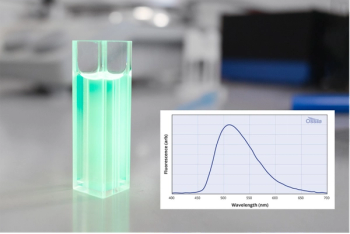
Cellular autofluorescence often masks target signals in time-resolved fluorescence imaging, and metal-based phosphors that could solve this raise toxicity and cost concerns. Thermally activated delayed fluorescence (TADF) materials offer a metal-free alternative with long emission lifetimes, and early studies show promise despite remaining challenges with quenching, solubility, and spectral purity.
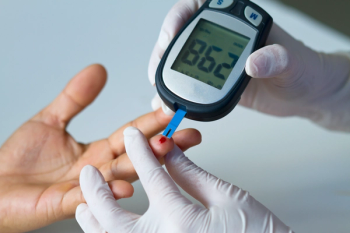
Nearly every diabetic on earth still stabs a finger to measure their blood sugar, but a small army of lasers, infrared beams, and machine-learning algorithms is quietly plotting to end that ritual for good. This review tracks the photons chasing glucose through skin, from near-infrared reflectance to Raman fingerprints, and asks why the “needle-free” promise keeps slipping just out of reach.
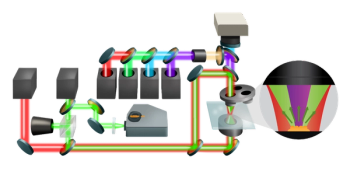
This paper demonstrates the use of optical photothermal infrared (O-PTIR) spectroscopy for the detection, identification, and localization of microplastics in tissue samples.

A recent study examined how surface-enhanced Raman spectroscopy (SERS) is being used with machine learning (ML) analysis to accurately distinguish patients with Crohn’s disease.

A new diagnostic platform may help detect drug-induced liver injury better. How would this work in real-world clinical settings?

The combination of surface-enhanced Raman spectroscopy (SERS) and digital microfluidics (DMF) might be able to improve detection of liver injury biomarkers.

A recent study showcased a wearable, glove-mounted sensor that can detect trace residues of two cancer drugs on workplace surfaces.

In this Q&A overview, we explore how vibrational spectroscopy is set to help create a robust framework for identifying complex biomarkers that traditional blood tests might not be able to detect.
In this video clip from Pittcon 2026, Lenka Halámková, an assistant professor at Texas Tech University, provides an overview of her talk at Pittcon.

As part of our coverage of the Pittcon 2026 conference, Spectroscopy sat down with Seth Kenkel to talk about his work using nearfield infrared (IR) spectroscopy.

A recent study presented an approach combining Fourier transform infrared (FT-IR) imaging spectroscopy, histology, and statistical analysis that can identify biochemical spectral markers and distinguish benign from malignant uterine smooth muscle tumors.

In this video segment, Sarah Theiner dives into the research that she conducted at the University of Vienna, which focused on how chemoresistance affects drug distribution in the tumor microenvironment.

A recent study presented a new AI model that can be used to improve patient outcomes for breast cancer.

Discover the latest advancements in medical devices and artificial intelligence, focusing on the transformative impact of IoMT devices in healthcare.

A recent study examined how portable instrumentation could be applied in the detection of diabetes.

Recently, a team of researchers from Portugal examined a new method that could improve accessibility to kidney disease diagnostics.


A recent study demonstrated that combining hyperspectral imaging with multivariate curve resolution can non-invasively detect and monitor intestinal necrosis in acute mesenteric ischemia, offering a promising tool for earlier diagnosis and improved patient outcomes.

In a recent review article, a team of researchers from Shanghai Jiao Tong University explored how to improve the monitoring of drugs and metabolites in biomedical research and clinical settings.
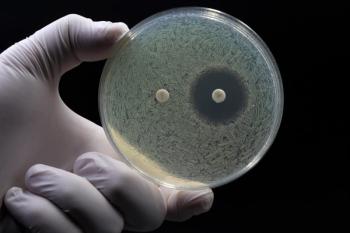
A research team from Putian University has developed a dual surface-enhanced Raman spectroscopy (SERS) and Fourier transform infrared spectroscopy (FT-IR) approach to reveal detailed molecular changes in E. coli exposed to different antibiotics.
Advertisement
Advertisement
Trending on Spectroscopy Online
1
Beyond Digestion: Discover ETHOS Flexibility
2
Mapping Oxidation in Fractured Knee Implant Posts with FT-IR Imaging
3
Thermo Fisher Scientific Announces Launch of New FT-IR Microscope for Microscale Chemical Analysis
4
Alessandro De Giacomo on LIBS, Plasma Physics, and Nanoparticle Size
5