

LIBS
Latest News
Advertisement
Latest Videos

Shorts

0:32
Best of the Week: Fiber Laser-Induced Breakdown Spectroscopy, Understanding Particle Behavior
a month ago
by
Will Wetzel
Advertisement
More News
Top articles published this week include a preview of an upcoming presentation at the American Chemical Society (ACS) 2026 Fall Meeting in Chicago, Illinois.
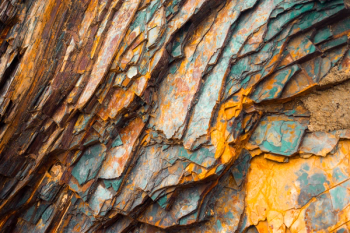
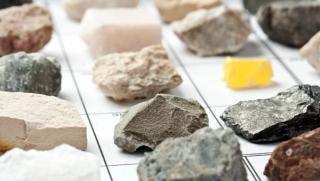
Laser-induced breakdown spectroscopy (LIBS) has moved from the laboratory to the field, offering rapid, in situ elemental analysis of minerals, rocks, soils, and meteorites with minimal sample preparation. This practical tutorial covers LIBS instrumentation, field sampling best practices, quantification methods, common pitfalls, and emerging applications in geoscience.
Handheld spectroscopy tools are being used to identify food fraud.
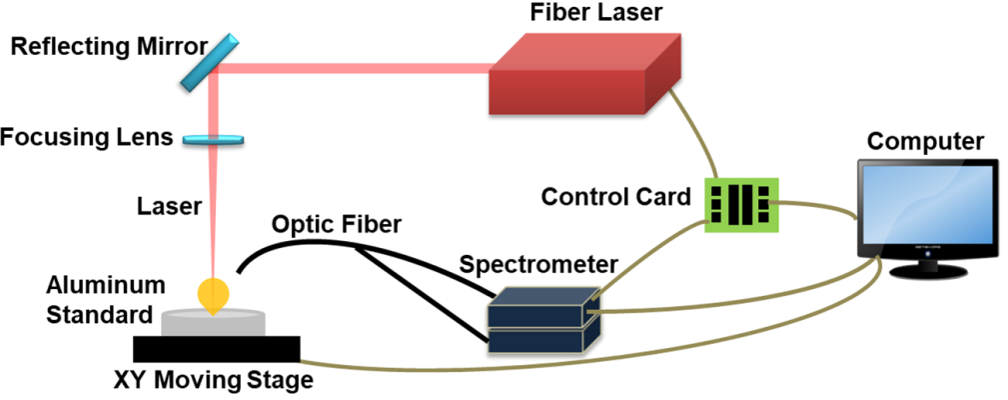
A recent study showcased an auto-focusing laser-induced breakdown spectroscopy (LIBS) imaging system that uses a motor-driven focusing mirror to track surface height changes in real time, cutting signal variability on irregular surfaces and improving spectral stability more than eightfold compared to conventional static systems.
A comprehensive introduction to LIBs coverage published in Spectroscopy Online from 2022–2025.
The 2024-2026 period has been marked by rapid methodological innovation and critical reassessment of established atomic spectrometric techniques in environmental analysis. Advances in inductively coupled plasma–tandem mass spectrometry (ICP-MS/MS) reaction-cell chemistry, matrix-effect correction in X-ray fluorescence (XRF), microwave-sustained plasma sources, and green preconcentration strategies have expanded analytical capabilities for soils, waters, sediments, plants, and atmospheric particulates. Simultaneously, comparative evaluations of inductively coupled plasma–mass spectrometry (ICP-MS), inductively coupled plasma–optical emission spectrometry (ICP-OES), and XRF have sharpened our understanding of detection limits, bias, and field applicability. This brief review highlights 10 of the most influential publications shaping environmental applications of XRF, ICP-MS, and ICP-OES during 2024–2026. Each paper is discussed with emphasis on its technical contributions and broader impact on environmental monitoring, regulatory science, and instrumental development.

In this article, we highlight some of the important talks on atomic spectroscopy that will take place at Pittcon on Sunday March 8th.
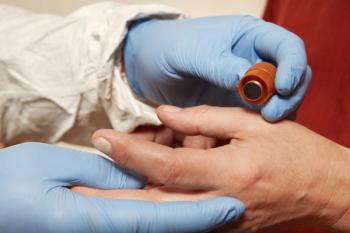
A recent study demonstrated that combining laser-induced breakdown spectroscopy (LIBS) with machine learning (ML) can accurately identify gunshot residue from nontoxic ammunition and reliably distinguish shooters from non-shooters despite the absence of traditional elemental markers.
In the lead-up to the American Academy of Forensic Sciences (AAFS) Conference, we reflect on some of the most pertinent ongoing trends in forensic analysis.
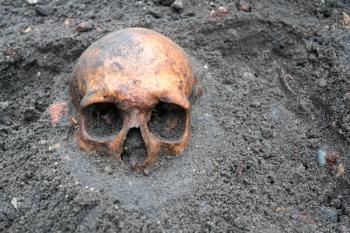
Discover how LIBS revolutionizes forensic science by enabling rapid, precise bone identification, overcoming challenges of traditional methods with advanced AI classification.
In this article, we focus on why LIBS is particularly ideal for forensic applications, especially for studying human or animal remains.

Jorge Caceres, a professor at Complutense University in Madrid, Spain, sat down with Spectroscopy to discuss how LIBS works as a fast, simple, cost-effective, and analytically conclusive technique for confidently re-associating human bone remains.
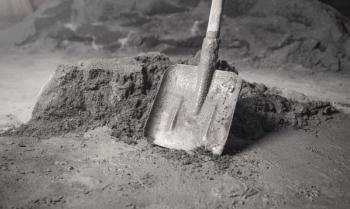
Researchers in Germany have demonstrated in the journal Cement and Concrete Research that laser-induced breakdown spectroscopy (LIBS) offers a fast, accurate, and non-destructive method for estimating cement content in concrete.

This article provides a clear refresher on key spectroscopy techniques—IR/NIR, Raman, UV–Vis, XPS/XAS, NMR, ICP-MS, and LIBS—and their applications in the energy industry, from batteries and solar panels to fuel production and emissions monitoring.
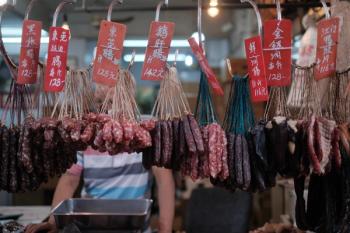
Researchers at Tianjin University of Technology develop a rapid, in situ technique for identifying adulteration in starch sausages using laser-induced breakdown spectroscopy.
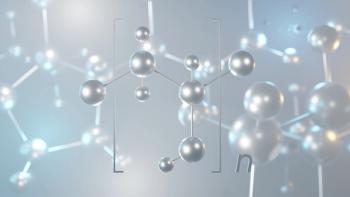
Surface hardness is one of the most important parameters which describes the degree of aging in polyvinyl chloride (PVC) cables. In this work, the hardness of PVC sheathing material was studied using laser-induced breakdown spectroscopy (LIBS).
Researchers in South Korea demonstrate a fast and reliable method for measuring lithium isotope abundance using dual-laser plasma technology.
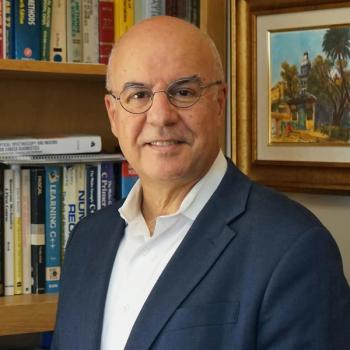
Noureddine Melikechi, dean of the Kennedy College of Sciences and professor at the University of Massachusetts Lowell, shares his work on the early detection of diseases like epithelial ovarian cancer and Alzheimer’s.
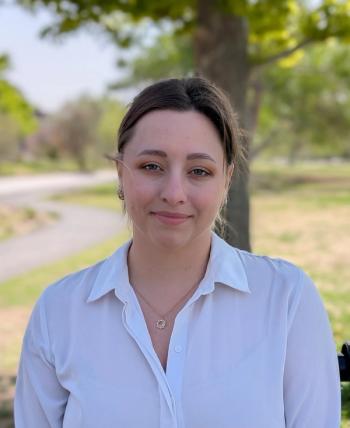
In this extended Q&A interview, we sit down with Kelsey Williams, a postdoctoral researcher at Los Alamos National Laboratory (LANL), who is working on planetary instrumentation using spectroscopic techniques such as laser-induced breakdown spectroscopy (LIBS) and laser ablation molecular isotopic spectrometry (LAMIS). In the final part of our conversation with Williams, she discusses how laser-based spectroscopic techniques might be used in the future to advance space exploration.
In this extended Q&A interview, we sit down with Kelsey Williams, a postdoctoral researcher at Los Alamos National Laboratory (LANL), who is working on planetary instrumentation using spectroscopic techniques such as laser-induced breakdown spectroscopy (LIBS) and laser ablation molecular isotopic spectrometry (LAMIS). In Part III, Williams goes into detail about ChemCam and SuperCam and how LIBS is used in both these instruments.
In this extended Q&A interview, we sit down with Kelsey Williams, a postdoctoral researcher at Los Alamos National Laboratory (LANL), who is working on planetary instrumentation using spectroscopic techniques such as laser-induced breakdown spectroscopy (LIBS) and laser ablation molecular isotopic spectrometry (LAMIS). In Part II of our conversation with Williams, she talks about the potential of mass spectrometry (MS) in space exploration applications.
In honor of National Space Day, we interviewed Kelsey Williams, who is a postdoctoral researcher at Los Alamos National Laboratory (LANL) working on planetary instrumentation using spectroscopic techniques such as laser-induced breakdown spectroscopy (LIBS) and laser ablation molecular isotopic spectrometry (LAMIS). In Part I of our interview with Williams, she discusses how her background led her to her current position at LANL.
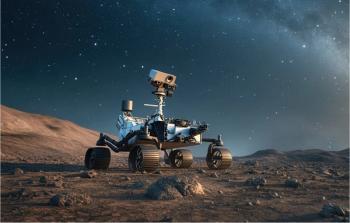
In this interview, S. Michael Angel, a consultant on the SuperCam team, explains how the instrument analyzes Martian rocks and what it reveals about Mars’ geology and potential for past life.
Noureddine Melikechi, dean of the Kennedy College of Sciences at the University of Massachusetts Lowell, discusses his work analyzing spectroscopic data collected by the Chemistry Camera (ChemCam) aboard NASA’s Curiosity Rover.
Advertisement
Advertisement
Trending on Spectroscopy Online
1
Vanishing Spectrometers: How Near-Infrared Instrumentation Got Small, Smart, and Everywhere
2
How to Monitor Indoor Air Quality Effectively
3
From VOC–Ozone Reactions to Respiratory Deposition: Unraveling Indoor Particle Exposure
4
Best of the Week: The Personalized Optical Digital Twin, Recapping ICORS 2026
5