



Spectroscopy Interviews
Latest News
Advertisement
Latest Videos


Shorts
0:52
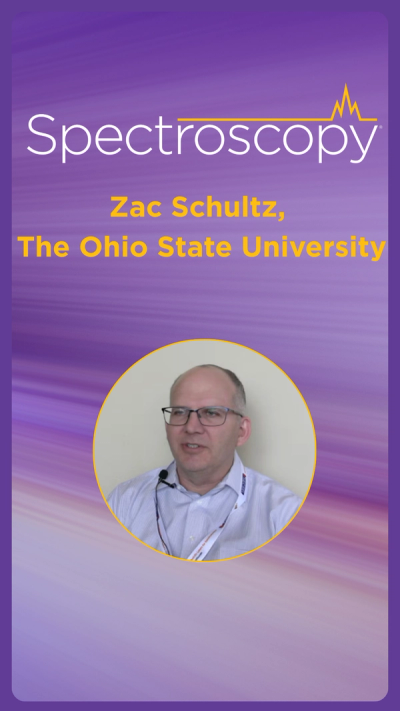
Seeing The Raman Signal From 1-3 Molecules
10 months ago
by
Zachary D. Schultz
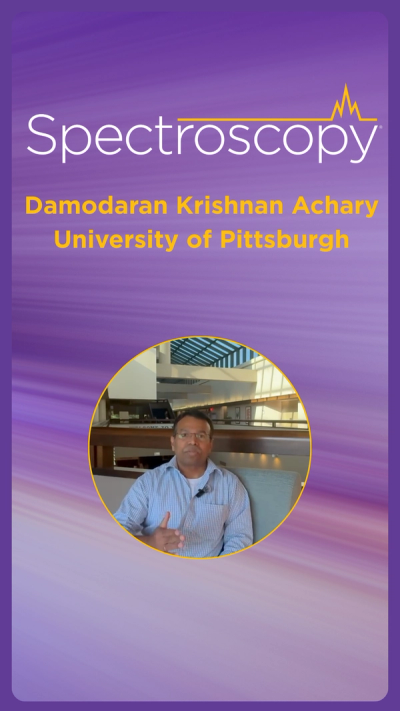
0:40
Not Your Grandfather’s NMR
10 months ago
by
Damodaran Krishnan Achary
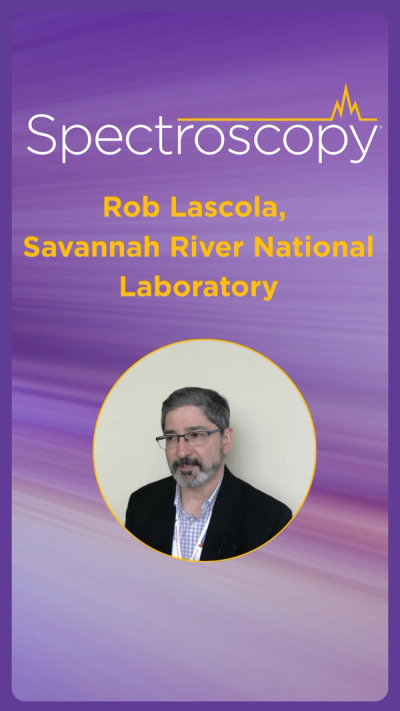
0:57
Controlling Selectivity via Molecular Structure
10 months ago
by
Robert Lascola
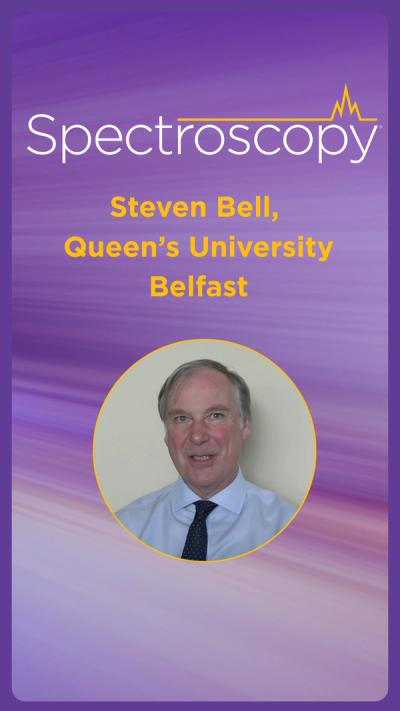
0:57
Why Internal Standards Are Crucial for Accurate Detection
10 months ago
by
Steven Bell
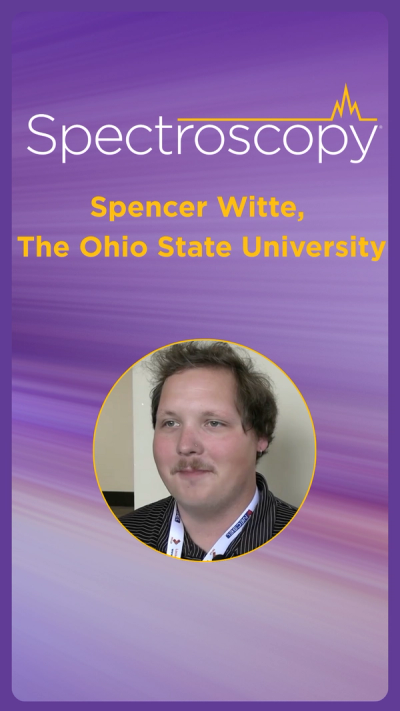
0:41
How Hair Can Reveal Chemical Changes Over Time Using Raman Spectroscopy
a year ago
by
Spencer Witte
1:04
Revolutionizing Plant Analysis with AI and Spectroscopy
a year ago
by
Renee Romano
0:42
Watching Chemical Bonds React Inside Living Cells
a year ago
by
Zachary D. Schultz
0:42
Fusing Spectra to Fix Measurement Errors
a year ago
by
Robert Lascola
0:48
Why Attending the SciX Conferences Matters
a year ago
by
Zachary D. Schultz
1:03
Why Do Molecules Naturally Stick to Surfaces?
a year ago
by
Steven Bell
Advertisement
More News
Naoto Nagai, of the Industrial Research Institute of Niigata Prefecture in Japan, has been studying the potential of IR spectroscopy for investigating higher-order structures of polymers. He and his colleagues recently looked at the IR spectra of polyoxymethylene (POM) mold plates and the cause of occasional resin cracks.
In drug development, quantitative determination of a candidate drug and its metabolites in biofluids is an important step. The standard technique for quantitative metabolite profiling is radiolabeling followed by high performance liquid chromatography (HPLC) with radiodetection, but there are disadvantages to this approach, including cost and time, as well as safety and ethical concerns related to administering radiolabeled compounds to humans.
Surface-enhanced Raman spectroscopy (SERS) with silver nanorod-array substrates has been used in various biological applications, such as detection of proteins in body fluids. Duncan C. Krause, who is a professor in the Department of Microbiology at the University of Georgia, worked with his group to establish a SERS method with those substrates for detecting the pathenogenic mycoplasma that causes bronchitis and pneumonia. We recently spoke with him about this research.

Coherent two-dimensional infrared spectroscopy (2D IR) uses a series of IR femtosecond laser pulses to pump and then probe the response of a system, making it possible to learn much more about the structure and dynamics of molecules than can be seen with one-dimensional IR spectroscopy. The technique’s inventor, Martin T. Zanni of the University of Wisconsin-Madison, discussed 2D IR in a 2013 interview in Spectroscopy (1). Since 2013, Zanni has applied 2D IR spectroscopy to new systems and has started a company, PhaseTech Spectroscopy, Inc., to commercialize the technique.
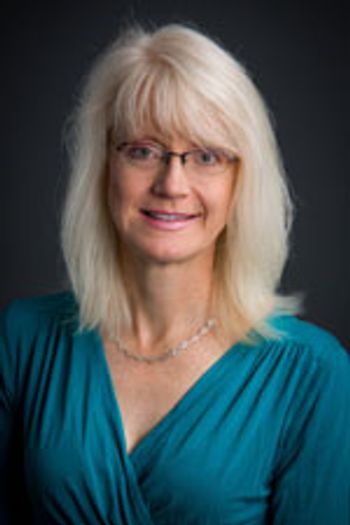
Proteomics and structural biology require specialized mass spectrometry methods for characterizing protein structures and conformations. Jennifer S. Brodbelt, a professor of chemistry at the University of Texas at Austin, focuses on the development and application of photodissociation mass spectrometry for studying biological molecules such as peptides, proteins, nucleic acids, oligosaccharides, and lipids. She recently spoke with Spectroscopy about her work with this technique. She is the winner of the 2017 ANACHEM Award, which will be presented at the SciX meeting in October 2017. The award is presented annually to an outstanding analytical chemist based on activities in teaching, research, administration, or other activities that have advanced the art and science of the field.
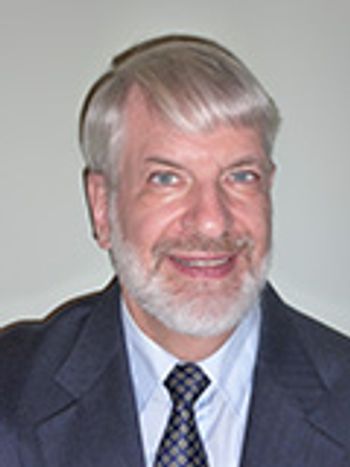
Using Raman and FT-IR spectroscopy for on-line monitoring of manufacturing processes offers advantages such as improved quality control, nondestructive analysis, and reduced costs. Jim Rydzak has more than 20 years of experience leading teams in applying on-line process control, in both the pharmaceutical and consumer goods industries. He recently talked to Spectroscopy about that work, including what they achieved and how they overcame challenges.
Spectroscopy
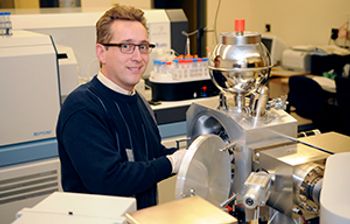
Multiple-collector inductively coupled plasma–mass spectrometry (MC-ICP-MS) is a powerful technique for measuring isotopic ratios in various areas of research. Michael Wieser, who is an associate professor in the Department of Physics and Astronomy at the University of Calgary, uses MC-ICP-MS to measure isotopic compositions at trace levels in applications ranging from geological studies to protein research. He recently spoke to Spectroscopy about this work.
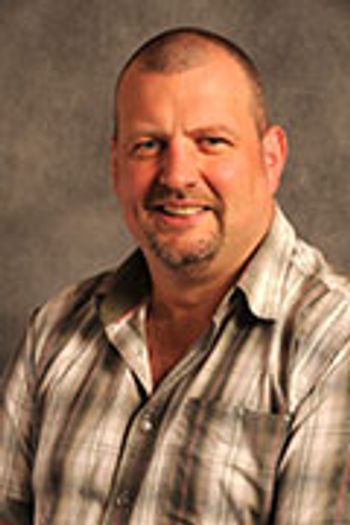
In biomedical applications of surface-enhanced Raman spectroscopy (SERS), nanoparticles can enhance the Raman signal and provide additional functionality. Duncan Graham of the University of Strathclyde has been pushing the limits of what can be achieved using functionalized nanoparticles and SERS, in applications such as cholera detection, lipid profiling in cancer cells, and assessing the efficacy of anti-cancer drugs, For this and other work he has won the 2017 Charles Mann Award, presented by the Federation of Analytical Chemistry and Spectroscopy Societies (FACSS). He recently spoke to Spectroscopy about this work. This interview is part of a series of interviews with the winners of awards that will be presented at the SciX 2017 conference in October.
Spectroscopy is proud to have created a new award, the Emerging Leader in Atomic Spectroscopy Award. As its name implies, the award recognizes a young scientist, and it is designed to encourage the next generation of atomic spectroscopists. George Chan, the winner of the inaugural Emerging Leader in Atomic Spectroscopy Award, is a project scientist at Lawrence Berkeley National Laboratory (LBNL) in Berkeley, California. One of Chan’s most significant contributions to the field of atomic spectroscopy has been his work on matrix effects and excitation processes in the inductively coupled plasma (ICP).
Optical coherence tomography (OCT) is an emerging technique for medical imaging that uses light to see deep inside tissue. Rohith Reddy, who is a postdoctoral research fellow at the Harvard Medical School and Massachusetts General Hospital in Boston, has worked to develop an OCT device for noninvasive diagnosis of a precancerous condition, Barrett’s esophagus. Reddy is the winner of the FACSS 2016 Innovation Award. He recently spoke to us about these efforts.
Surface-enhanced Raman scattering (SERS) has the capability of enhancing the signal from analytes present in low concentrations, and the detection of drugs present in human and other samples is an important application of this technique. Roy Goodacre is a Professor of Biological Chemistry in the School of Chemistry at the University of Manchester, and he and his group have been developing SERS methods for analyzing drugs in various solutions, including human biofluids, with the ultimate goal of monitoring dosing and drug therapy. He recently spoke to us about this work.
Spectroscopy
Metals and metalloids, while essential to living organisms, can, in high concentrations, be toxic. An understanding of how these metals and metalloids are accumulated and transported within plants and animals is possible with the use of synchrotron X-ray fluorescence (SXRF) microtomography. The technique is used in the imaging of major and trace element distributions within natural materials with high spatial resolution. Stefan Vogt of the Argonne National Laboratory in Lemont, Illinois, has been exploring the use of SXRF to detect metal content in biological and other systems. He recently discussed the various challenges, applications, and advantages associated with this technique.
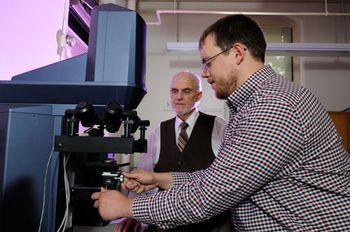
Isolating material of commercial value from solid natural products presents a challenge for many spectroscopic techniques. Near-infrared (NIR) chemical imaging makes it possible to obtain spectra from individual pixels within a field of view for analysis of complex, heterogeneous mixtures. A team at Kansas State University, led by David Wetzel, has been applying this approach to multiple applications, including the analysis of wheat. In particular, the group has work on alternative methods for the determination of flour and milling stream purity, because outdated methods such as mineral ash residue impurity analysis do not properly reflect the quality of the final products of milling and are dependent upon the soil where the wheat is milled. Mark Boatwright, who is studying for his doctorate under Wetzel, talked to Spectroscopy about some of this work.
The analysis of metals using inductively coupled plasma–mass spectrometry (ICP-MS), ICP-atomic emission spectroscopy (ICP-AES), and atomic absorption can serve many purposes in environmental, health, and forensic studies. Yi He, a chemistry professor at John Jay College of Criminal Justice at The City University of New York, has been using these elemental analysis techniques for fingerprinting and provenance of counterfeit cigarettes and as an educational tool. Here, she discusses some of that work.
Spectroscopy is proud to have created a new award, the Emerging Leader in Molecular Spectroscopy Award. As its name implies, the award recognizes a young scientist, and it is designed to encourage the next generation of molecular spectroscopists. Matthew Baker, the winner of the inaugural Emerging Leader in Molecular Spectroscopy Award, is a senior lecturer in chemistry at the University of Strathclyde, in Glasgow, Scotland. At Strathclyde, Baker leads research to advance the application of analytical chemistry to real-world problems in a variety of areas, including the biomedical, clinical, defense, and security fields. His main focus is the development of spectroscopic and spectrometric molecular pathology, disease diagnosis, and the detection of pathogenic bacteria and toxic chemicals. In particular, Baker has pioneered the use of vibrational spectroscopy for clinical diagnostics.
Advances in spatial resolution for Fourier transform infrared (FT-IR) imaging historically have involved the use of a synchrotron source, but new optics have been developed that yield better spectral quality and spatial resolution than are provided by existing synchrotron sources. Kathleen Gough, Professor in the Department of Chemistry at the University of Manitoba, has been working with her group to conduct diagnostic tissue imaging with the new thermal source FT-IR system. She recently spoke to us about these efforts.
The use of engineered nanoparticles (ENPs) in various applications and consumer products continues to increase, and these nanoparticles require thorough characterization for proper environmental risk assessment. James Ranville, a professor at the Colorado School of Mines, in Golden, Colorado, has been studying colloids and and particles in environmental processes and developing methods to collect and analyze colloids from rivers, reservoirs, mountain streams, soil solutions, and ground waters. He spoke with us about his work using field-flow fractionation–inductively coupled plasma mass spectrometry (FFF-ICP-MS) and ICP-MS for the detection of engineered nanoparticles in environmental samples.
Currently, there is significant interest in using vibrational spectroscopy techniques for a variety of biomedical applications, and the methods are showing good promise. Karen Faulds, a professor at the University of Strathclyde in Glasgow, has been investigating the application of surface-enhanced Raman spectroscopy (SERS) to the detection of disease pathogens, such as meningitis, and to distinguish related pathogens in a complex matrix. Faulds is the 2016 recipient of the Coblentz Society’s Craver Award, which recognizes the efforts of young professional spectroscopists who have made significant contributions in applied analytical vibrational spectroscopy. This interview is part of a series of interviews with the winners of awards that will be presented at the SciX 2016 conference.
Laser-ablation inductively coupled plasma–mass spectrometry (LA-ICP-MS) is well suited for highly sensitive elemental and isotopic analysis of solid samples. In this technique, a laser beam ablates the sample and generates fine particles that are then transported to the ICP-MS system for rapid elemental analysis. Detlef Günther is Professor for Trace Element and Micro Analysis and Vice President Research and Corporate Relations for ETH Zurich, and he and his group use LA-ICP-MS for two- and three-dimensional imaging of geological samples such as rocks and meteorites. He recently spoke to us about this research.
Spectroscopy has played a significant role in the Mars expeditions, including the confirmation of the former presence of water on the Red Planet. Raymond Arvidson, the James S. McDonnell Distinguished University Professor at Washington University in Saint Louis, Missouri, is involved with the various National Aeronautics and Space Administration (NASA) missions to Mars and the spectroscopy incorporated in the instruments sent there. Here, Arvidson discusses those techniques, including a hyperspectral imaging system, an emission spectrometer, and an X-ray spectrometer, and what the results of the missions indicate about Mars so far.
Total reflection x-ray fluorescence (TXRF) spectrometry is an energy-dispersive x-ray technique that is used for elemental and chemical analysis, and is especially suitable for small-sample analyses. Ursula Fittschen, an assistant professor at Washington State University, is working on elemental microscopy and micro analysis. She has been using TXRF to analyze stainless steel metal release, and also airborne silver nanoparticles (NPs) from fabrics. Here, she describes the advantages and challenges of this technique.
The isotopic profile of a material refers to the ratios of the stable isotopes of elements contained within, such as 2H/1H, 13C/12C, and 18O/16O. Biological, chemical, and physical processes cause variations in the ratios of stable isotopes; analysis of a material for its distinctive isotopic signature can thus be used to reveal information about its history. Isotope ratio mass spectrometry (IRMS) is a technique used to measure the relative abundance of isotopes in materials. Forensic investigators have used IRMS to measure a variety of materials, such as drugs, explosives, food, and human remains. In a recent web seminar, Lesley Chesson, the president of IsoForensics, Inc., explained how IRMS works and discussed the use of IRMS in forensic science, illustrating her discussion with several case examples.
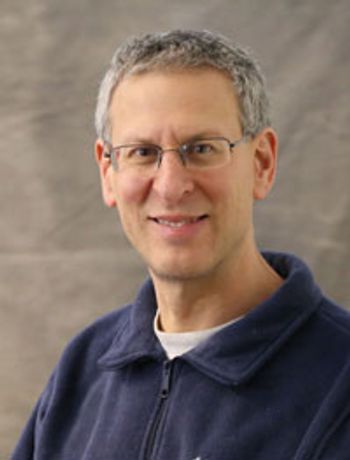
A wide variety of processes occur at biological interfaces, such as those between drugs and membranes, metal ions and membranes, and water and membranes. Paul S. Cremer, the J. Lloyd Huck Chair in Natural Sciences in the Department of Chemistry at Penn State, is the recipient of the 2016 ANACHEM Award, and he and his group study these processes using various novel spectroscopy and microfluidic approaches..
In recent years, Raman spectroscopy has been applied to process monitoring and control applications in a wide range of application fields, including bioprocessing, pharmaceuticals, food, oil and gas, and oceanography. Brian Marquardt, cofounder and CEO of MarqMetrix, Inc., and director and senior principal engineer with the Center for Process Analysis and Control in the Applied Physics Laboratory at the University of Washington, has more than 15 years of experience with such applications and recently spoke with us about his research.
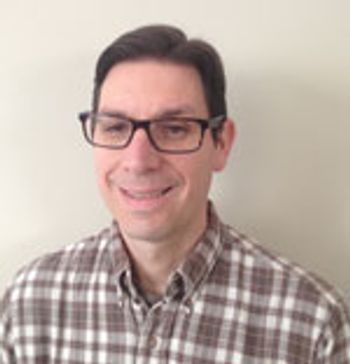
Understanding electron- and energy-transfer processes in nanoscale systems is critical both for investigating fundamental energy redistribution mechanisms in nanoscopic media and for developing new devices based on these systems. Ken L. Knappenberger is the recipient of the 2016 Coblentz Award and is an associate professor in the Department of Chemistry and Biochemistry at Florida State University, and he and his group study these processes in nanoscale assemblies by developing and implementing novel optical spectroscopy approaches. He recently spoke to us about this work.
Advertisement
Advertisement
Trending on Spectroscopy Online
1
Mapping Oxidation in Fractured Knee Implant Posts with FT-IR Imaging
2
Thermo Fisher Scientific Announces Launch of New FT-IR Microscope for Microscale Chemical Analysis
3
Light That Thinks: How Near-Infrared Spectroscopy Learned to See Inside Bodies, Bioreactors, and the Biosphere
4
Measuring Seawater Temperature and Salinity Simultaneously Using Brillouin Scattering
5