Application Notes: Atomic Spectroscopy


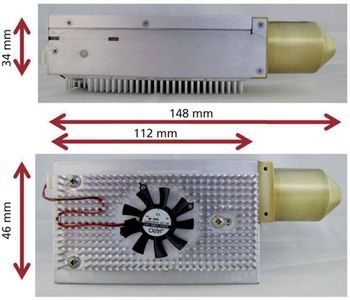
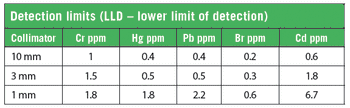
Recently, the compact MAGPRO’s maximum voltage was increased from 60 kV to 70 kV while maintaining the same size profile. This article highlights the advantages of 70 kV excitation of cadmium, an element of interest for Restriction of Hazardous Substances Directive (RoHS), at parts per million (ppm) levels.

// You can adjust the form size here: var DrupalLeadsFormWidth = 870; var DrupalLeadsFormHeight = 2500;

Limestone is widely used as the main ingredient in cement and mortar, and as an aggregate in concrete and asphalt for building roads. It iis also used as a soil conditioner and is the raw material for making quick lime and slaked lime. During mining and processing operations, limestone composition must be monitored and controlled to ensure proper quality and characteristics are achieved for a variety of products. This application note demonstrates the measurement of carbonates and major oxides in high calcium limestone by EDXRF using empirical calibration.

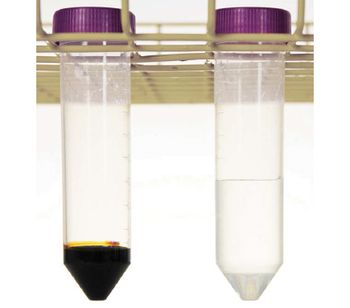
This application note describes the method for preparation of four large baby food samples by microwave digestion using a minimal acid volume. Analysis by ICP-OES shows successful digestion.


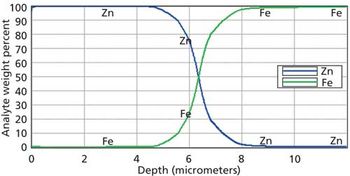
Hard disk manufacturing requires high levels of precision at nanometer scale for the production of a repeatable product with high memory density. Because hard disks are dependent upon magnetic properties to read and write to each memory unit, the disk has a layered structure comprised of magnetic and nonmagnetic materials. Over the last two decades, extensive work has been done by hard disk manufacturers to reduce grain size, which enables smaller, but consistent magnetic domain sizes and distinct boundaries. This movement toward tighter anufacturing tolerances requires advanced techniques for characterization. Compositional depth profiling with GD-AES enables precise characterization of the size of these thin layers of material.



Miniature X-ray sources reached the development level that is appropriate for their use in the handheld and portable X-Ray diffraction (XRD) instruments. This note describes the application of X-ray sources for the residual stress measurements using XRD.

Spectrochemical analysis is a comparative technique; therefore, unknown samples are best analyzed against reference materials of similar composition.

Miniature X-ray sources reached the development level that is appropriate for their use in the hand held and portable X-Ray diffraction (XRD) instruments. This note describes the application of X-ray sources for the residual stress measurements using XRD.

Data for a handheld LIBS device (SciAps Z-500) is presented demonstrating in-field measurement of several elements critical for geochemical applications. In some cases these elements have never before been measured with a handheld device.

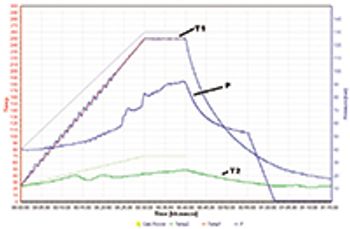
CEM's Discover SP-D Gold microwave digestion system with high temperature and pressure chamber enables safe, fast, and automated preparation of previously difficult sample types

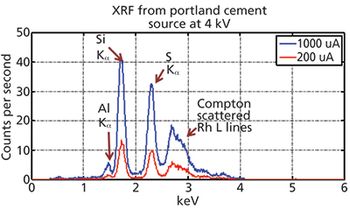
The 12 W miniature source has a higher voltage and a much higher emission current than our present miniature X-ray sources, which is an advantage for a number of applications.

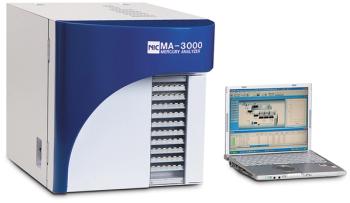
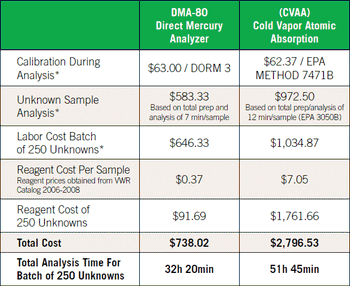
The majority of environmental laboratories are currently using traditional techniques like cold vapor atomic absorption to analyze samples for mercury content.

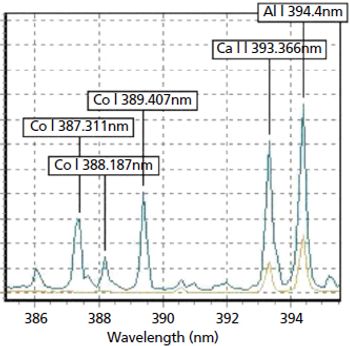
The TSI® LIBS Desktop Analyzer laser induced breakdown spectroscopy (LIBS) instrument allows simultaneous determination of all detectable elements present in the material being analyzed.

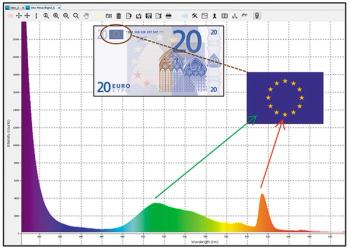
Inks and pigments with optically unique properties can provide quick visual verification of authenticity, and can be difficult to replicate.

In the agri-food sector it is important to not only study the soil composition and use of fertilizers, but also the uptake of nutrients and potentially toxic elements within the plants and crops themselves.

Elemental ratio determinations in foraminiferal calcite require the measurement of trace levels of Na, Mg, Sr, and ultra-trace levels of Li, B, Ba, Cd, Mn, U in a calcium rich matrix and ratioed to calcium.

In gemology the TSI ChemReveal LIBS Desktop Analyzer has been used to aid gemologists in gemstone classification. This paper highlights study results of this instrument in some of those applications.